FreePrintable

South Island High Country Evolution

A free, printable general worksheet ready for your classroom. Download instantly, print, and hand out to your students — no account needed.
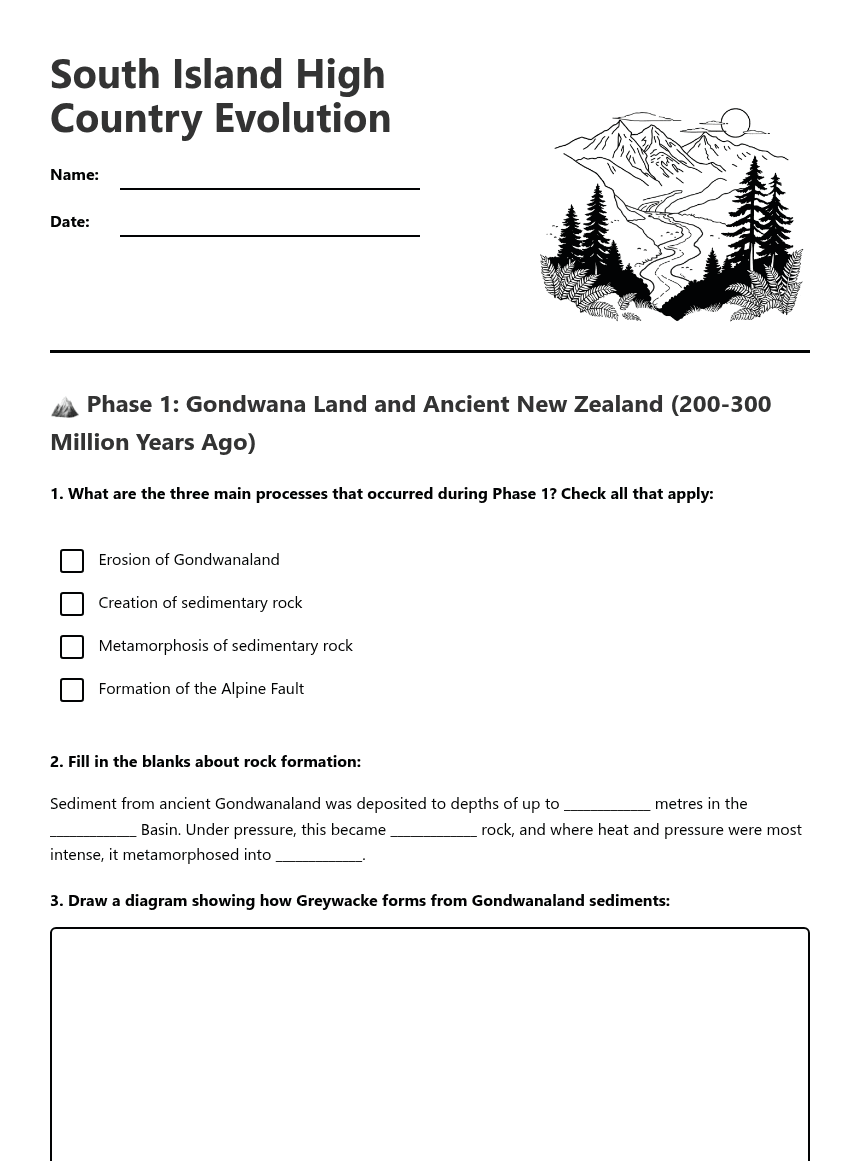
South Island High Country Evolution worksheet preview
South Island High Country Evolution

South Island High Country Evolution

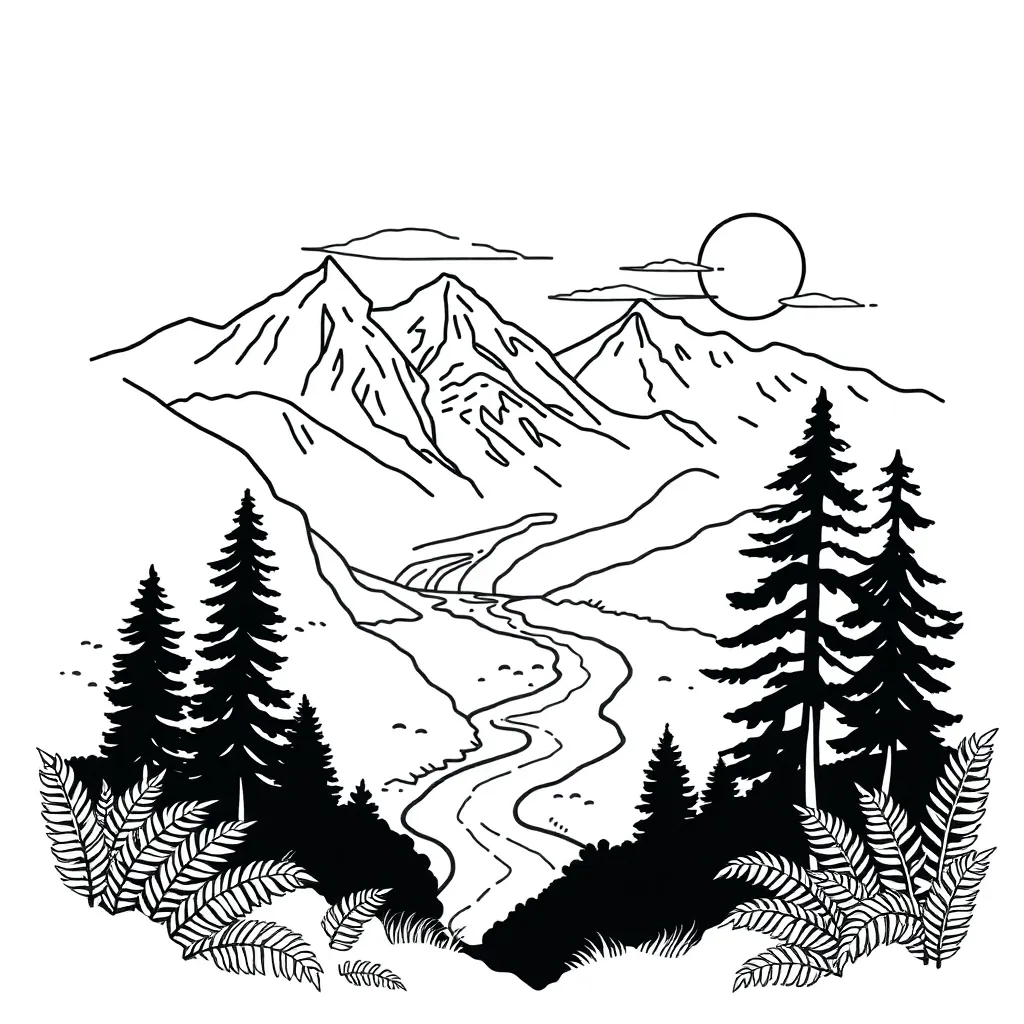
South Island High Country landscape

🏔️ Phase 1: Gondwana Land and Ancient New Zealand (200-300 Million Years Ago)

1. What are the three main processes that occurred during Phase 1? Check all that apply:

Erosion of Gondwanaland

Creation of sedimentary rock

Metamorphosis of sedimentary rock

Formation of the Alpine Fault

2. Fill in the blanks about rock formation:

Sediment from ancient Gondwanaland was deposited to depths of up to _____________ metres in the _____________ Basin. Under pressure, this became _____________ rock, and where heat and pressure were most intense, it metamorphosed into _____________.

3. Draw a diagram showing how Greywacke forms from Gondwanaland sediments:

⛰️ Phase 2: The Rangitata Orogeny (125-200 Million Years Ago)

4. What does "orogeny" mean?
5. Which process happened first during the Rangitata Orogeny?

Plate collision creating mountains

Gondwanaland splitting apart

Formation of the Tasman Sea

Volcanic activity

6. Match the geological features with their locations:
1. Volcanic rocks
2. Coal beds
3. Castle Hill limestones
4. Clay cliffs
A. Omarama
B. Awatere and Clarence valleys
C. SIHC
D. Otago and Southland
7. Draw a diagram showing Zealandia breaking away from Gondwanaland:
8. How long did it take for the Tasman Sea to reach its present width? _______________ million years

🌋 Phase 3: Kaikoura Orogeny (25-10 Million Years Ago - Today)

9. What caused the transform fault movements in the South Island?
10. Fill in the information about the Alpine Fault:

The western side of the Alpine Fault moved _____________ relative to the eastern side at a rate of _____ to _____ cm per year. This resulted in approximately _____________ km of total displacement.

11. Why do Palaeozoic rock belts in Nelson match those in Fiordland?
12. Draw a diagram showing the Alpine Fault and plate movement:

❄️ Phase 4: Erosion and Modern Landscape

13. What are the main erosional processes affecting the SIHC today? Check all that apply:

Frost shattering

Earthquakes

Landslides

Glacial activity

River erosion

Volcanic eruptions

14. How were the Canterbury Plains formed?
15. Give an example of how erosion has dramatically changed the landscape:
16. Draw a cross-section diagram showing a U-shaped glacial valley with a finger lake (like Lake Tekapo):
17. What is the current stage of the SIHC landscape evolution?

Rapid mountain building

Rapid weathering

Volcanic activity

Stable lowlands

🔄 Timeline Summary

18. Create a timeline showing the four main phases of SIHC evolution. Include the time periods and key events for each phase:
19. Explain how the current balance between uplift and erosion affects the Southern Alps:
20. Predict what might happen to the SIHC landscape over the next million years, considering current processes:

About This Worksheet

Free Download

No sign-up, no email, no paywall. Just download and print.

Print-Ready

Formatted for standard paper. Clean layout, easy to read.

AI-Generated

Created with Kuraplan's AI, designed for real classroom use.

For Teachers & Parents

Use in classrooms, for homework, tutoring, or homeschool.

Need a custom version of this worksheet?

Kuraplan's AI generates custom worksheets in seconds — differentiated for every learner, aligned to your curriculum.

Generate Custom Worksheets — Free
No credit card Curriculum-aligned Under 60 seconds