FreePrintable

Mihi Translation and Analysis

A free, printable general worksheet ready for your classroom. Download instantly, print, and hand out to your students — no account needed.
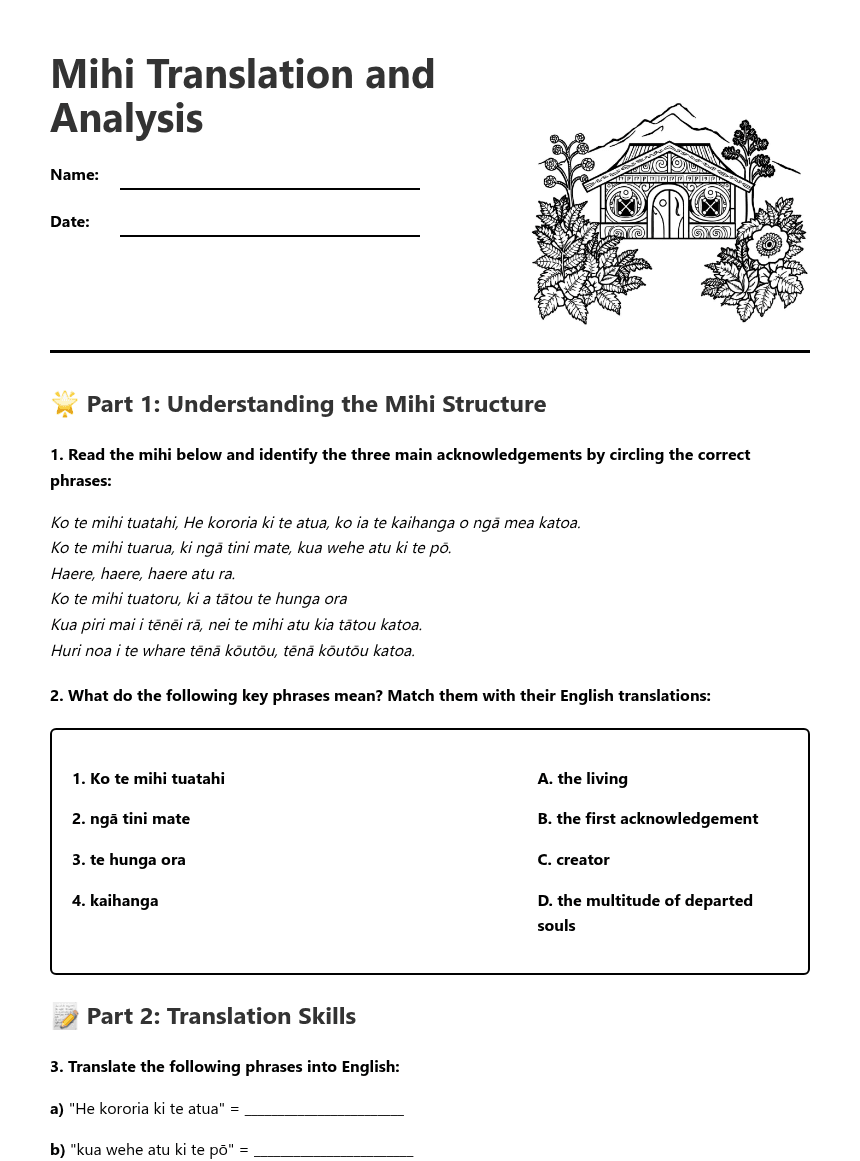
Mihi Translation and Analysis worksheet preview
Mihi Translation and Analysis

Mihi Translation and Analysis

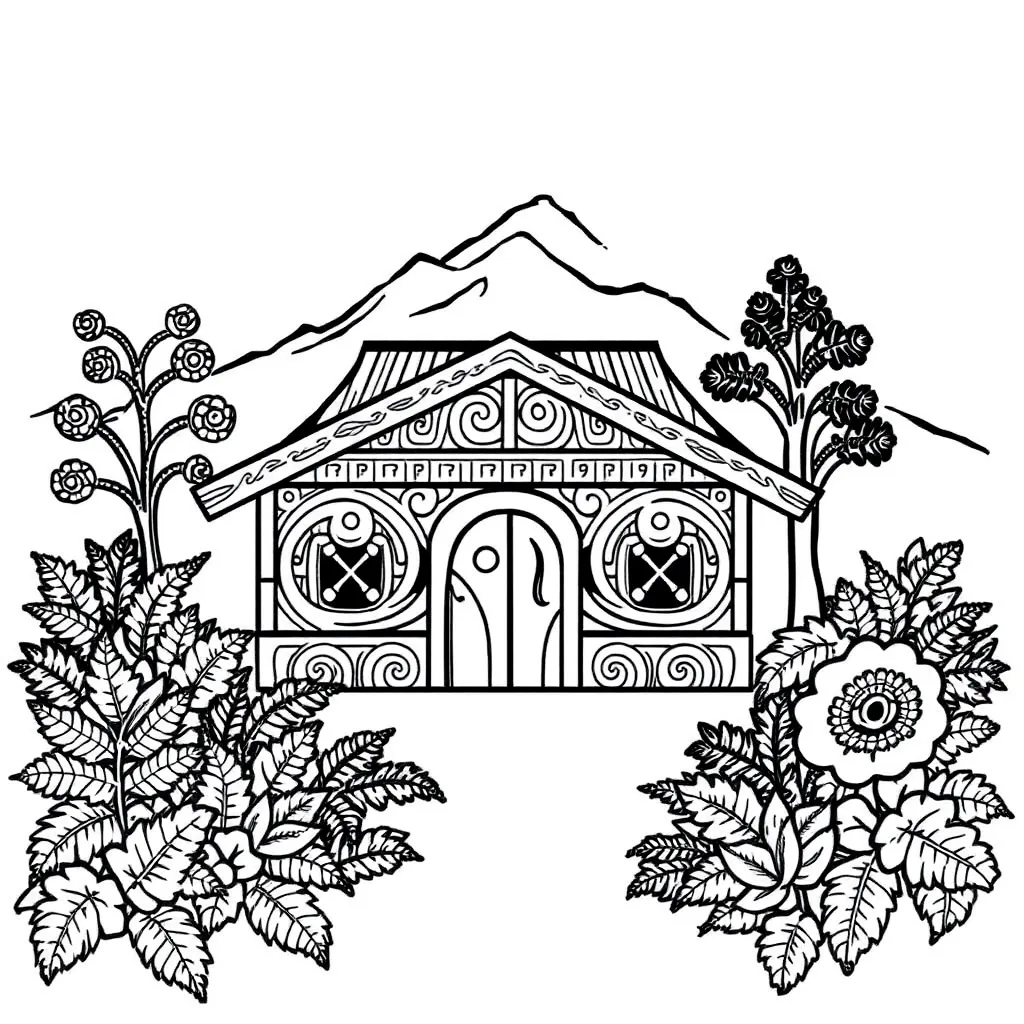
Traditional Māori greeting illustration

🌟 Part 1: Understanding the Mihi Structure

1. Read the mihi below and identify the three main acknowledgements by circling the correct phrases:

Ko te mihi tuatahi, He kororia ki te atua, ko ia te kaihanga o ngā mea katoa.
Ko te mihi tuarua, ki ngā tini mate, kua wehe atu ki te pō.
Haere, haere, haere atu ra.
Ko te mihi tuatoru, ki a tātou te hunga ora
Kua piri mai i tēnēi rā, nei te mihi atu kia tātou katoa.
Huri noa i te whare tēnā kōutōu, tēnā kōutōu katoa.

2. What do the following key phrases mean? Match them with their English translations:
1. Ko te mihi tuatahi
2. ngā tini mate
3. te hunga ora
4. kaihanga
A. the living
B. the first acknowledgement
C. creator
D. the multitude of departed souls

📝 Part 2: Translation Skills

3. Translate the following phrases into English:

a) "He kororia ki te atua" = ________________________

b) "kua wehe atu ki te pō" = ________________________

c) "Kua piri mai i tēnēi rā" = ________________________

4. Complete the translation by filling in the missing English words:

"Ko te mihi tuatoru, ki a tātou te hunga ora"

The ________ greeting is to ________ the ________

5. Why is the phrase "Haere, haere, haere atu ra" repeated three times? What is the significance of this repetition in Māori culture?

🤔 Part 3: Cultural Analysis

6. The mihi follows a specific order. Which statement best explains why this order is important? (Circle one)

It shows respect by acknowledging the spiritual realm first, then the deceased, then the living

It's easier to remember this way

It follows alphabetical order in te reo Māori

It doesn't matter what order is used

7. What does "ko ia te kaihanga o ngā mea katoa" reveal about Māori worldview? Tick all that apply:

Recognition of a spiritual creator

Belief that all things are connected

Importance of acknowledging divine authority

Separation between spiritual and physical worlds

8. Compare this mihi structure to greeting customs in your own culture or family. How are they similar or different?

✍️ Part 4: Language Patterns and Creation

9. Identify the pattern in these phrases and fill in the missing words:

Ko te mihi __________, He kororia ki te atua

Ko te mihi __________, ki ngā tini mate

Ko te mihi __________, ki a tātou te hunga ora

10. The phrase "tēnā kōutōu" appears twice at the end. What is the difference between "tēnā kōutōu" and "tēnā kōutōu katoa"?
11. Critical thinking: Why might it be important to acknowledge "ngā tini mate" (the departed) before greeting the living in Māori protocol? Explain your reasoning.
12. Create your own simple mihi following the three-part structure. Write it in English first, then attempt a te reo Māori version using vocabulary from this lesson:

English version:

Te reo Māori attempt:

About This Worksheet

Free Download

No sign-up, no email, no paywall. Just download and print.

Print-Ready

Formatted for standard paper. Clean layout, easy to read.

AI-Generated

Created with Kuraplan's AI, designed for real classroom use.

For Teachers & Parents

Use in classrooms, for homework, tutoring, or homeschool.

Need a custom version of this worksheet?

Kuraplan's AI generates custom worksheets in seconds — differentiated for every learner, aligned to your curriculum.

Generate Custom Worksheets — Free
No credit card Curriculum-aligned Under 60 seconds