Philosophy: Person and Environment
🌍 Part 1: Multiple Choice Questions
Instructions: Circle the letter of the best answer for each question.
1. What does it mean to say that humans are embodied beings?
A. Humans have souls separate from their bodies
B. Humans exist as unified beings of body and spirit
C. Humans are purely physical creatures
D. Humans can exist without their physical form
2. Which philosopher emphasised that humans are "beings-in-the-world"?
A. Aristotle
B. Martin Heidegger
C. Immanuel Kant
D. John Locke
3. What is environmental philosophy primarily concerned with?
A. The relationship between humans and nature
B. Weather patterns and climate
C. Animal behaviour studies
D. Geological formations
4. According to deep ecology, what is the proper relationship between humans and nature?
A. Humans should dominate nature
B. Humans are separate from and superior to nature
C. Humans are interconnected with and equal to all living beings
D. Nature exists solely for human use
5. What does "anthropocentrism" mean in environmental philosophy?
A. The study of human anatomy
B. Human-centred approach to environmental issues
C. The evolution of human species
D. Human migration patterns
✅ Part 2: True or False
Instructions: Check the box if the statement is TRUE, leave blank if FALSE.
6. Humans can exist independently of their environment.
7. Environmental ethics considers the moral relationship between humans and nature.
8. Ecocentrism places ecosystems at the centre of moral consideration.
9. The concept of "thrownness" suggests humans choose their circumstances completely.
10. Sustainable development aims to meet present needs without compromising future generations.
📝 Part 3: Fill in the Blanks
Instructions: Complete each sentence with the appropriate philosophical term or concept.
11. The German term "____________" refers to humans being thrown into existence without choosing their initial circumstances.
12. ____________ is the philosophical view that considers the intrinsic value of all living beings, not just humans.
13. The concept of ____________ suggests that humans have a responsibility to care for and protect the environment.
14. ____________ ecology argues for the inherent worth of all living beings and natural systems.
15. The term "____________" describes the interconnectedness of all elements within an ecosystem.
🔗 Part 4: Matching Activity
Instructions: Match each philosophical concept with its correct definition by drawing lines.
16. Phenomenology
17. Biocentrism
18. Ecological footprint
19. Environmental virtue ethics
20. Gaia hypothesis
A. Earth functions as a self-regulating system
B. Focus on character traits for environmental responsibility
C. Study of consciousness and lived experience
D. Life-centred approach to environmental ethics
E. Measure of human impact on Earth's ecosystems
💭 Part 5: Short Answer Questions
Instructions: Provide clear, concise answers to the following questions.
21. Explain how humans are both part of nature and separate from it according to philosophical perspectives.
22. Describe the difference between shallow ecology and deep ecology.
23. What role does technology play in the relationship between humans and their environment?
📖 Part 6: Essay Question
Instructions: Choose ONE of the following essay questions and provide a detailed response.
24. Option A: "Humans have a moral obligation to protect the environment." Discuss this statement using philosophical arguments for and against environmental responsibility.
OR
24. Option B: Analyse how the concept of "being-in-the-world" helps us understand the human relationship with the environment. Include specific examples.
🎨 Part 7: Reflection and Application
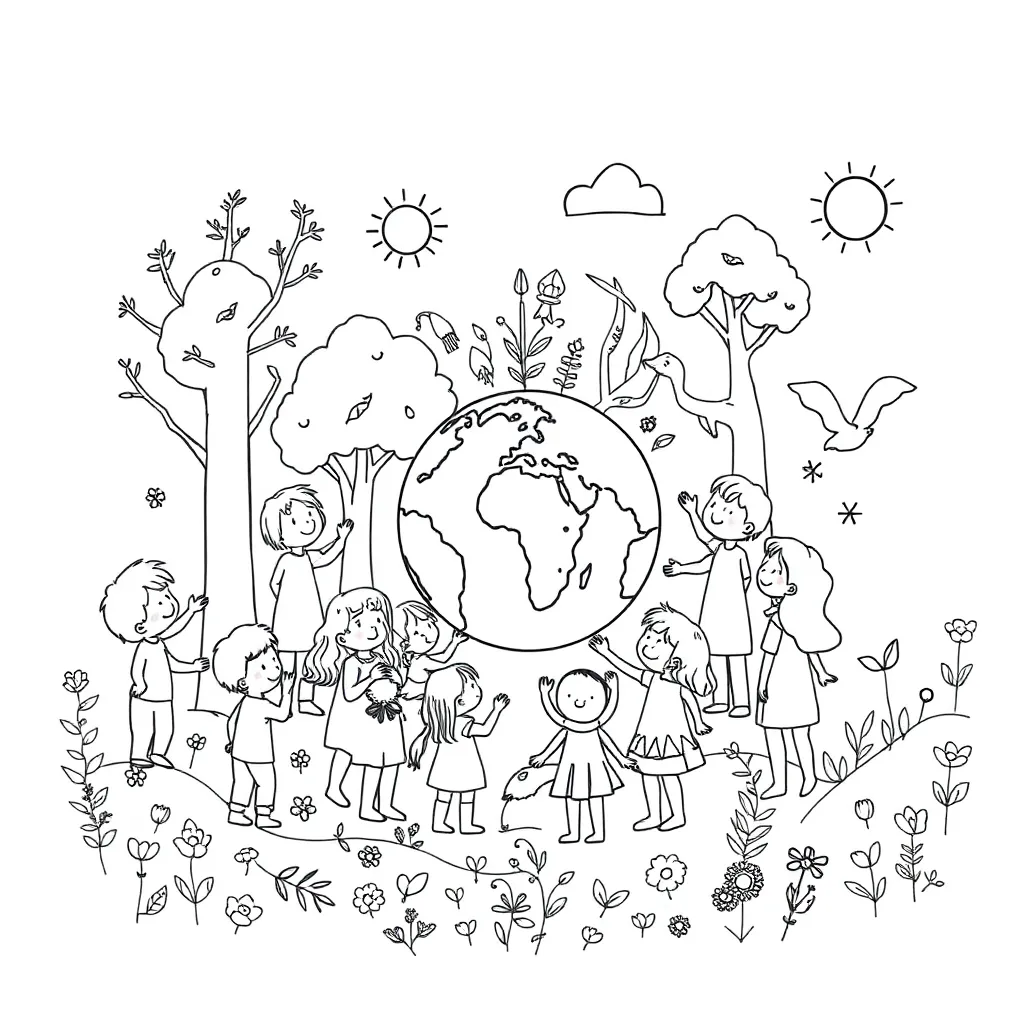
25. Draw a diagram showing the interconnections between humans, society, and the natural environment.
26. Reflect on your own relationship with the environment. How do philosophical concepts about human-environment relationships apply to your daily life?