Native Animals Hui Story
A free, printable english worksheet ready for your classroom. Download instantly, print, and hand out to your students — no account needed.
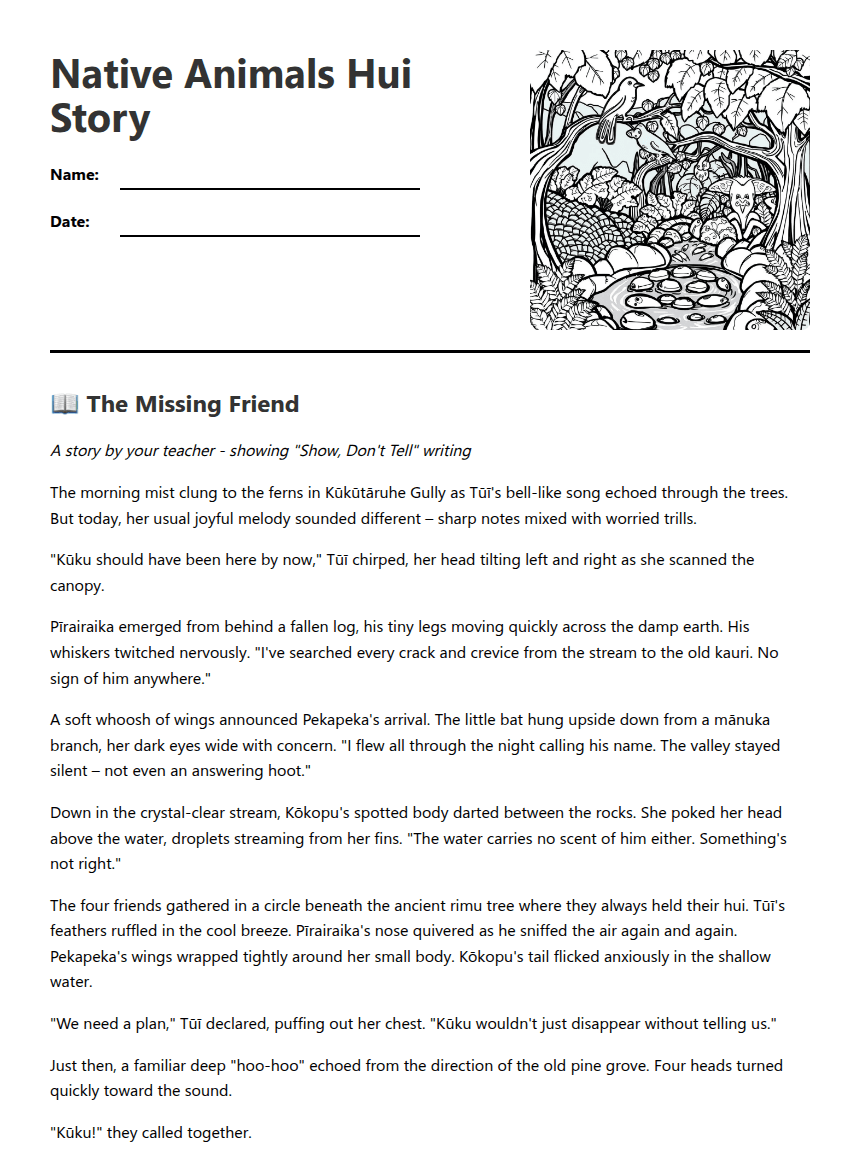
Native Animals Hui Story
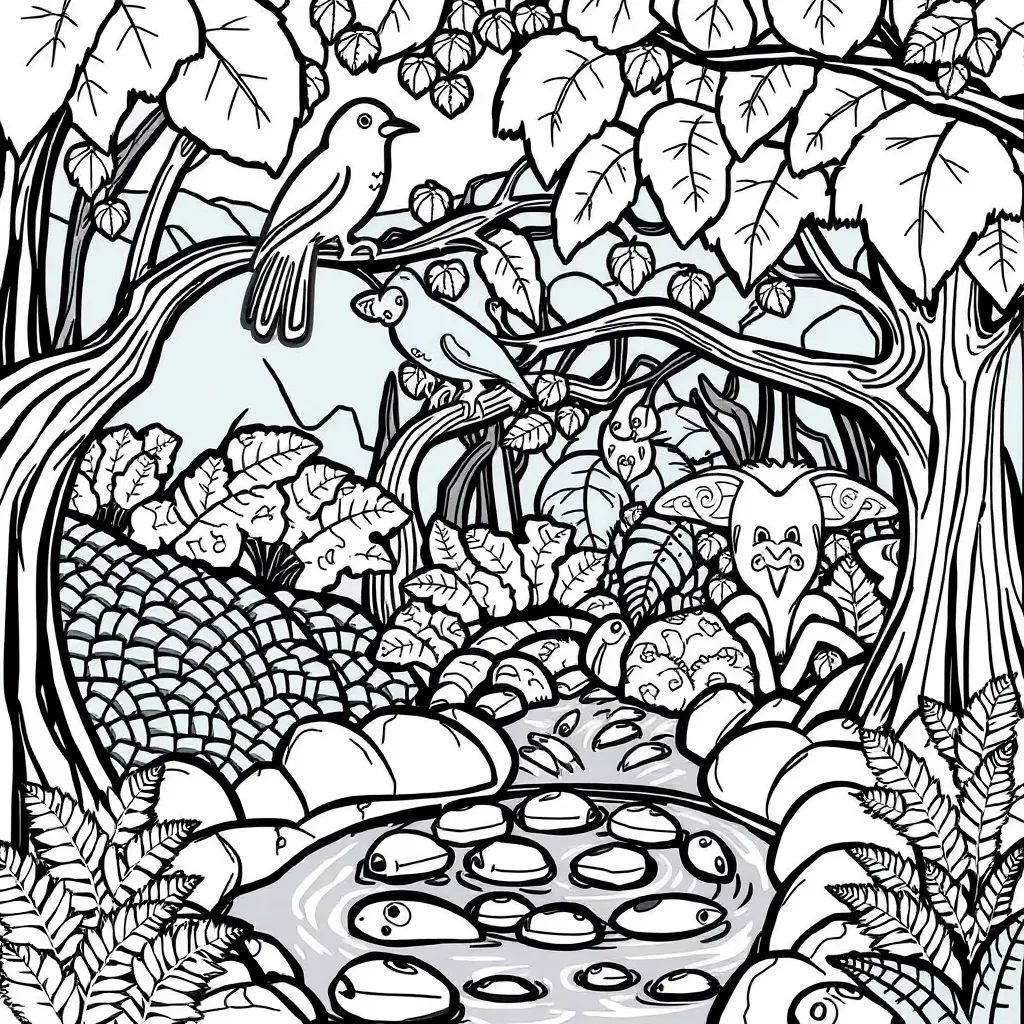
📖 The Missing Friend
A story by your teacher - showing "Show, Don't Tell" writing
The morning mist clung to the pākākā (ferns) in Kūkūtāruhe Gully as Tūī's bell-like song echoed through the trees. But today, her usual joyful melody sounded different – sharp notes mixed with worried trills.
"Kūku should have been here by now," Tūī chirped, her head tilting left and right as she scanned the canopy.
Pīrairaika emerged from behind a fallen log, his tiny legs moving quickly across the damp earth. His whiskers twitched nervously. "I've searched every crack and crevice from the wai (stream) to the old kauri. No sign of him anywhere."
A soft whoosh of wings announced Pekapeka's arrival. The little bat hung upside down from a mānuka branch, her dark eyes wide with concern. "I flew all through the night calling his name. The valley stayed silent – not even an answering hoot."
Down in the crystal-clear wai, Kōkopu's spotted body darted between the rocks. She poked her head above the water, droplets streaming from her fins. "The water carries no scent of him either. Something's not right."
The four friends gathered in a circle beneath the ancient rimu tree where they always held their hui. Tūī's feathers ruffled in the cool breeze. Pīrairaika's nose quivered as he sniffed the air again and again. Pekapeka's wings wrapped tightly around her small body. Kōkopu's tail flicked anxiously in the shallow water.
"We need a plan," Tūī declared, puffing out her chest. "Kūku wouldn't just disappear without telling us."
Just then, a familiar deep "hoo-hoo" echoed from the direction of the old pine grove. Four heads turned quickly toward the sound.
"Kūku!" they called together.
Their friend appeared, his brown feathers dusty and his usually bright eyes looking tired. "Sorry, whānau (family). I've been helping my cousin build a new nest after the storm knocked down her tree. I should have told you where I was going."
Tūī's song immediately brightened, filling the gully with sweet, liquid notes. Pīrairaika scampered in happy circles. Pekapeka did a little loop in the air. Kōkopu splashed joyfully in the wai.
"Next time, let us know," Tūī chirped. "We were worried sick!"
"And next time, let us help too," added Pīrairaika, his whiskers twitching with excitement rather than worry now.
As the sun climbed higher, warming the gully, the five friends settled in for their hui, grateful to be together again in their special place.
📝 Author's Note: Show, Don't Tell
How this story demonstrates "Show, Don't Tell":
Instead of simply writing "Tūī was worried," I showed her worry through:
- Her song sounding different – "sharp notes mixed with worried trills"
- Her actions – "head tilting left and right as she scanned the canopy"
Instead of writing "The animals were anxious," I showed their feelings through:
- Pīrairaika's "whiskers twitched nervously"
- Pekapeka's "dark eyes wide with concern"
- Kōkopu's "tail flicked anxiously"
- Their body language – "wings wrapped tightly," "feathers ruffled"
Instead of writing "They were happy when Kūku returned," I showed their relief and joy through:
- Tūī's song "immediately brightened"
- Pīrairaika "scampered in happy circles"
- Pekapeka "did a little loop in the air"
- Kōkopu "splashed joyfully"
Remember: Let your readers feel the emotions through actions, dialogue, and sensory details rather than just telling them how characters feel!
🤔 Understanding the Story
About This Worksheet
Free Download
No sign-up, no email, no paywall. Just download and print.
Print-Ready
Formatted for standard paper. Clean layout, easy to read.
AI-Generated
Created with Kuraplan's AI, designed for real classroom use.
For Teachers & Parents
Use in classrooms, for homework, tutoring, or homeschool.
Need a custom version of this worksheet?
Kuraplan's AI generates custom worksheets in seconds — differentiated for every learner, aligned to your curriculum.
Generate Custom Worksheets — Free