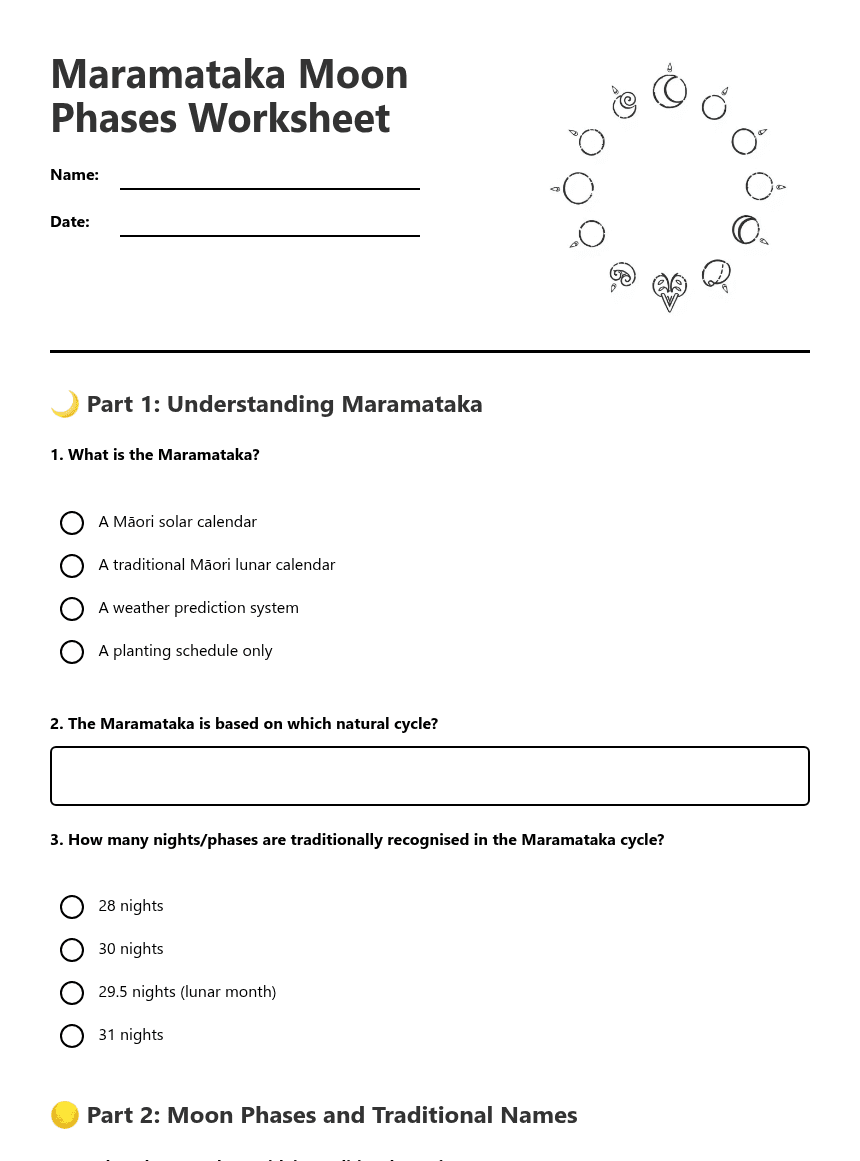
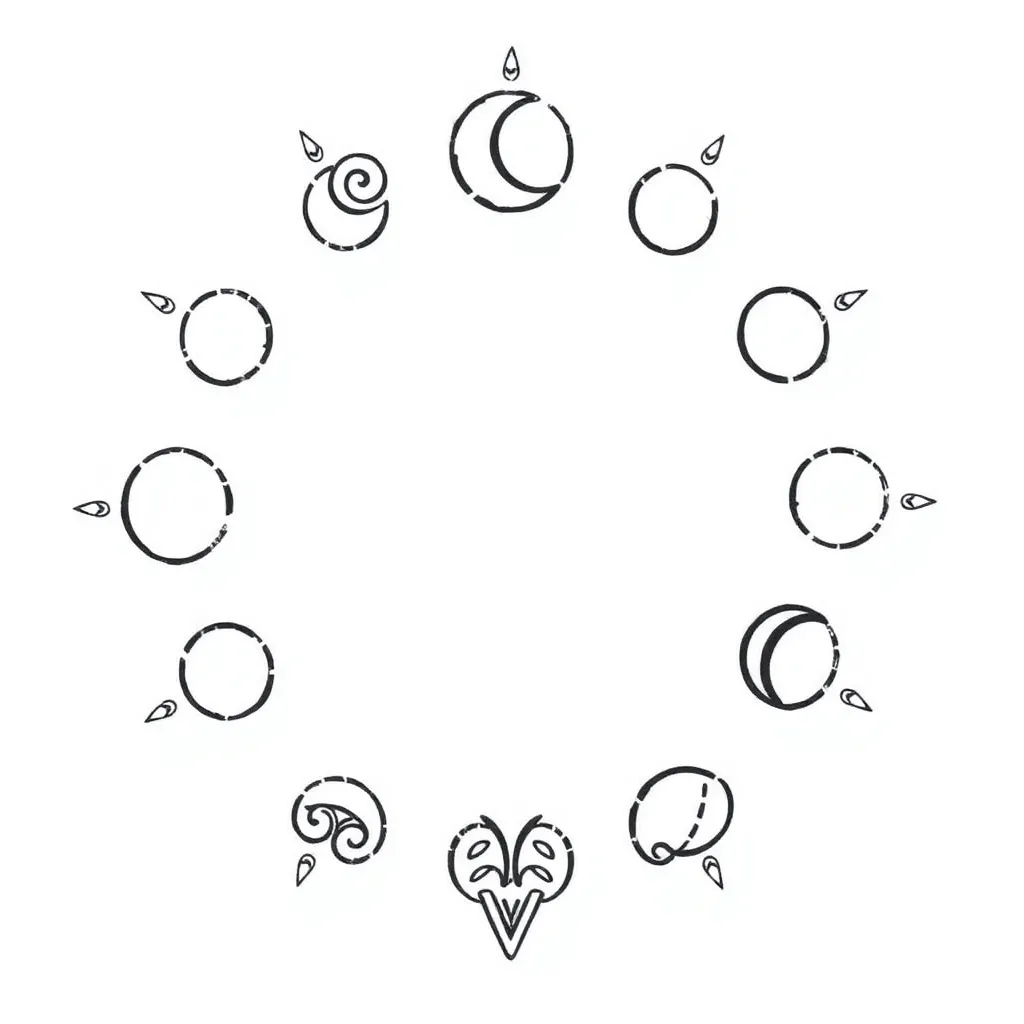
Maramataka Moon Phases Worksheet
🌙 Part 1: Understanding Maramataka
1. What is the Maramataka?
A Māori solar calendar
A traditional Māori lunar calendar
A weather prediction system
A planting schedule only
2. The Maramataka is based on which natural cycle?
3. How many nights/phases are traditionally recognised in the Maramataka cycle?
28 nights
30 nights
29.5 nights (lunar month)
31 nights
🌕 Part 2: Moon Phases and Traditional Names
4. Match each moon phase with its traditional Māori name:
1. New Moon
2. Waxing Crescent
3. Full Moon
4. Waning Moon
5. Last Quarter
A. Rākaunui
B. Whiro
C. Mutuwhenua
D. Tirea
E. Ōturu
5. Fill in the traditional names for these important moon phases:
The new moon phase is called ____________, which is considered a time for rest and reflection.
____________ is the full moon phase, ideal for harvesting and gathering.
____________ marks the beginning of the waxing moon, good for planting.
🌱 Part 3: Traditional Activities and Moon Phases
6. Match each moon phase with its traditional associated activities:
1. Whiro (New Moon)
2. Tirea (Waxing Crescent)
3. Rākaunui (Full Moon)
4. Tangaroa (Waning)
5. Mutuwhenua (Dark Moon)
A. Harvesting, fishing, gathering
B. Rest, planning, spiritual reflection
C. Planting, starting new projects
D. Fishing, water activities
E. Quiet contemplation, ending cycles
7. Which activities were traditionally considered appropriate during the full moon phases? (Select all that apply)
Harvesting crops
Fishing expeditions
Community gatherings
Starting new plantings
Collecting shellfish
Deep rest and meditation
💼 Part 4: Modern Applications and Workflow
8. How might the Maramataka principles be applied to modern work environments? Reflect on each phase:
New Moon (Whiro) - Rest and Planning Phase:
Waxing Moon (Tirea) - Growth and Action Phase:
Full Moon (Rākaunui) - Peak Performance and Completion Phase:
9. Which modern workplace practices align with Maramataka principles? (Select all that apply)
Flexible working hours based on natural rhythms
Scheduling intensive work during high-energy phases
Planning and reflection time during low-energy phases
Team meetings during collaborative moon phases
Project launches during waxing moon periods
Deadline completion during full moon phases
🌿 Part 5: Personal Wellbeing and Reflection
10. Reflect on your own energy patterns. Do you notice any natural rhythms in your productivity, creativity, or wellbeing?
11. How might incorporating Maramataka awareness benefit modern wellbeing practices?
12. Design a simple weekly schedule that incorporates Maramataka principles. Consider different types of activities for different moon phases:
13. What challenges might you face in implementing Maramataka principles in a conventional workplace, and how could these be addressed?
🎯 Part 6: Practical Application
14. Create an action plan: Choose one Maramataka principle you could realistically incorporate into your current routine.
Principle chosen: ________________________
How you will implement it:
Expected benefits:
Timeline for trial period: ________________________