🌍 Part 1: Understanding Environments
1. Which of these is a natural environment?
Shopping centre
Rainforest
Car park
School playground
2. What are the main parts of an environment? (Select all that apply)
Living things (plants and animals)
Non-living things (rocks, water, air)
Only buildings
Weather and climate
3. Match each environment to its main feature:
Many trees and wildlife
Very dry with little water
Lots of buildings and people
Salt water and sea creatures
4. Draw and label one natural and one built environment you know:
5. What is the difference between a natural environment and a built environment? Provide examples:
👥 Part 2: Communities and Their Impact
6. A community is:
Only the people who live in one house
A group of people who live, work or play in the same area
Only animals that live together
Buildings in a neighbourhood
7. How do communities impact their environment? Give two examples:
Positive impact: _________________________________
Negative impact: _________________________________
8. What can your community do to help protect the local environment?
9. Circle the actions that help protect environments:
Recycling rubbish
Throwing litter on the ground
Planting trees
Wasting water
Using less electricity
10. How can you get involved in your community to make a positive impact on the environment?
🌏 Part 3: Global Environments
11. Different countries around the world have different environments. Match each country to its famous environment:
Australia
Brazil
Egypt
Canada
Amazon Rainforest
Sahara Desert
Snowy mountains
Great Barrier Reef
12. Why is it important to care about environments in other countries, not just Australia?
13. Name one way that people around the world are working together to protect global environments:
________________________________________________
14. Draw a picture showing how you can help protect environments as part of your community:
15. What are some global issues that affect environments? List two:
🖼️ Part 4: Match Pictures to Environments
16. Match the pictures to the correct environment names:
🔍 Part 5: Earth's Biosphere, Lithosphere, and Atmosphere
17. The biosphere refers to:
The layer of gases surrounding the Earth
All living organisms on Earth
The solid outer part of the Earth
The water bodies on Earth
18. Which of the following best describes the lithosphere?
The atmosphere where weather occurs
The Earth's crust and upper mantle
The layer of water covering the Earth
The region where living things exist
19. Match each layer of the Earth to its description:
Biosphere
Lithosphere
Atmosphere
Layer of gases
Solid outer layer
Region of life
20. Why is it important to protect the biosphere, lithosphere, and atmosphere?
21. Describe one way human activities can negatively impact the lithosphere:
🔍 Part 6: Observing Our Environment
In this section, we will explore how the biosphere, lithosphere, and atmosphere interact and affect our daily lives. Think about how these layers contribute to the environments you see around you.
22. How do plants and animals in the biosphere depend on the lithosphere?
23. What are some ways we can reduce pollution in the atmosphere?
🌿 Part 7: Labeling a Typical Australian Local Environment
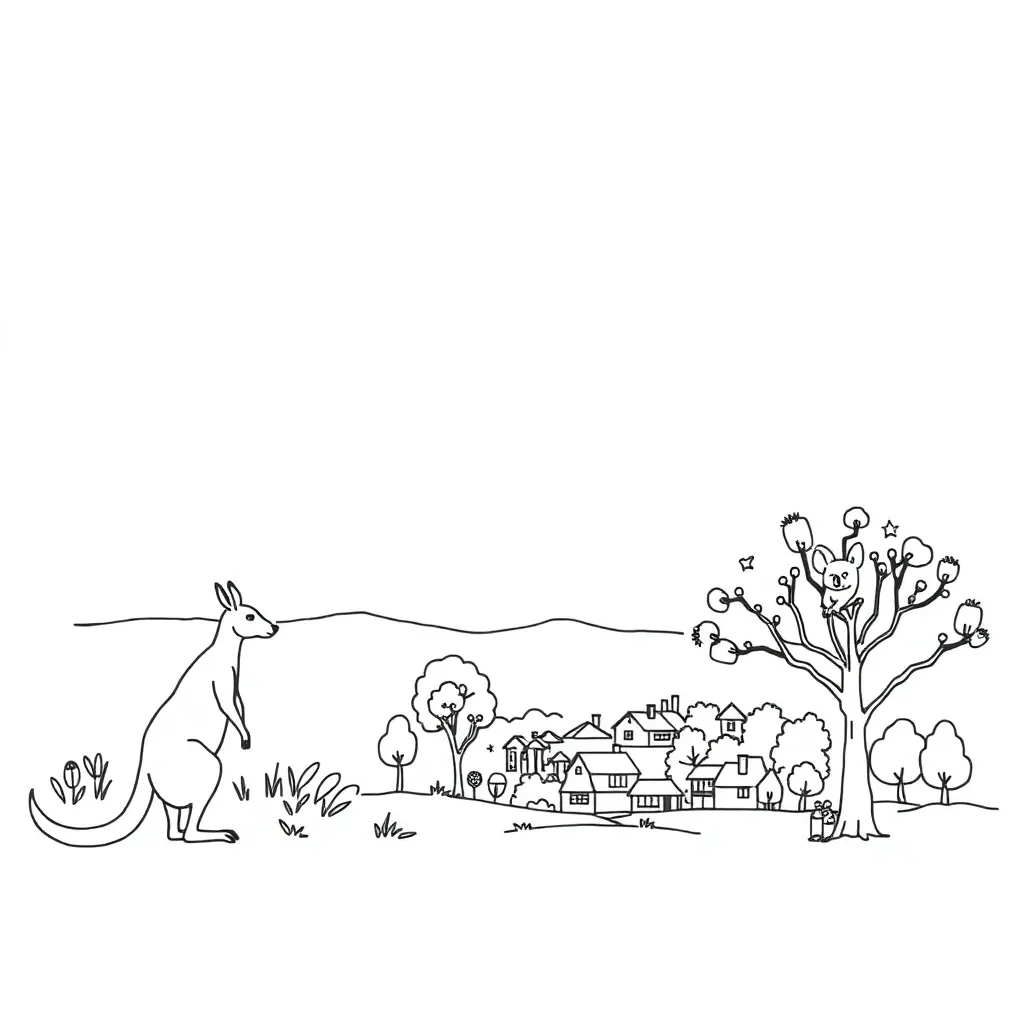
Below is an illustration of a typical Australian local environment. Label the common features such as eucalyptus trees, kangaroos, a billabong, native birds, and bushland.
🌏 Part 8: Recognising Diversity of Australian Communities
24. Which of the following is a common language spoken in Australia? (Select one)
Mandarin
Spanish
English
French
25. What is one tradition that is celebrated in many Australian communities?
26. Why is it important to respect different cultures in our community?
27. Name one way you can learn about other cultures in Australia.
28. Circle the activities that promote understanding and respect for diversity:
Attending cultural festivals
Ignoring different traditions
Learning a new language
Making fun of others