Endangered Animals Reading Text
A free, printable english worksheet ready for your classroom. Download instantly, print, and hand out to your students — no account needed.
Endangered Animals Reading Text
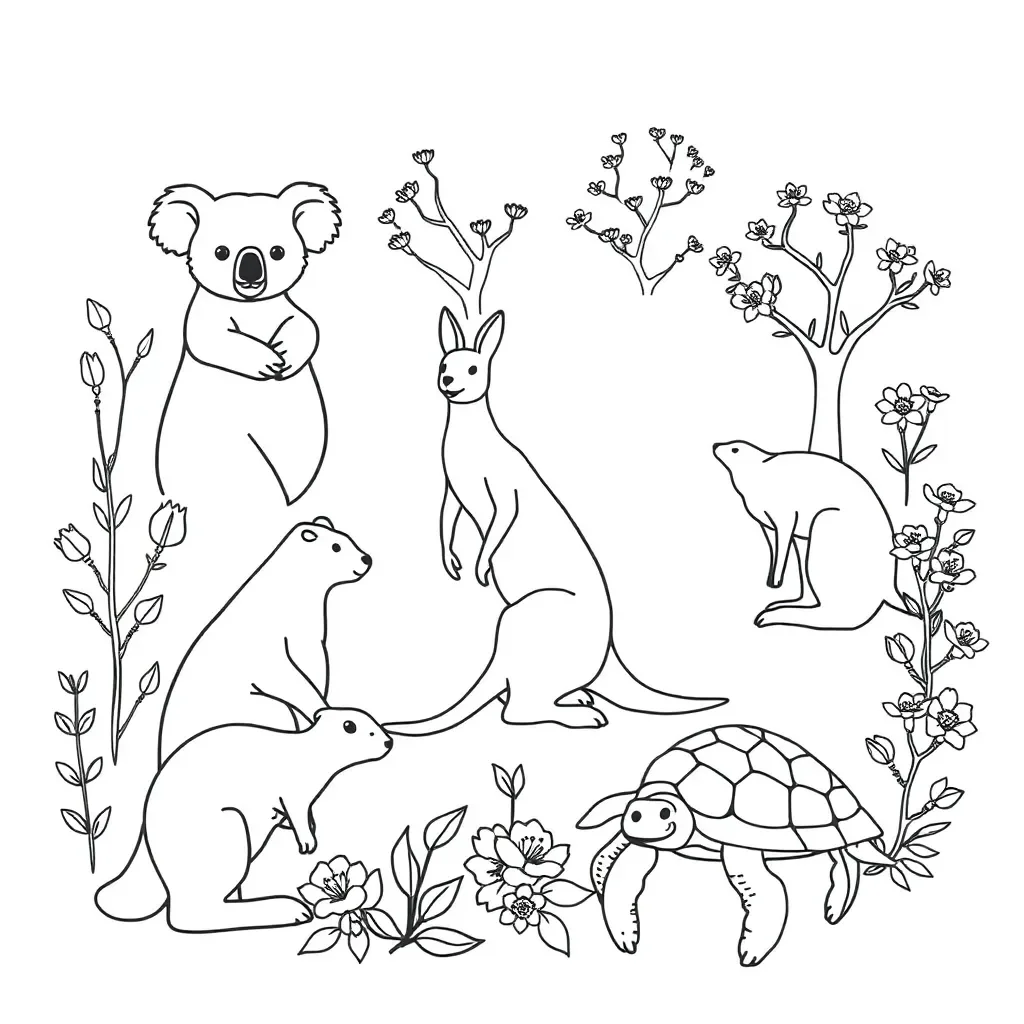
Endangered Animals: A Closer Look
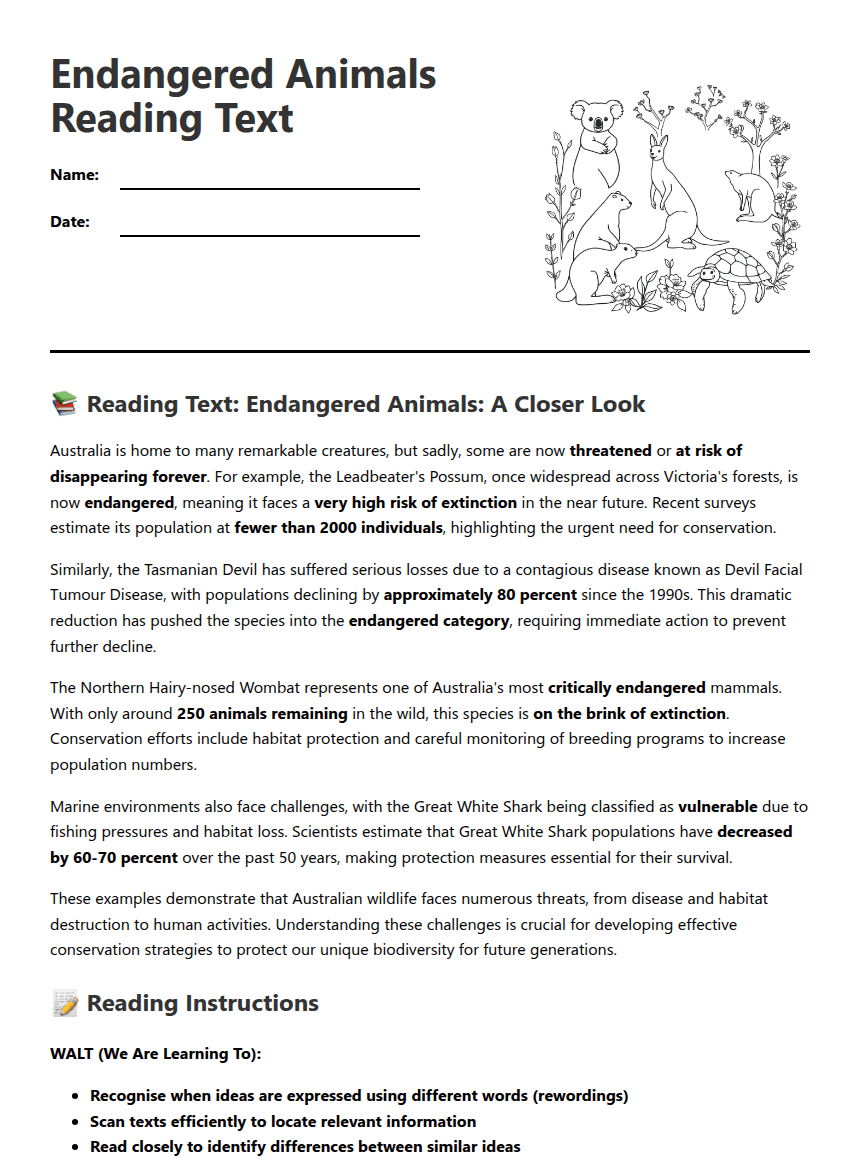
Australia is home to many remarkable creatures, but sadly, some are now threatened or at risk of disappearing forever. For example, the Leadbeater's Possum, once widespread across Victoria's forests, is now endangered, meaning it faces a very high risk of extinction in the near future. Recent surveys estimate its population at fewer than 2000 individuals, highlighting the urgent need for conservation.
The Leadbeater's Possum primarily inhabits the wet forests of the Central Highlands of Victoria. It is a nocturnal creature that feeds on a diet of eucalyptus leaves, nectar, and insects. The main threats to its survival include habitat destruction due to logging and bushfires. Conservation efforts focus on protecting its habitat and restoring areas that have been damaged.
Similarly, the Tasmanian Devil has suffered serious losses due to a contagious disease known as Devil Facial Tumour Disease, with populations declining by approximately 80 percent since the 1990s. This dramatic reduction has pushed the species into the endangered category, requiring immediate action to prevent further decline.
Tasmanian Devils are primarily scavengers, feeding on the remains of dead animals. They inhabit a variety of environments, including forests, grasslands, and coastal areas. The main threats they face include disease, habitat loss, and vehicle strikes. Conservation efforts include disease management programs and the establishment of insurance populations in wildlife sanctuaries.
The Northern Hairy-nosed Wombat represents one of Australia's most critically endangered mammals. With only around 250 animals remaining in the wild, this species is on the brink of extinction. Conservation efforts include habitat protection and careful monitoring of breeding programs to increase population numbers.
These wombats are primarily found in the grasslands of Queensland and are herbivorous, feeding on grasses and roots. The main threats to their survival include habitat destruction, competition with livestock, and disease. Conservation initiatives focus on habitat restoration and creating protected areas to ensure their survival.
Marine environments also face challenges, with the Great White Shark being classified as vulnerable due to fishing pressures and habitat loss. Scientists estimate that Great White Shark populations have decreased by 60-70 percent over the past 50 years, making protection measures essential for their survival.
Great White Sharks inhabit coastal waters and are apex predators, primarily feeding on seals, fish, and other marine animals. The main threats they face include overfishing, bycatch, and habitat degradation. Conservation efforts involve implementing fishing regulations, creating marine protected areas, and raising public awareness about their ecological importance.
These examples demonstrate that Australian wildlife faces numerous threats, from disease and habitat destruction to human activities. Understanding these challenges is crucial for developing effective conservation strategies to protect our unique biodiversity for future generations.
About This Worksheet
Free Download
No sign-up, no email, no paywall. Just download and print.
Print-Ready
Formatted for standard paper. Clean layout, easy to read.
AI-Generated
Created with Kuraplan's AI, designed for real classroom use.
For Teachers & Parents
Use in classrooms, for homework, tutoring, or homeschool.
Need a custom version of this worksheet?
Kuraplan's AI generates custom worksheets in seconds — differentiated for every learner, aligned to your curriculum.
Generate Custom Worksheets — Free