Ancient Mesopotamian Daily Life
A free social studies worksheet ready for your classroom. Open in Kuraplan to grab the print-ready PDF, customize it for your students, or generate a fresh version in seconds.

Ancient Mesopotamian Daily Life
📖 Part 1: Reading Passage
Daily Life in Ancient Mesopotamia
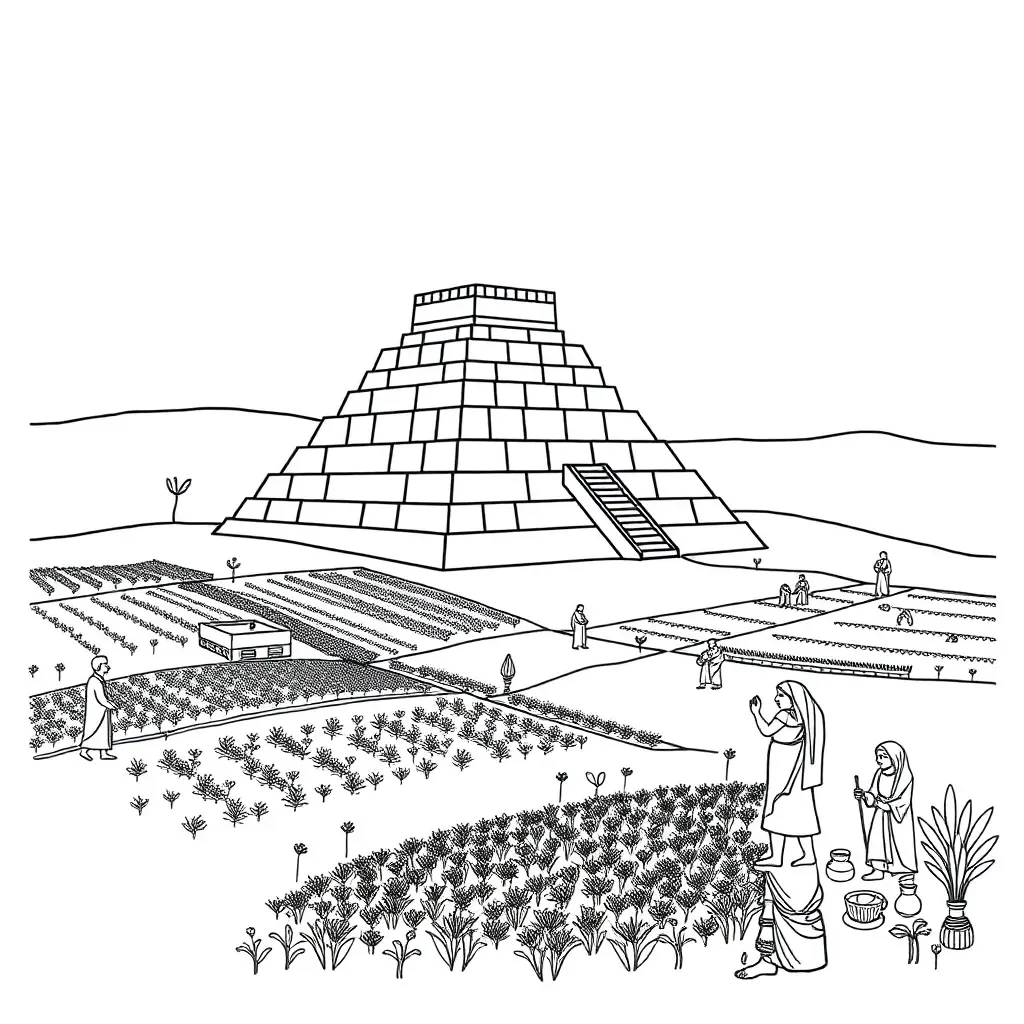
Life in Ancient Mesopotamia was organized around the fertile land between the Tigris and Euphrates rivers. Different groups of people had specific roles that kept their civilization running smoothly.
Farmers made up the largest part of the population. They worked in the fields growing barley, wheat, and vegetables. During flood season, farmers also helped build and repair irrigation canals that brought water to their crops. Most farmers lived in small mud-brick houses and worked land owned by wealthy landowners or temples.
Artisans were skilled workers who created goods that people needed and wanted. These craftspeople made pottery, jewelry, tools, and weapons. Artisans often worked in workshops in the city and sold their products in busy marketplaces. Some artisans became quite wealthy and respected in their communities.
Priests held great power in Mesopotamian society. They managed the ziggurats (massive temple towers) and performed religious ceremonies. Priests could read and write using cuneiform, the world's first writing system made of wedge-shaped marks on clay tablets. They also collected taxes, managed temple lands, and advised rulers on important decisions.
This social structure created a hierarchy where priests and wealthy landowners held the most power, followed by artisans and merchants, with farmers and laborers at the bottom.
🤔 Part 2: Reading Comprehension Questions
📝 Part 3: Vocabulary Matching
Instructions: Match each vocabulary word with its correct definition by writing the letter in the blank.
Vocabulary Words:
Definitions:
📋 Answer Key
Part 2: Reading Comprehension Answers
1. Tigris and Euphrates rivers
2. Farmers (third choice)
3. They could read and write using cuneiform, the world's first writing system
4. They created goods that people needed and wanted, such as pottery, jewelry, tools, and weapons. They worked in workshops and sold their products in marketplaces.
5. Most powerful: Priests and wealthy landowners; Middle: Artisans and merchants; Least powerful: Farmers and laborers
Part 3: Vocabulary Matching Answers
1. E - Artisan
2. C - Ziggurat
3. B - Cuneiform
4. J - Irrigation
5. G - Hierarchy
6. D - Fertile
7. F - Civilization
8. I - Scribe
9. H - Surplus
10. A - Barley
About This Worksheet
Free in Kuraplan
Sign up free, grab the PDF, and customize it for your class.
Print-Ready
Formatted for standard paper. Clean layout, easy to read.
AI-Generated
Created with Kuraplan's AI, designed for real classroom use.
For Teachers & Parents
Use in classrooms, for homework, tutoring, or homeschool.
Need a custom version of this worksheet?
Kuraplan's AI generates custom worksheets in seconds — differentiated for every learner, aligned to your curriculum.
Generate Custom Worksheets — Free