
Tracking Arguments & Rhetoric Mastery
Grade 7 English Language Arts Understanding Arguments and Persuasive Techniques 5-Day Learning Journey

Learning Objectives
Track the development of arguments and analyze reasoning types Identify and explain rhetorical devices like irony and rhetorical questions Use context clues to understand word meanings Evaluate the effectiveness of persuasive techniques

What is an Argument?
A claim or position supported by evidence Uses reasoning to convince readers Found in essays, speeches, advertisements, and articles Not just disagreements - structured persuasion
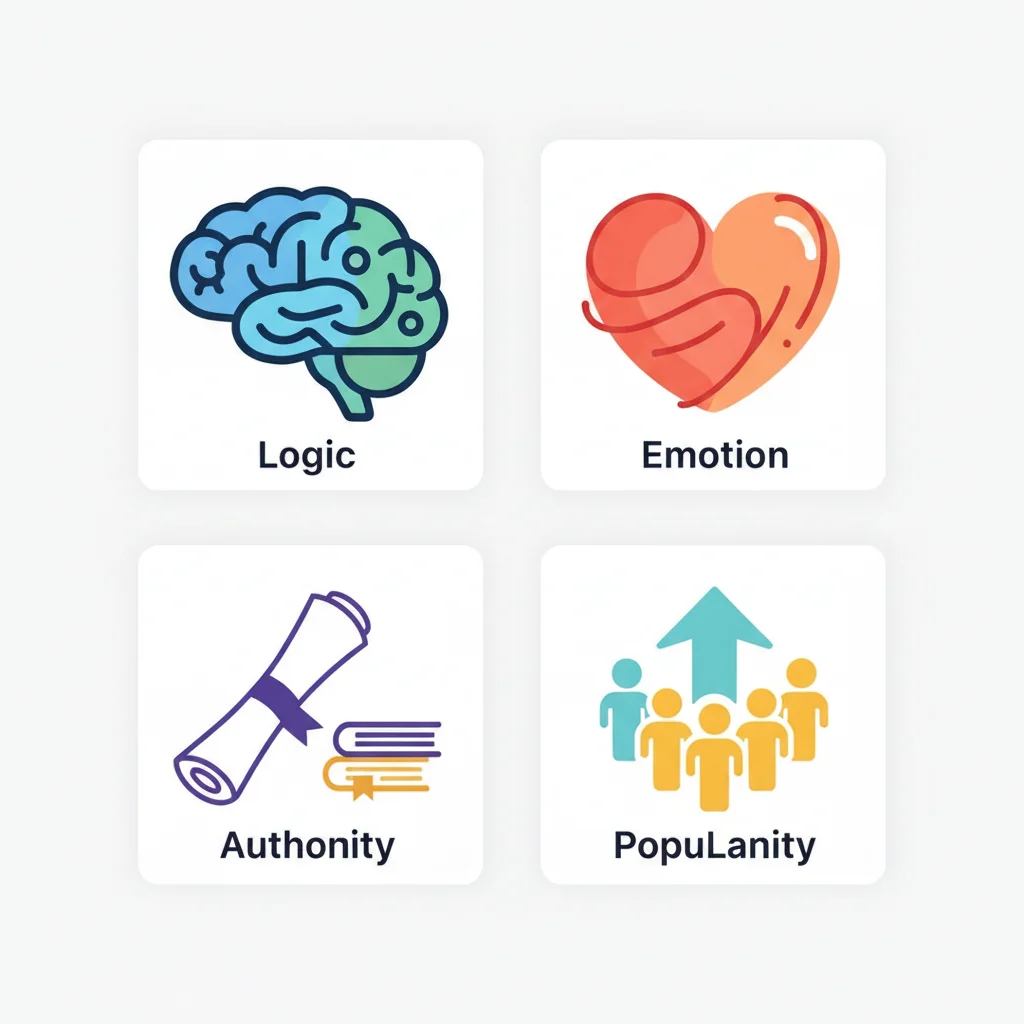
Types of Reasoning
{"left":"Appeal to Logic (Logos): Facts, statistics, logical connections\nAppeal to Emotion (Pathos): Stories, vivid language, emotional examples","right":"Appeal to Authority (Ethos): Expert opinions, credible sources\nAppeal to Popularity: What most people think or do"}

Rhetorical Devices
Irony: Saying one thing but meaning the opposite Rhetorical Questions: Questions that don't need answers Used to engage readers and strengthen arguments Help create tone and emphasize points

Bell Ringer: Last Lesson Link
Think about a recent argument you read or heard Write one sentence summarizing the main claim Identify one piece of evidence that supported it Share with a partner

Our Focus Text: 'Reality TV and Society'
Examines the impact of reality television Contains multiple types of reasoning Includes rhetorical devices like irony Perfect for practicing argument tracking

Discussion Question
Is reality TV good or bad for society? What evidence would you need to answer this? How might different people argue different sides?

Context Clues Strategy
Definition clues: Author directly explains the word Synonym clues: Similar words nearby Antonym clues: Opposite words that contrast Example clues: Specific instances that illustrate meaning

Argument Detective Worksheet
Highlight two types of reasoning in the passage Explain why each type is effective or not Find one rhetorical device and explain its purpose Use context clues for three vocabulary words
Identifying Fallacies
Appeal to Popularity: 'Everyone else is doing it' False Cause: Assuming one thing caused another without proof Weak reasoning that undermines arguments Important to recognize in media and advertising

Collaboration: Reasoning Roundtable
Work in groups of 3-4 students Create an argument map together Identify fallacies and rhetorical devices Complete vocabulary chart as a team
3 more slides available after you open the deck.
Download all 15 slides