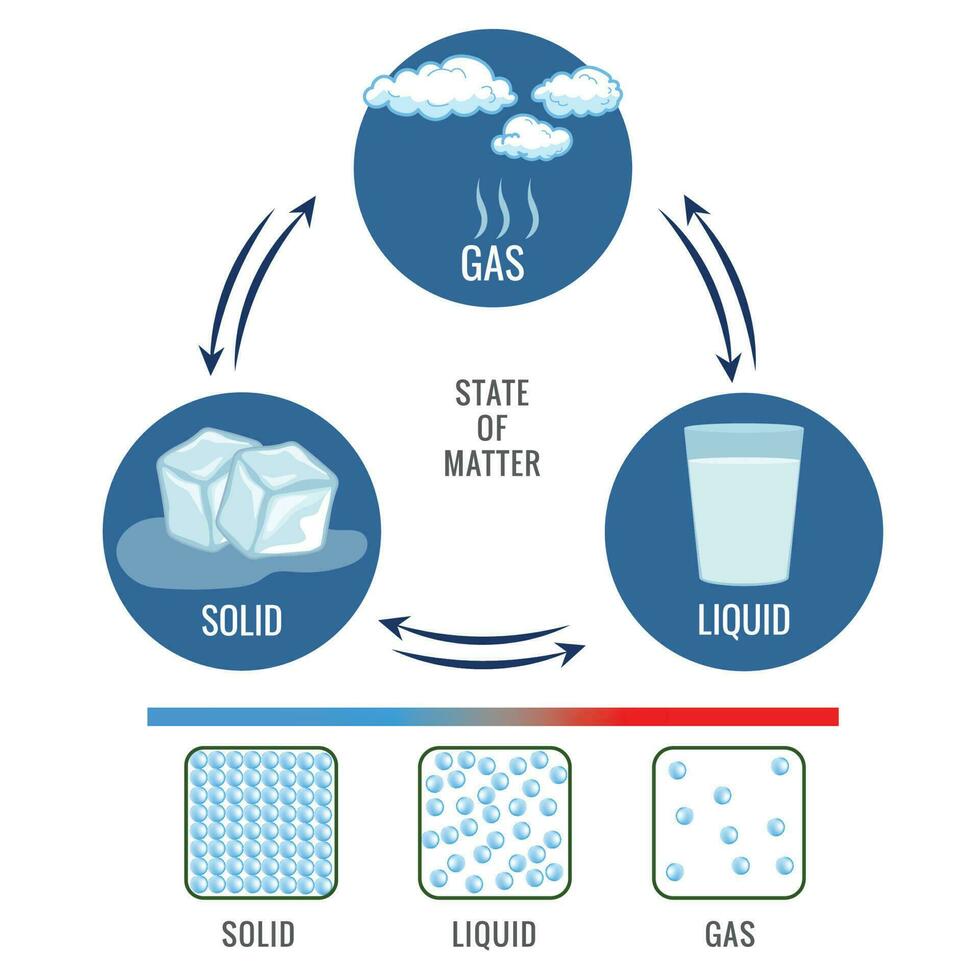
States of Matter: Particles in Motion
Understanding how particles behave in solids, liquids, and gases Cambridge IGCSE Science - Grade 9

What is Matter?
Think about everything around you right now What do a desk, water, and the air you breathe have in common? Share your ideas with the class

The Three States of Matter
Solid - definite shape and volume Liquid - definite volume, takes shape of container Gas - no definite shape or volume All made of tiny moving particles
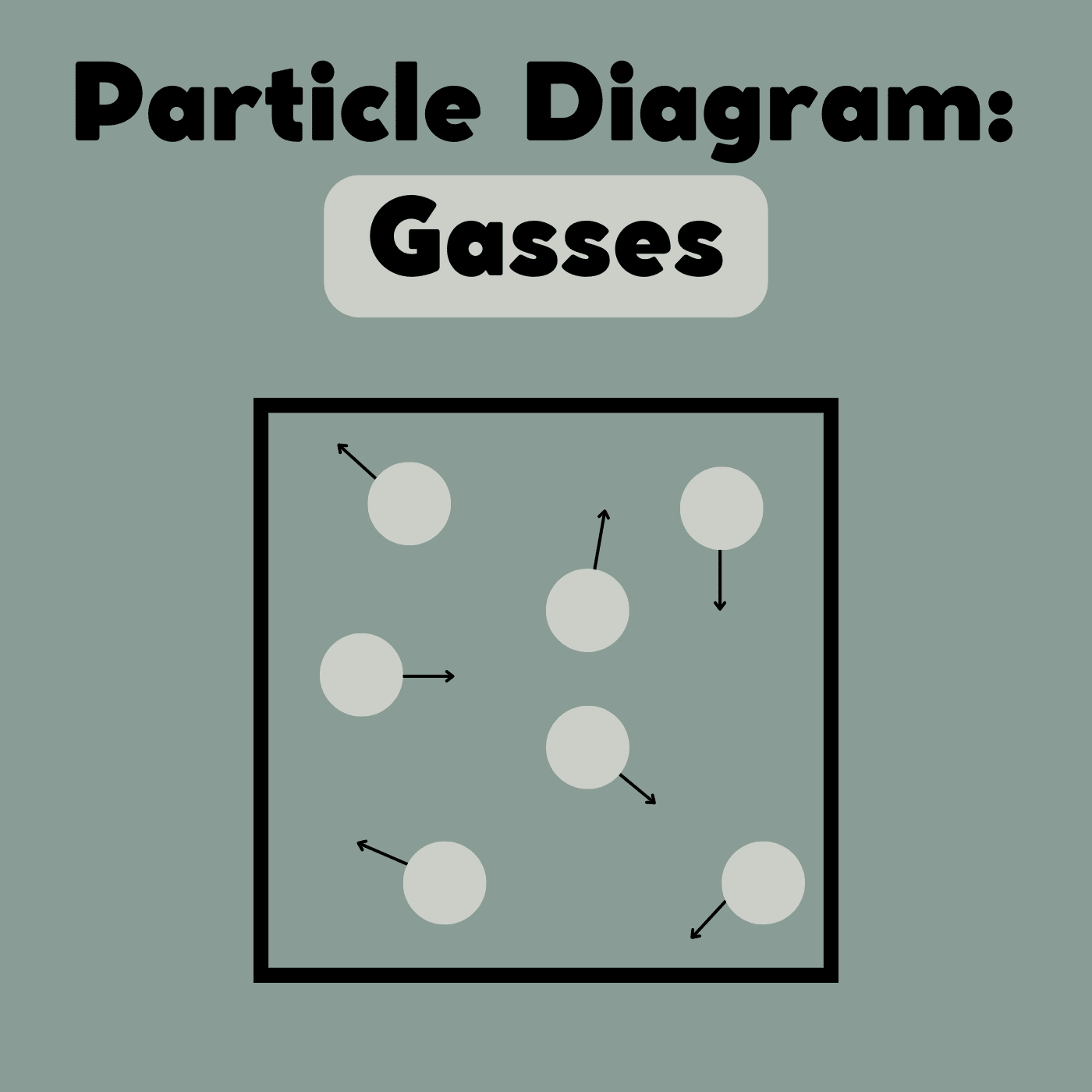
Particle Arrangement and Movement
{"left":"SOLIDS: Particles vibrate in fixed positions, closely packed in orderly arrangement\nLIQUIDS: Particles slide past each other, close together but disordered","right":"GASES: Particles move freely at high speed, far apart and random"}
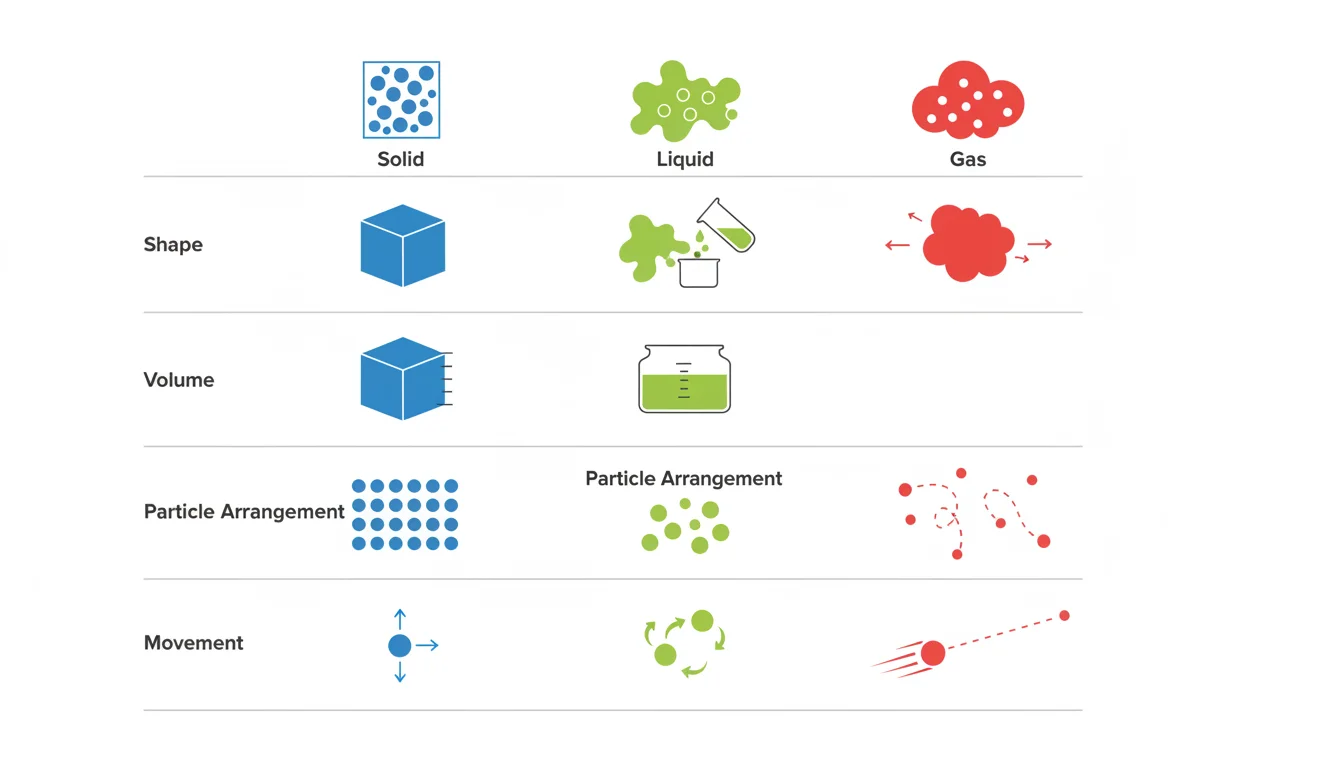
Properties Comparison Table

Hands-On Investigation
Group A: Observe ice cubes - feel and examine the solid state Group B: Pour water between containers - observe liquid behavior Group C: Inflate balloons - explore gas properties Record observations about particle movement and properties

Think-Pair-Share Challenge
Why can you compress a gas but not a solid or liquid? Think individually for 2 minutes Discuss with your partner for 3 minutes Share your explanation with the class using particle ideas
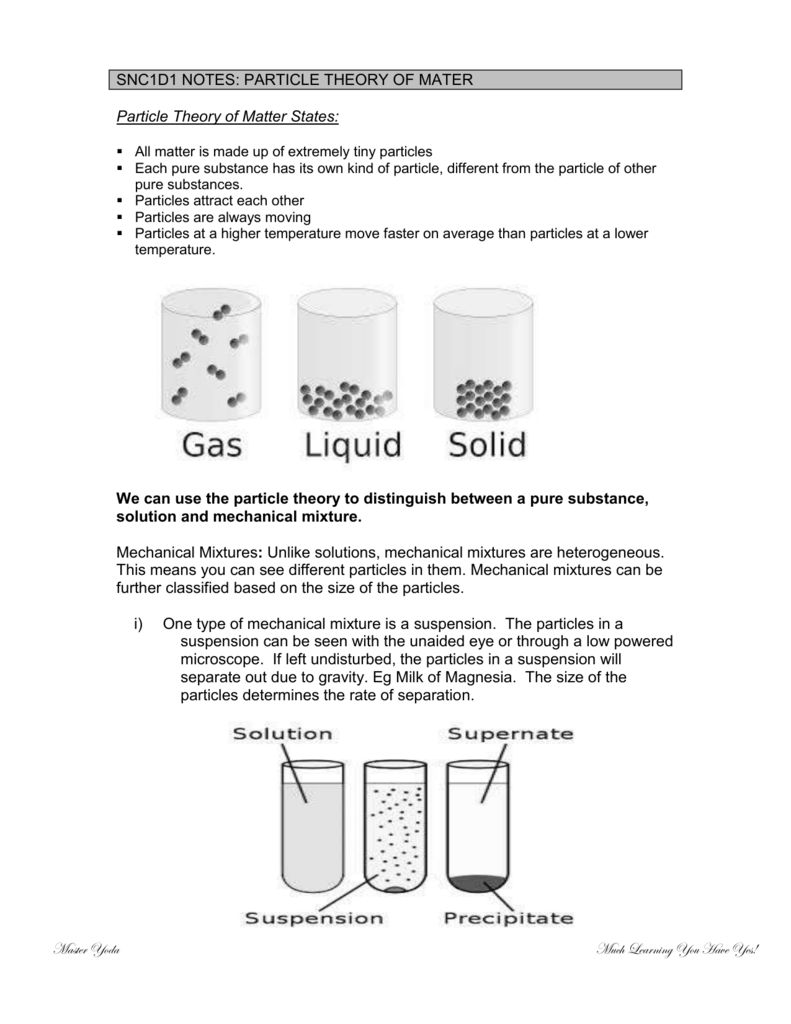
Key Takeaways
All matter is made of tiny particles in constant motion Particle arrangement determines the properties of each state Solids have fixed shape and volume due to rigid particle structure Liquids flow because particles can slide past each other Gases expand to fill containers because particles move freely Understanding particles helps explain everyday phenomena