
Solving Linear Equations Made Easy
A step-by-step guide for Grade 7 students Master the fundamentals of algebra

What is a Linear Equation?
An equation with variables raised to the first power only Forms a straight line when graphed Examples: x + 5 = 12, 2y - 3 = 7 No squared terms, cubes, or other powers
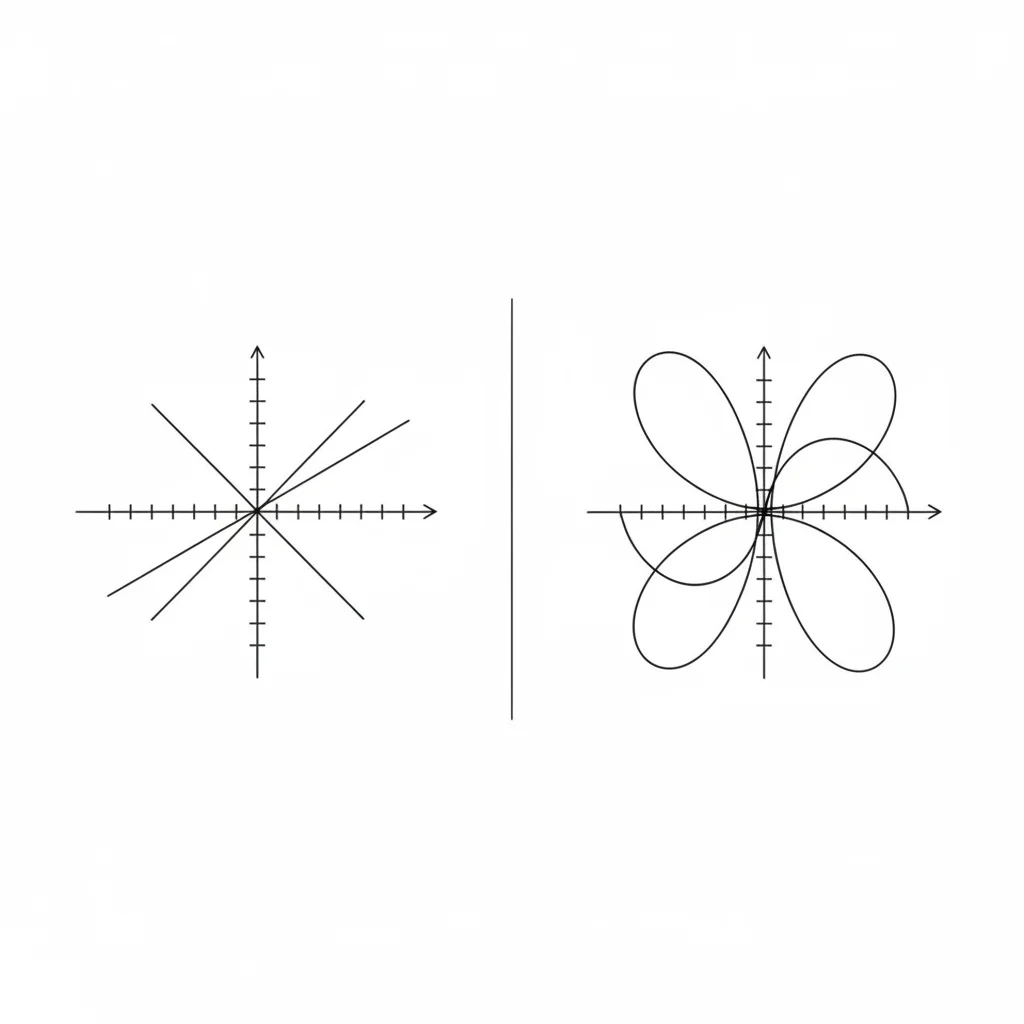
Linear vs Non-Linear Equations
{"left":"Linear: x + 3 = 8\nLinear: 2y - 5 = 11\nLinear: 3a + 7 = 16","right":"Non-Linear: x² + 2 = 10\nNon-Linear: 3y³ - 1 = 26\nNon-Linear: 2x² + 5x = 12"}

The Golden Rule of Equations
Whatever you do to one side, do to the other This keeps the equation balanced Like a balance scale - both sides must be equal This is the foundation of solving equations
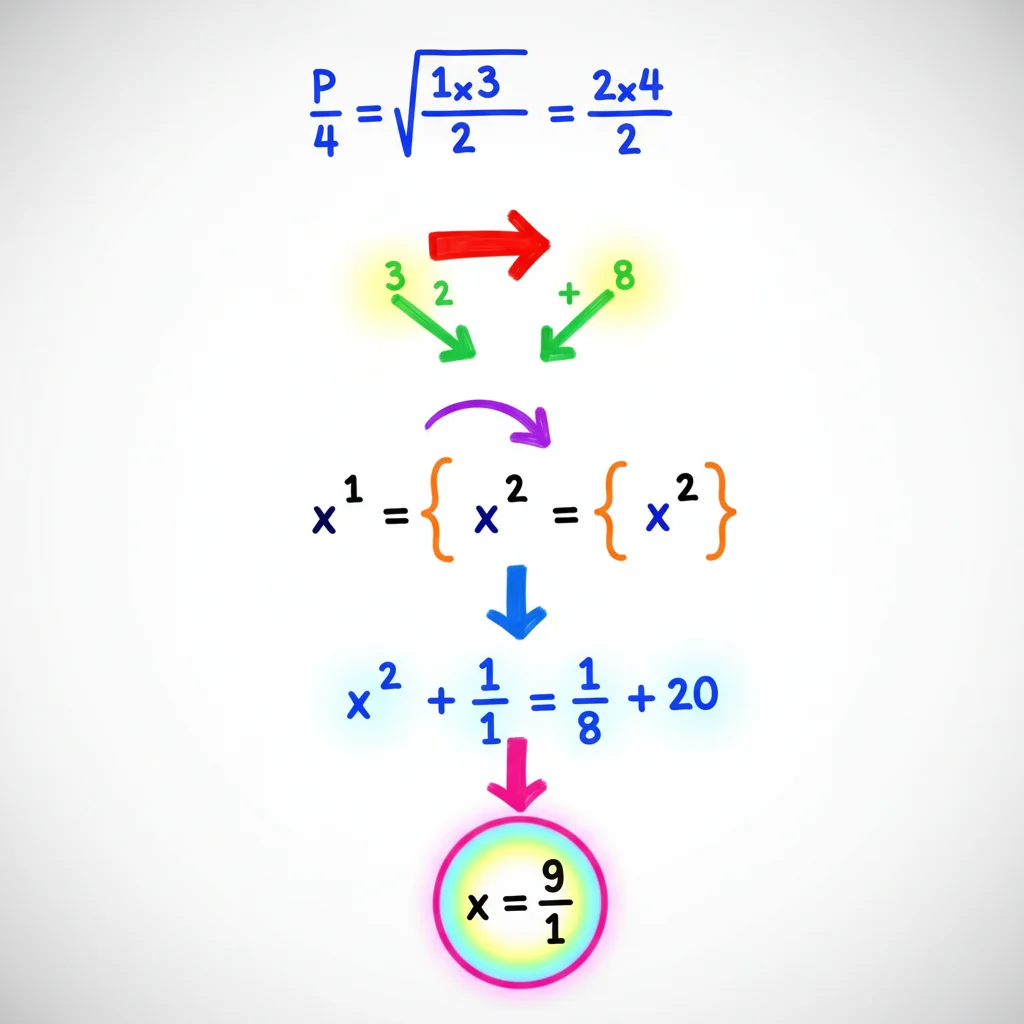
Practice: Keep It Balanced!
Start with: x + 4 = 10 Subtract 4 from both sides x + 4 - 4 = 10 - 4 Result: x = 6
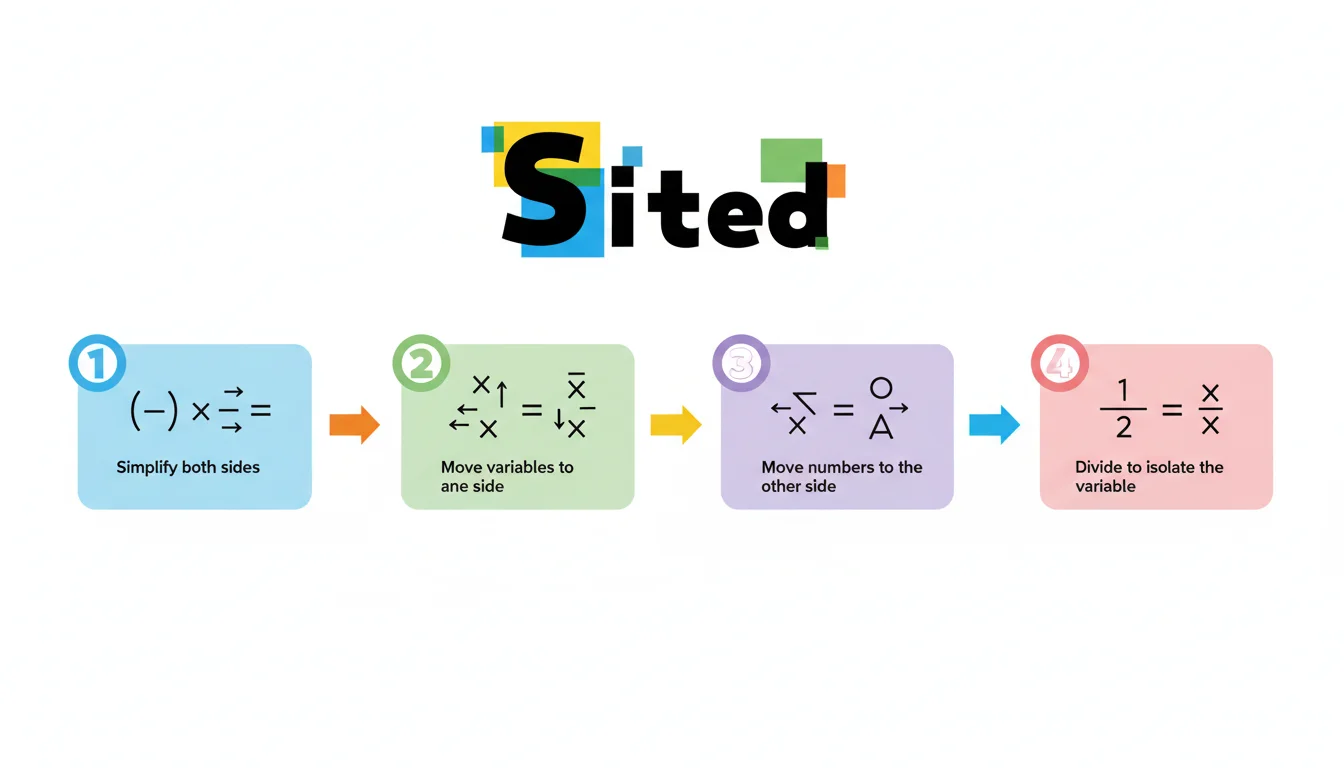
The Four-Step Method
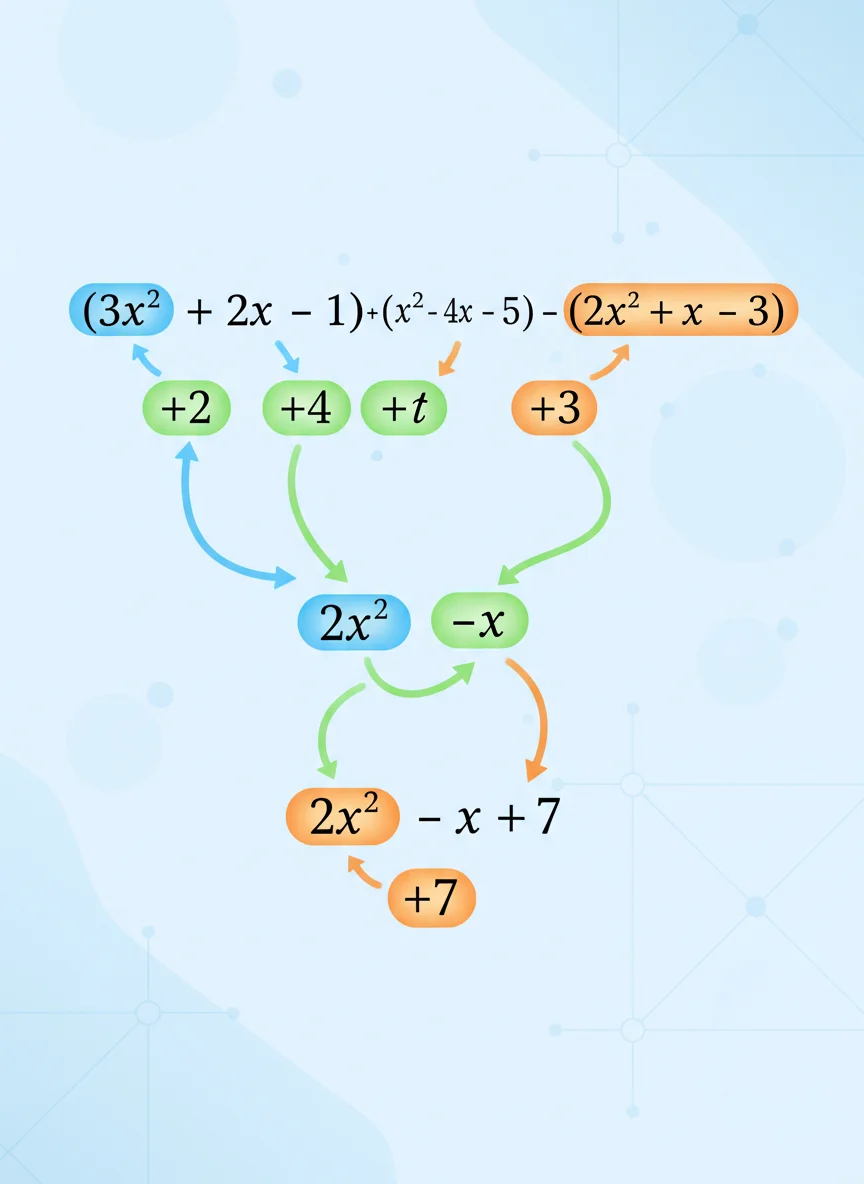
Step 1: Simplify Both Sides
Combine like terms on each side Example: 3x + 2x - 1 = 4 + 5 Becomes: 5x - 1 = 9 Clean up before solving

Let's Solve Together!
Solve: 2x + 3 = 11 Step 1: Already simplified Step 2: Variable is already isolated on left Step 3: Subtract 3 from both sides: 2x = 8 Step 4: Divide both sides by 2: x = 4

Check Your Understanding
Solve: 3x - 5 = 16 What is the value of x? Use the four-step method Check your answer!

Key Takeaways
Linear equations have variables to the first power only Always do the same operation to both sides Follow the four-step method systematically Check your answer by substituting back Practice makes perfect!