
Smart Spending Choices: Grade 1 Guide
Teacher Summary Presentation Key Teaching Points & Strategies Assessment Tips & Reflection
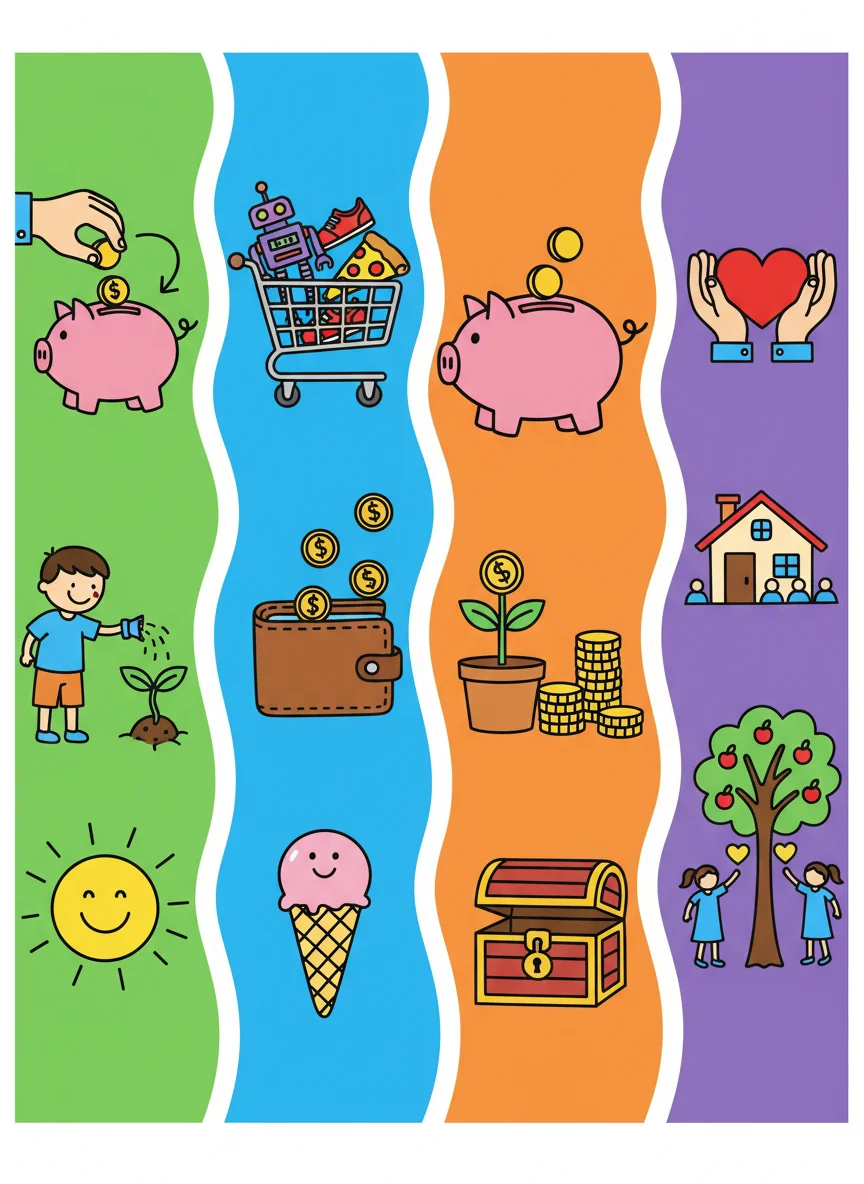
Learning Objectives & Success Criteria
I can explain how to make choices about spending money I can identify examples of earning, spending, saving, and donating I can fill out a chart with at least three examples from video and song Success: Students complete chart with 3+ correct examples Success: Active participation in discussions about money choices

Differentiation Strategies for Diverse Learners
{"left":"Guided Reading: Small group support during lyric reading to scaffold comprehension\nDyslexia-Friendly Text: Simplified and clearly spaced lyrics to improve readability\nVisual Supports: Pictures or icons next to chart headings for better understanding","right":"Oral Responses: Allow verbal completion of charts if writing is challenging\nExtension Activities: Reflection worksheets for advanced learners about personal spending choices\nMultiple Modalities: Video, song, discussion, and hands-on chart completion"}

Assessment Tips & Observation Points
Informal Assessment: Monitor discussion participation and understanding Chart Review: Check for 3+ correct examples in earning/spending/saving/donating Guided Reading: Observe ability to connect lyrics to money concepts Extension Work: Review reflection writing for advanced comprehension Look for: Student engagement, correct vocabulary use, real-world connections

Post-Lesson Reflection Questions
Did students meet success criteria with 3+ chart examples? Which students needed additional guided reading support? How effective were the dyslexia-friendly lyrics? What adjustments would improve future money management lessons? Were students able to make real-world connections to their own experiences?