
Population Inference: Making Predictions from Samples
Understanding how to make predictions about entire populations using sample data Grade 7 Statistics 45-minute lesson
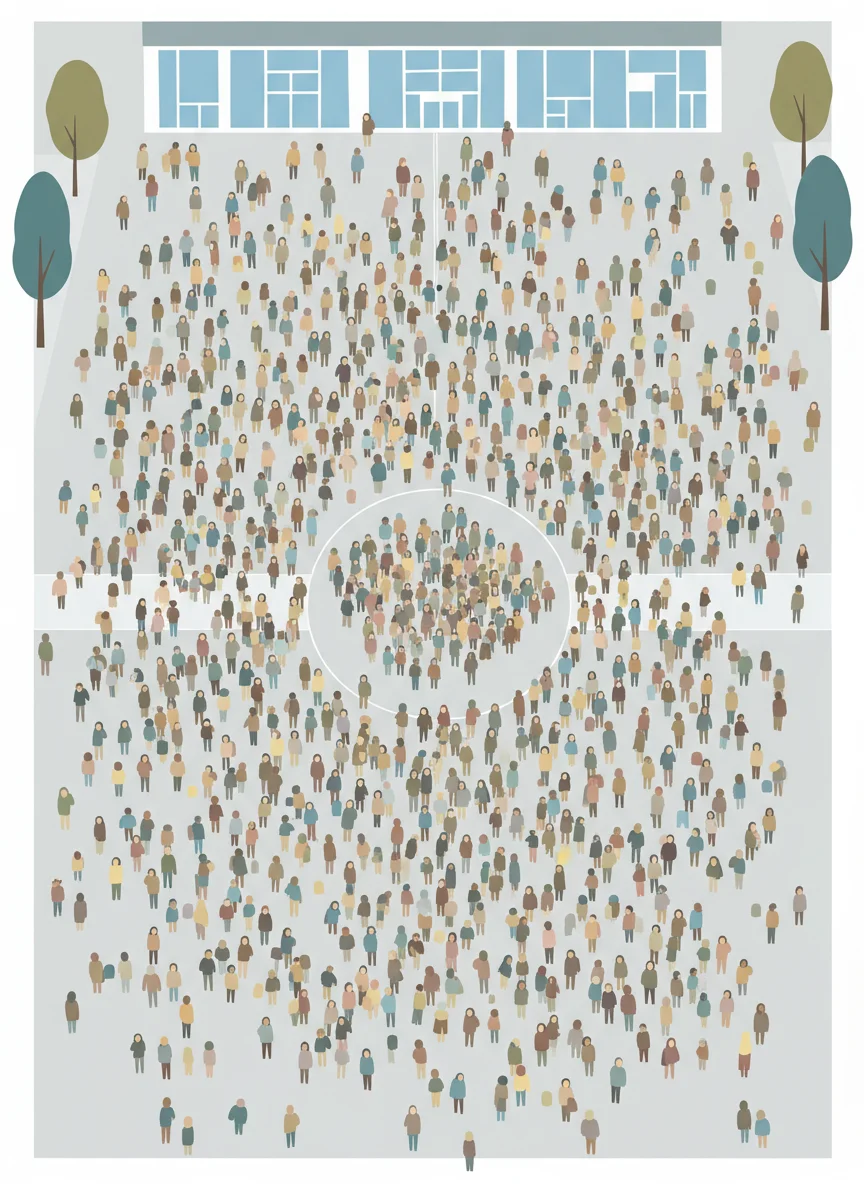
What is a Population?
A population is the entire group we want to study Examples: All 7th graders in your school, all teenagers in the US Usually too large or expensive to study everyone We need a way to learn about the whole group

What is a Sample?
A sample is a smaller group chosen from the population Must represent the larger population fairly Examples: 50 students from your grade, 100 teenagers from different states Easier and cheaper to study than the whole population

Sampling Activity: Favorite Pizza Toppings
Survey 5 classmates about their favorite pizza topping Record their answers Predict what the whole class prefers Compare your prediction with the actual class results
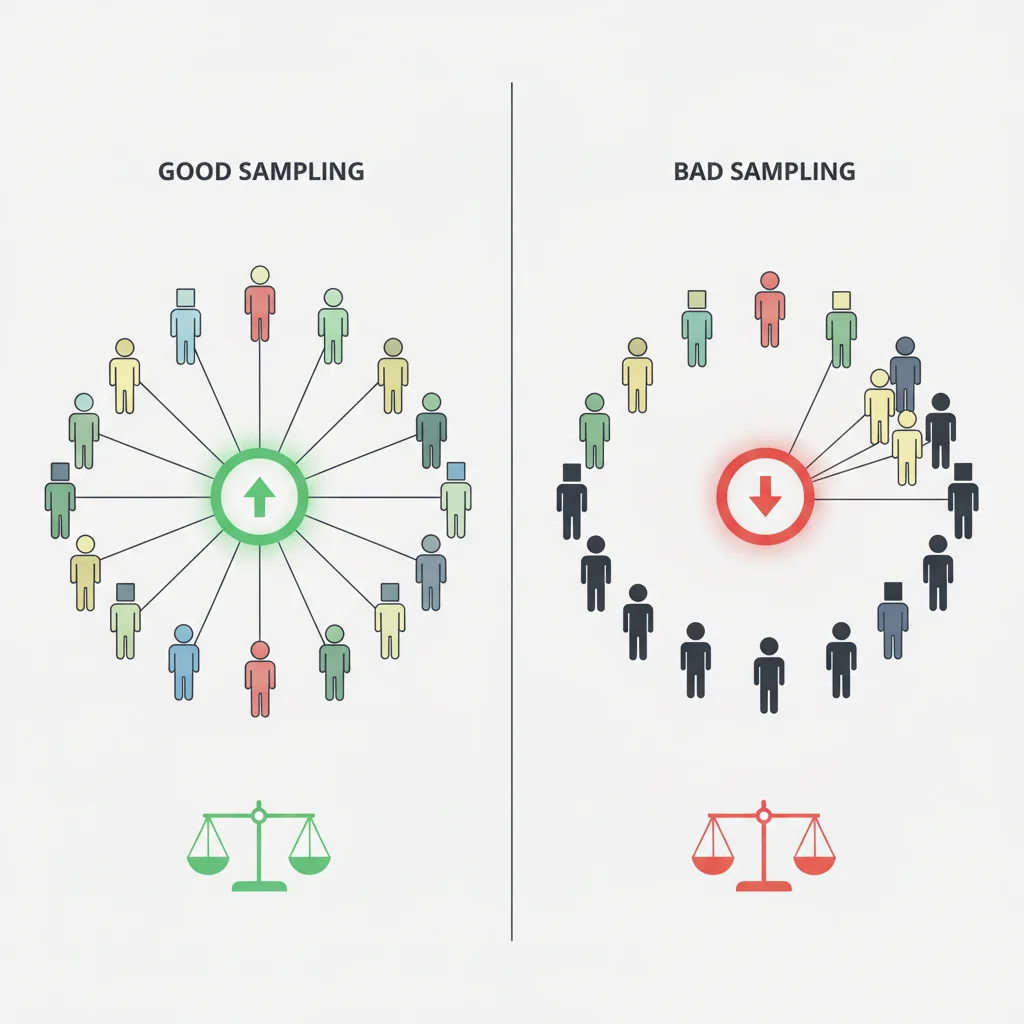
Good Sample vs. Bad Sample
{"left":"Representative of the population\nRandom selection\nAppropriate size\nNo bias in selection","right":"Not representative\nBiased selection\nToo small\nExcludes important groups"}

Think About It
You want to know the favorite subject of all 7th graders in your school Which sample would give you better results? A) Survey 20 students from your math class B) Survey 20 students randomly chosen from all 7th grade classes
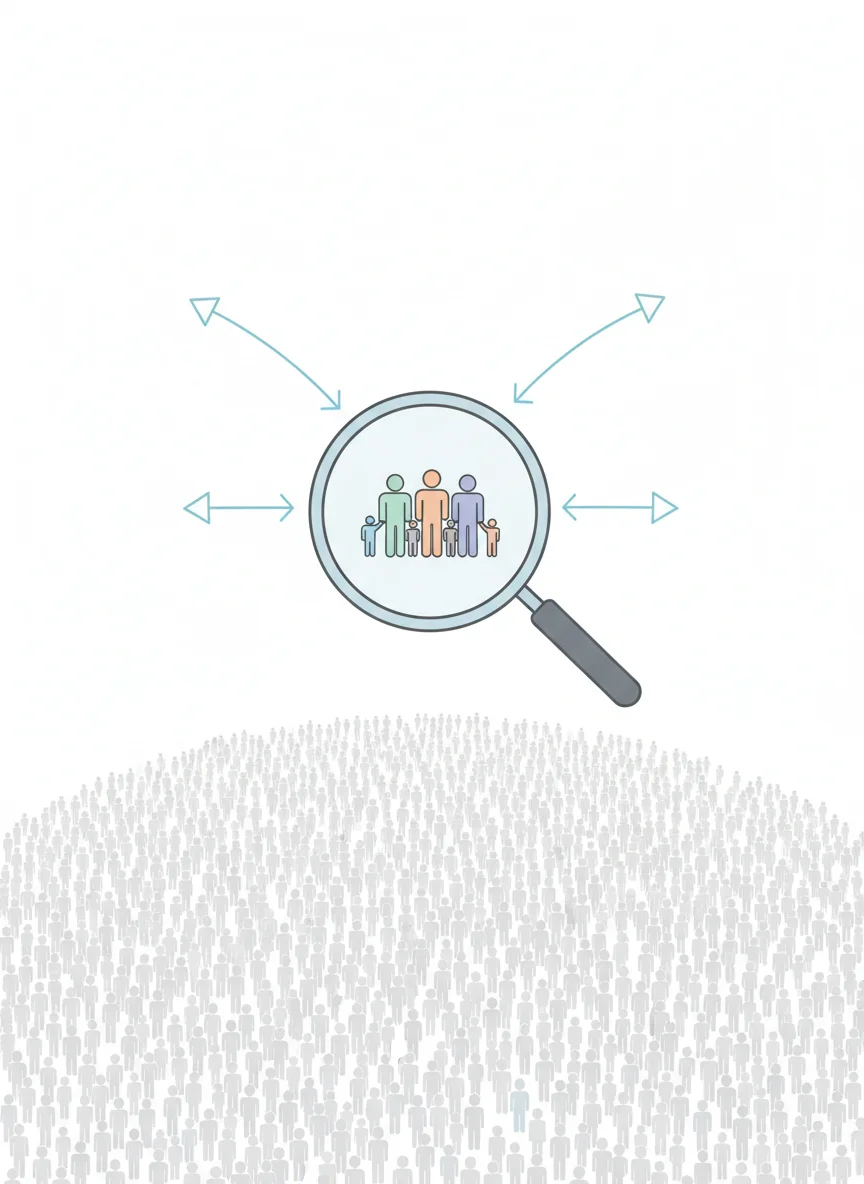
Making Inferences from Samples
Use sample data to make educated guesses about the population The larger and more random the sample, the better the inference Always include uncertainty - we can't be 100% sure Express results as estimates or ranges

Real-World Example: Election Polling

Practice Problem: School Lunch Survey
A sample of 40 students shows 25 prefer pizza over salad What can we infer about all 800 students in the school? Calculate: 25/40 = 62.5% prefer pizza Estimate: About 500 students (62.5% of 800) prefer pizza

Key Takeaway
'A good sample is like a mirror that reflects the whole population. The clearer the mirror, the better we can see the big picture.'