
Interval Training Essentials for Beginners
Grade 10 Health Education Building Fitness Through Smart Training

What is Interval Training?
Alternating periods of high and low intensity exercise Structured work-to-rest ratios More efficient than steady-state cardio Improves both aerobic and anaerobic fitness

Benefits vs. Traditional Cardio
{"left":"Burns more calories in less time\nImproves cardiovascular health faster\nBuilds both endurance and power\nPrevents workout boredom","right":"Requires 20-30 minutes vs. 45-60 minutes\nMaintains steady, moderate pace\nBuilds endurance primarily\nCan become repetitive over time"}
Think About It
Which would be more challenging: running at a steady pace for 30 minutes, or alternating between sprinting for 30 seconds and walking for 60 seconds, repeated 10 times? Why do you think the interval method might be more effective for fitness gains?
Key Components of Interval Training
Work Interval: High-intensity exercise period Rest Interval: Low-intensity recovery period Work-to-Rest Ratio: Relationship between work and rest Total Duration: Complete workout time
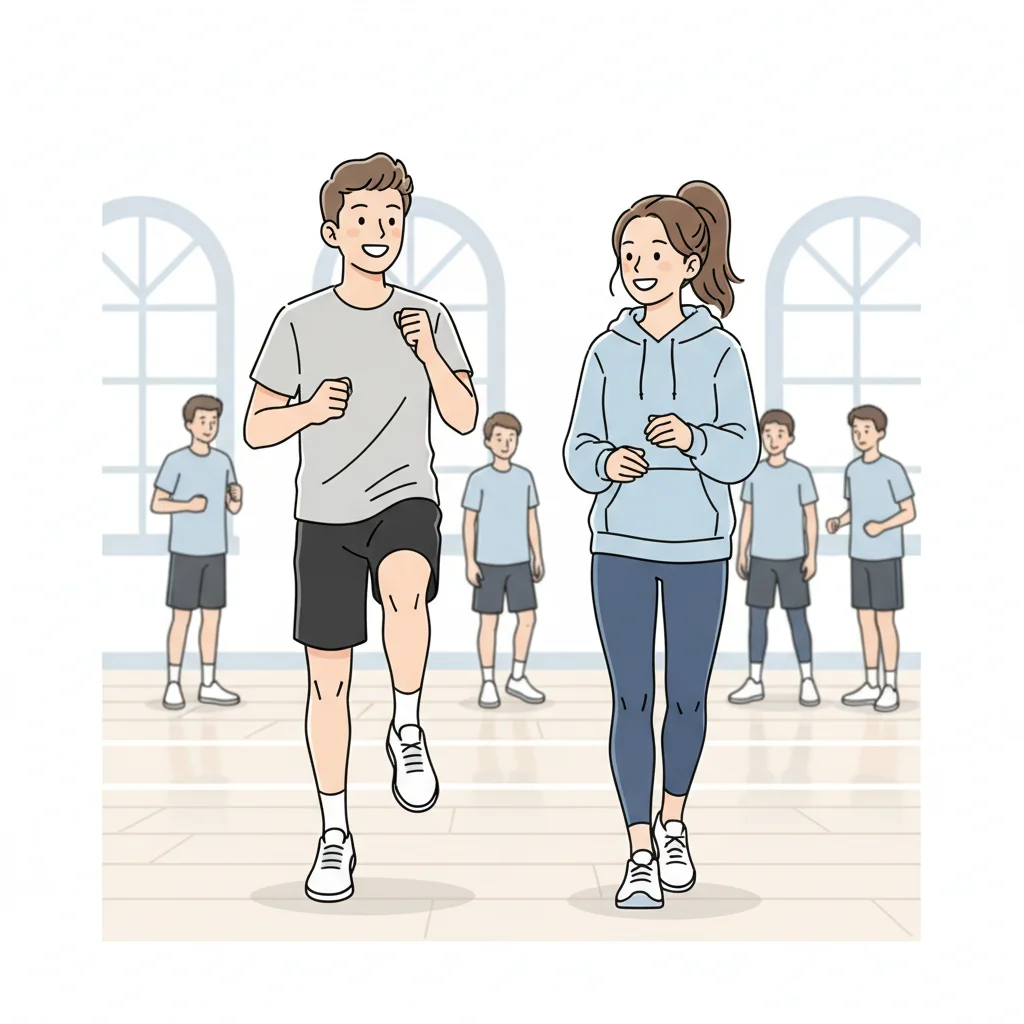
Try It: Basic Interval Structure
Partner up and try this simple interval: 30 seconds: March in place with high knees 60 seconds: Walk slowly around your space Repeat 3 times Pay attention to how your heart rate changes
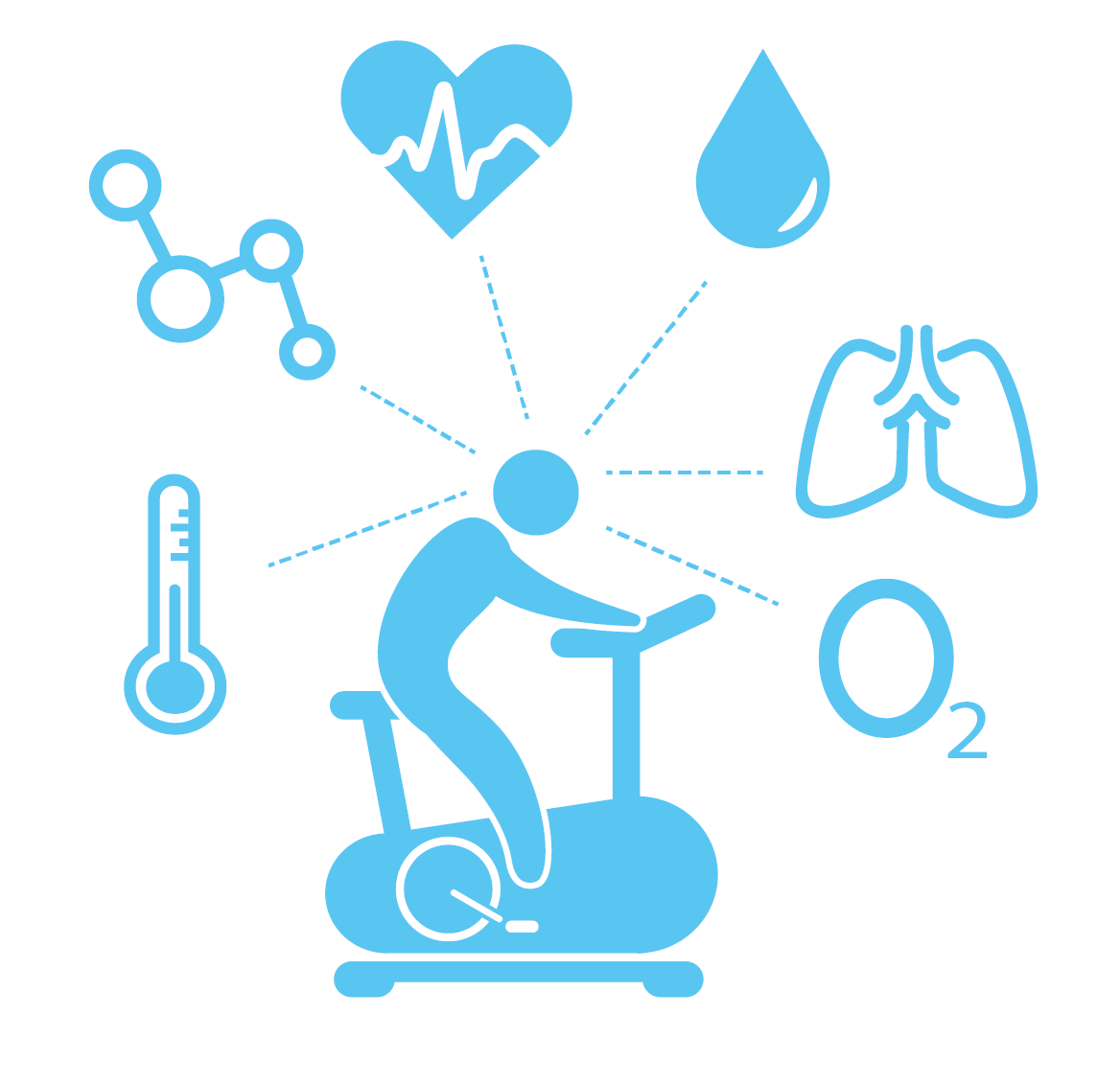
Why Intervals Work: The Science
Creates 'EPOC' - Excess Post-Exercise Oxygen Consumption Body continues burning calories after workout Improves VO2 max more effectively than steady cardio Challenges multiple energy systems simultaneously
Remember This
"Interval training is not about pushing yourself to exhaustion - it's about finding the right balance between challenge and recovery that allows your body to adapt and grow stronger."