
Waves Moving Sand Along Coasts
Understanding how waves transport sediment Exploring longshore drift Year 4 Geography

What Are Waves?
Waves are moving water They are caused by wind blowing over the sea Waves carry energy as they move They can pick up and move sand and pebbles
How Waves Approach the Shore

Wave Movement Activity
Look at the diagram on your worksheet Draw arrows to show which way the waves are moving Circle whether the waves are coming straight or at an angle Discuss with your partner what you notice

What Is Longshore Drift?
When waves hit the beach at an angle They push sand and pebbles sideways along the coast This movement is called longshore drift It happens slowly over time
The Longshore Drift Process
{"left":"Waves hit the beach at an angle\nSand and pebbles are pushed up the beach\nWater flows straight back down","right":"Sand moves sideways along the coast\nThis creates a zigzag pattern\nThe process repeats with each wave"}
Think and Discuss
Why do you think longshore drift is important? What might happen to beaches without this process? Can you think of any problems it might cause?

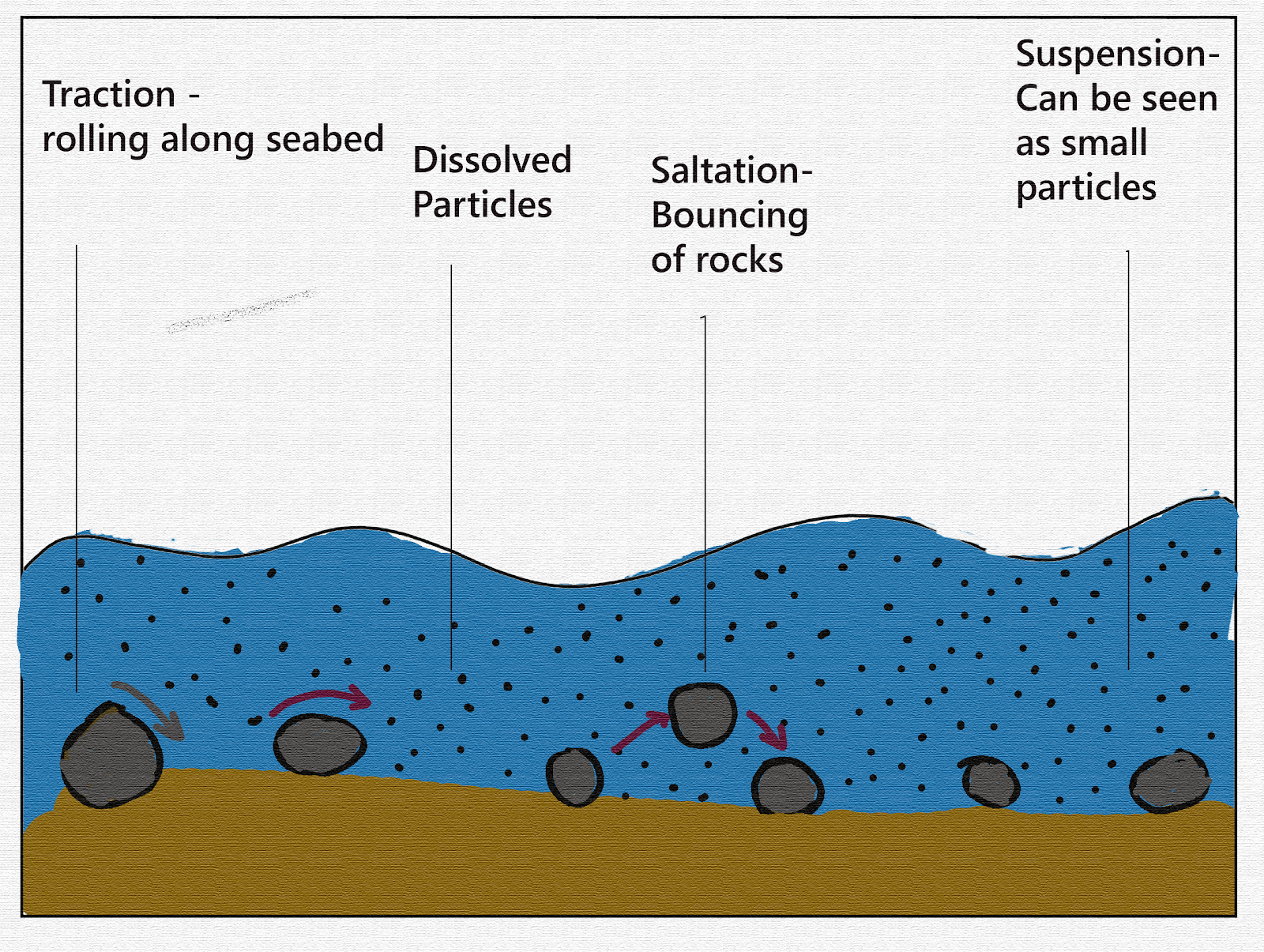
Types of Coastal Transportation
Suspension - tiny particles float in water Saltation - small pebbles bounce along Traction - large rocks roll along the seabed Solution - minerals dissolve in water
Matching Activity
Complete the matching exercise on your worksheet Match each transport type to its description Draw a simple picture for each type Check your answers with a friend
Remember This!
Waves are like nature's bulldozers - they never stop moving sand and shaping our coasts!