
Surfing Waves and Coastal Geography
Understanding Wave Formation Coastal Processes and Landforms The Science Behind Perfect Surf
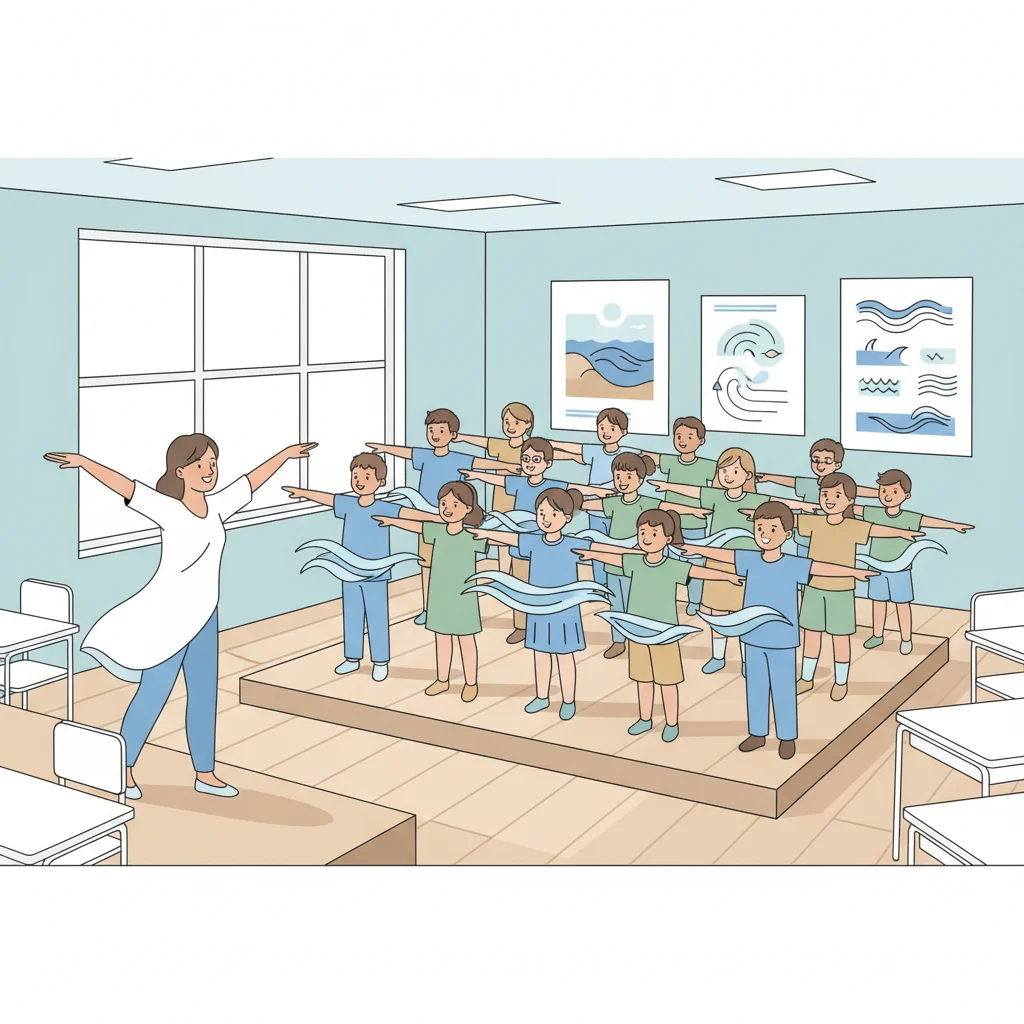
Wave Movement Warm-Up
Stand up and move your arms like ocean waves Feel the rhythm of wave motion Think about what creates waves as you move Imagine the energy traveling through water

What Makes Waves?
Wind blowing across water surface creates friction Energy transfers from wind to water Longer wind duration = bigger waves Wind speed and distance (fetch) matter Perfect for surfing when conditions align

Types of Waves for Surfing

Mini Wave Experiment
Use water tray and create 'wind' with fan Observe how waves form and travel Try different wind speeds Notice wave height and frequency changes Connect observations to real ocean waves

Coastal Landforms Created by Waves
{"left":"Cliffs - waves erode rock faces through hydraulic action\nBeaches - waves deposit sand and pebbles\nCaves - waves exploit weaknesses in rock","right":"Arches - caves meet from both sides\nStacks - isolated pillars when arches collapse\nHeadlands - resistant rock jutting into sea"}

Think About It
Why do you think some coastlines are better for surfing than others? What combination of factors creates the perfect wave? How might climate change affect wave patterns?

UK's Best Surf Spots
Cornwall - Newquay and Fistral Beach Devon - Croyde and Woolacombe Wales - Gower Peninsula Scotland - Thurso East Each location has unique wave characteristics Geography determines wave quality
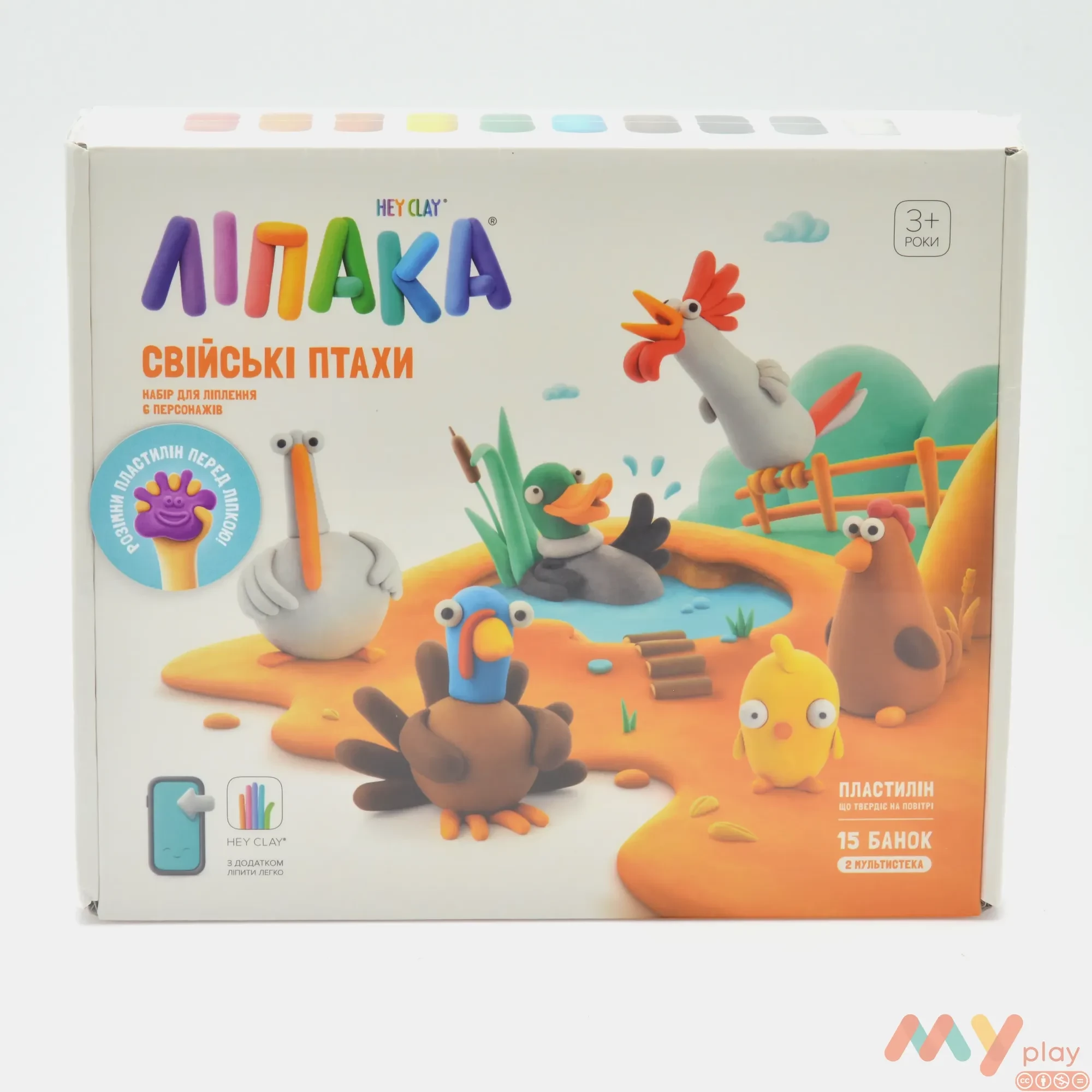
Build Your Coastal Model
Use playdough to create coastal features Add string for wave patterns Show how waves hit different coastlines Demonstrate erosion and deposition Explain your model to others

Key Learning
"Waves are the sculptors of our coastlines, carrying energy from distant storms to shape the beaches where surfers ride."