
Supporting Year 5 Maths Learning
Effective Strategies for Inclusive Teaching Building Confidence and Understanding 60-minute Professional Development Session

National Curriculum Links - Year 5 Mathematics
Number - Multiplication and Division: Mental calculations, multiples, factors, prime numbers Number - Addition and Subtraction: Formal written methods for 4+ digit numbers Number - Fractions: Understanding thousandths, decimals, and percentages Mathematical Reasoning: Problem-solving with number facts and place value

Learning Objectives for Today
Identify common barriers to Year 5 maths learning and apply specific strategies Modify activities for diverse needs including SEND and EAL learners Use three practical scaffolding approaches for mathematical concepts Reflect on teaching practice to increase inclusivity and engagement

What Barriers Might Children Face?
Think about your Year 5 students... What challenges do they encounter with: • 3-digit multiplication • Decimal place value • Fraction concepts • Word problems

Strategy 1: Clear Visual Representations
Use number lines for place value and operations Base-ten blocks for concrete understanding Fraction circles and bars for part-whole relationships Gradually fade visual supports as confidence builds
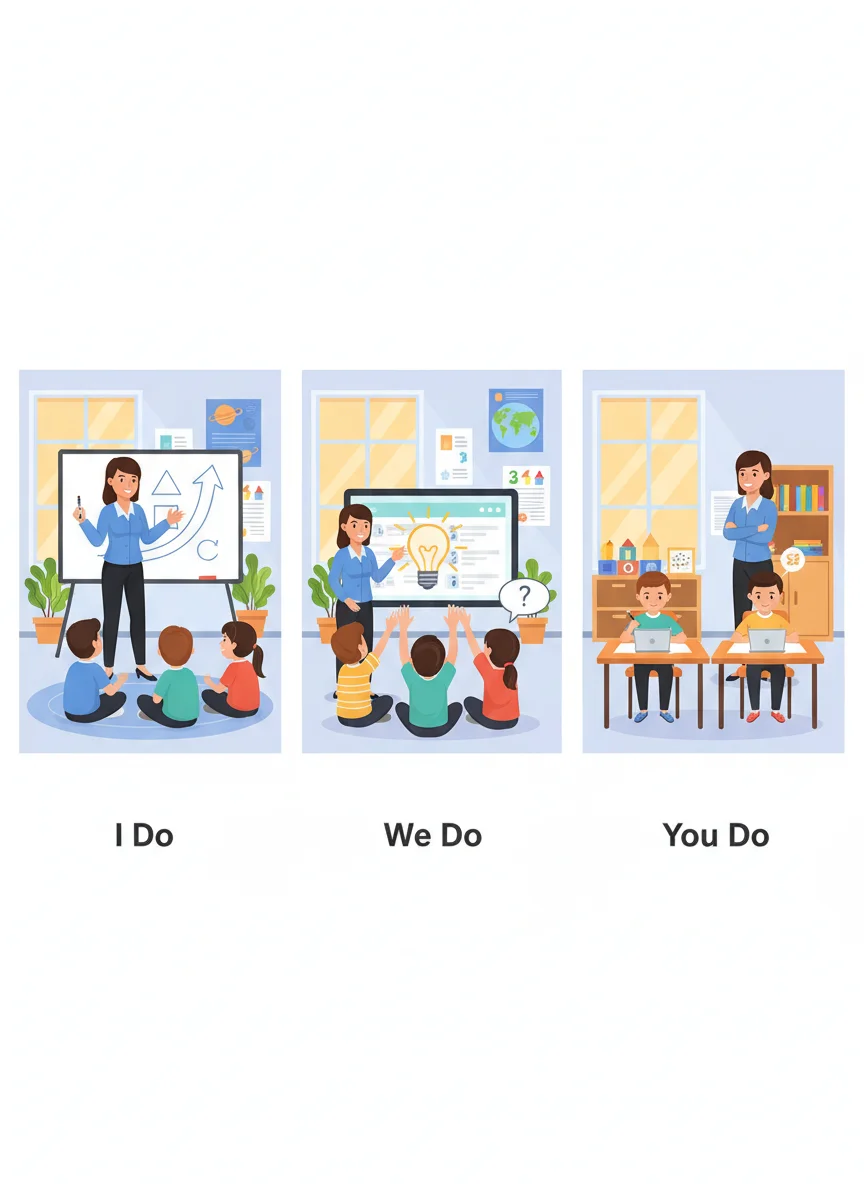
Strategy 2: Structured Lesson Approach
'I Do' - Teacher models the concept clearly 'We Do' - Collaborative practice with guided support 'You Do' - Independent application and practice Break complex problems into smaller, manageable steps
Strategy 3: Language & Vocabulary Support
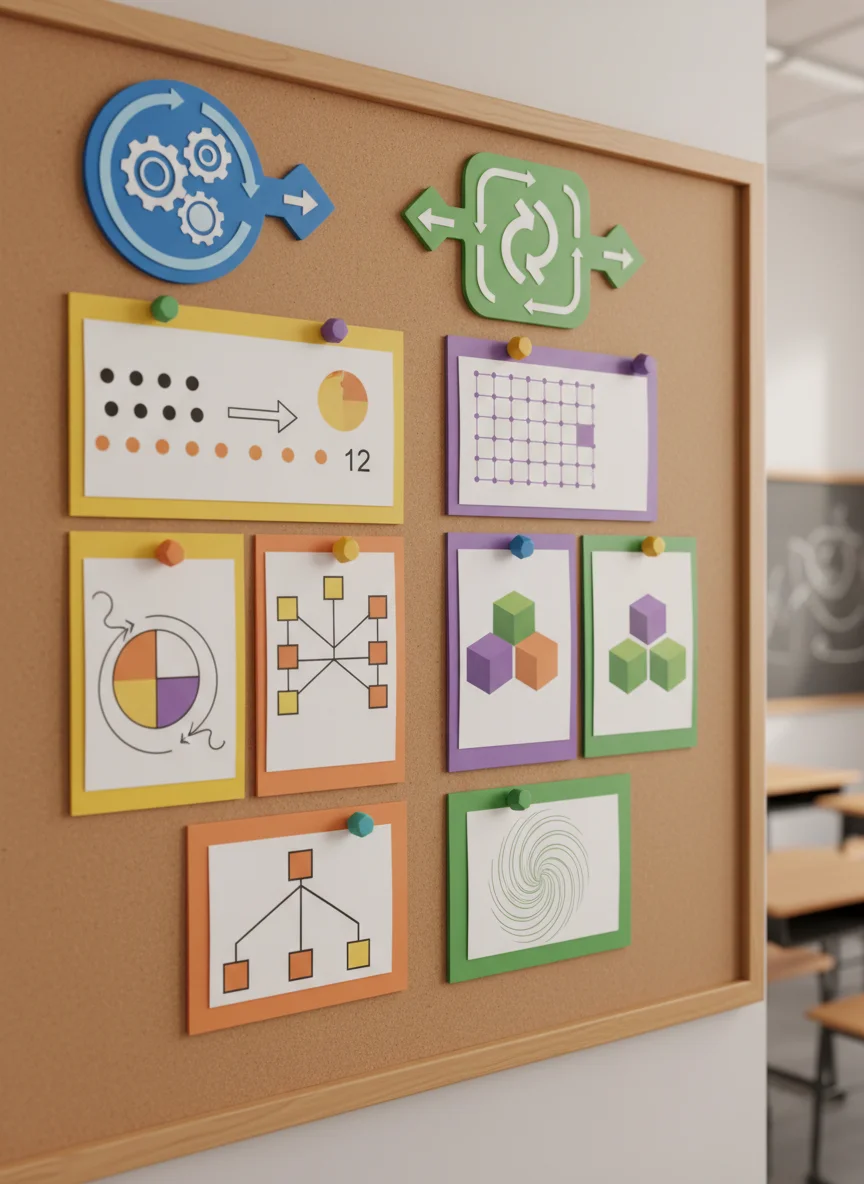
Pre-teach key mathematical vocabulary Create word walls with definitions and examples Use sentence stems for mathematical talk Provide visual vocabulary cards for EAL learners

Hands-On Activity: Adapting for Diverse Needs
Work in groups of 3-4 teachers Each group receives a Year 5 maths problem Adapt the task for different learner profiles: • EAL learner needing language support • Student with dyslexia • Gifted learner needing extension Create practical modifications and share solutions

Differentiation Examples in Practice
{"left":"EAL Support: Visual step-by-step guides, bilingual vocabulary cards, peer translation support\nSEND Adaptations: Color-coded materials, extra processing time, alternative recording methods","right":"Challenge Extensions: Open-ended investigations, real-world applications, peer teaching opportunities\nAssessment Modifications: Verbal explanations, practical demonstrations, portfolio evidence"}

Key Takeaways & Next Steps
Use concrete manipulatives before moving to abstract concepts Implement 'I Do, We Do, You Do' structure consistently Pre-teach mathematical vocabulary explicitly Adapt tasks to meet diverse learning needs Reflect on practice and measure student progress regularly