Prime Factor Decomposition
Year 10 Mathematics WJEC GCSE Higher Tier West Monmouth School
WALT - We Are Learning To
Understand what prime numbers are Find prime factors of numbers Use factor trees and division methods Apply prime factorization to solve problems
Success Criteria - Lesson 1
I can identify prime and composite numbers I can list the first 20 prime numbers I can find factors of small numbers I can explain what prime factorization means
What do you already know about numbers?
Think about different types of numbers What makes some numbers special? Can you give examples of 'building block' numbers?
What is a Prime Number?
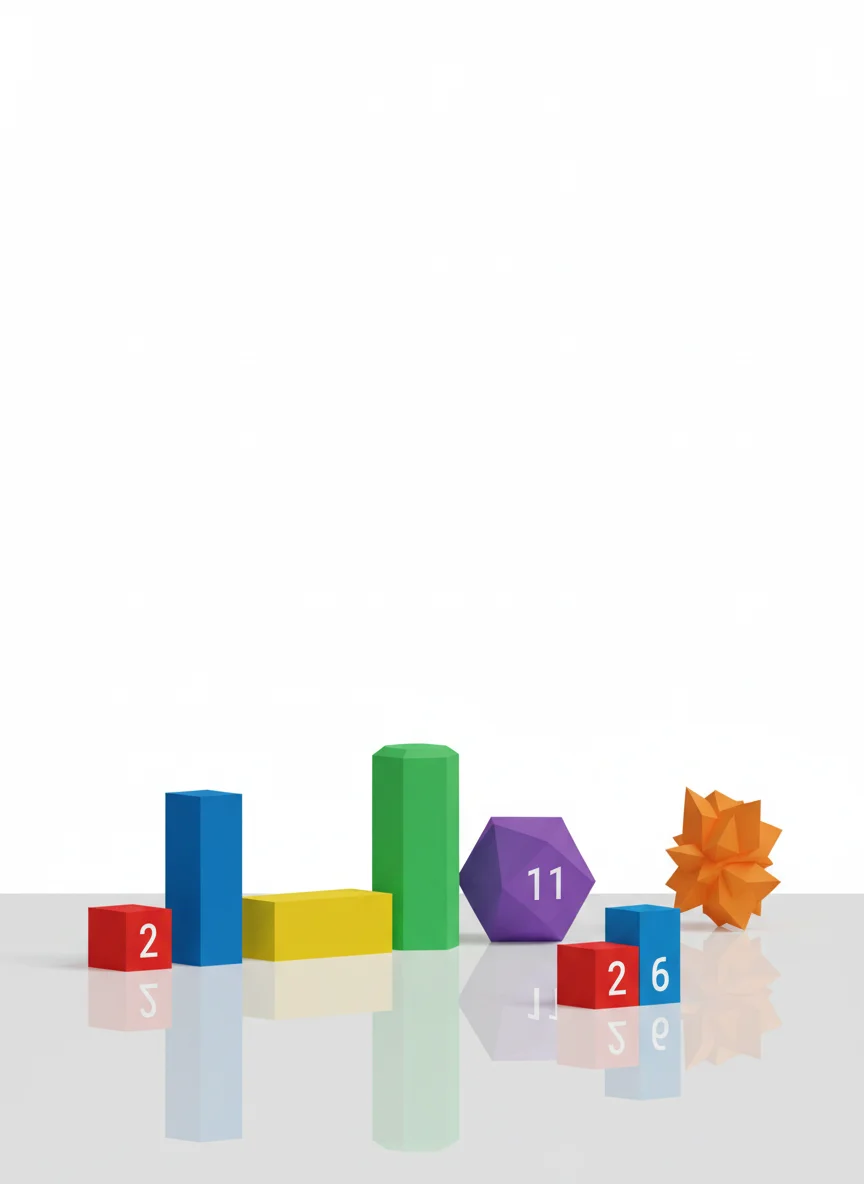
A prime number has exactly TWO factors The factors are 1 and itself Examples: 2, 3, 5, 7, 11, 13 2 is the only even prime number
Prime or Not Prime?
Look at these numbers: 4, 7, 9, 11, 15, 17 Work in pairs to decide which are prime Find ALL factors for each number Be ready to explain your reasoning
The First 20 Prime Numbers
2, 3, 5, 7, 11, 13, 17, 19, 23, 29 31, 37, 41, 43, 47, 53, 59, 61, 67, 71 Notice: All primes except 2 are odd Memorizing these helps with factorization
What is Prime Factorization?
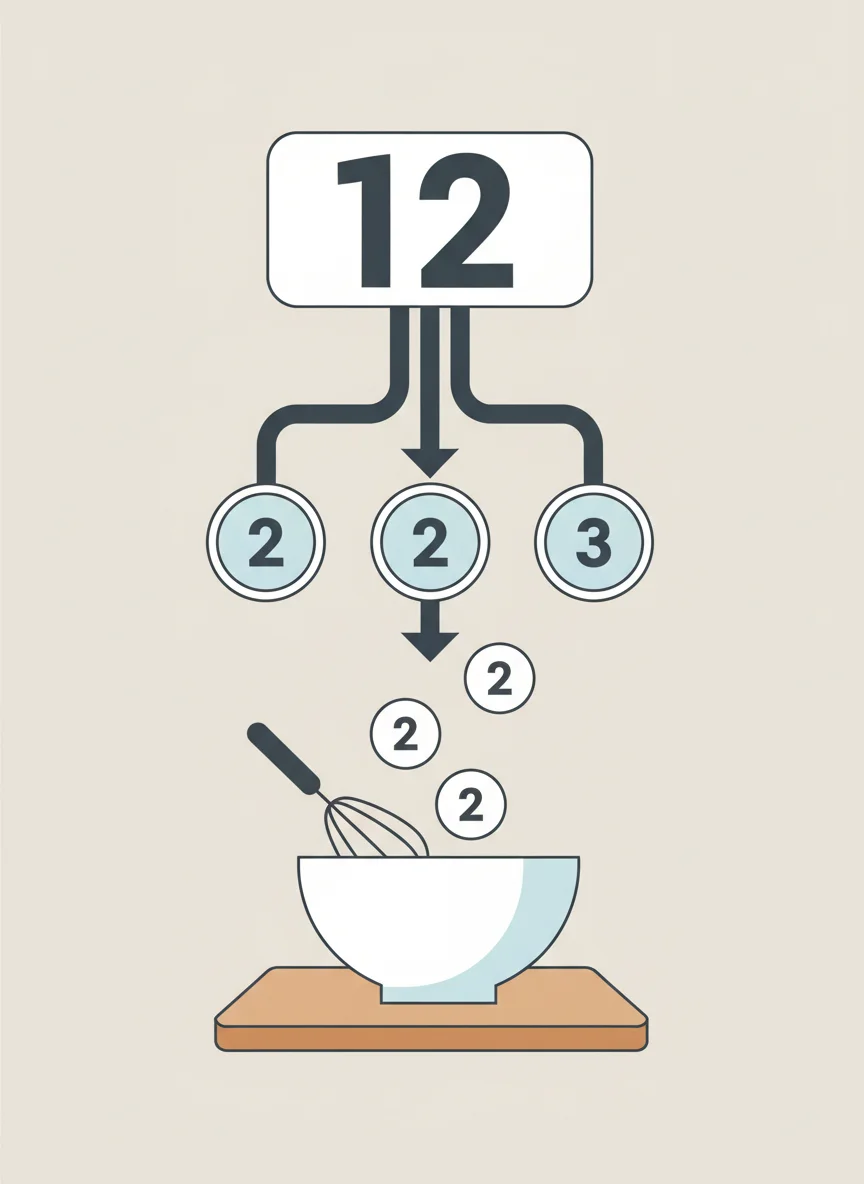
Breaking a number into its prime factors Every number can be written as a product of primes Like finding the 'recipe' for a number Example: 12 = 2² × 3
Method 1: Factor Trees
Start with your number at the top Split into any two factors Continue until all branches end in primes Write the answer using prime factors only
Factor Tree Practice
Create factor trees for: 24, 30, 36 Start with any factors you can see Keep going until you reach all primes Compare your trees with a partner
Worked Example: Factor Tree for 60
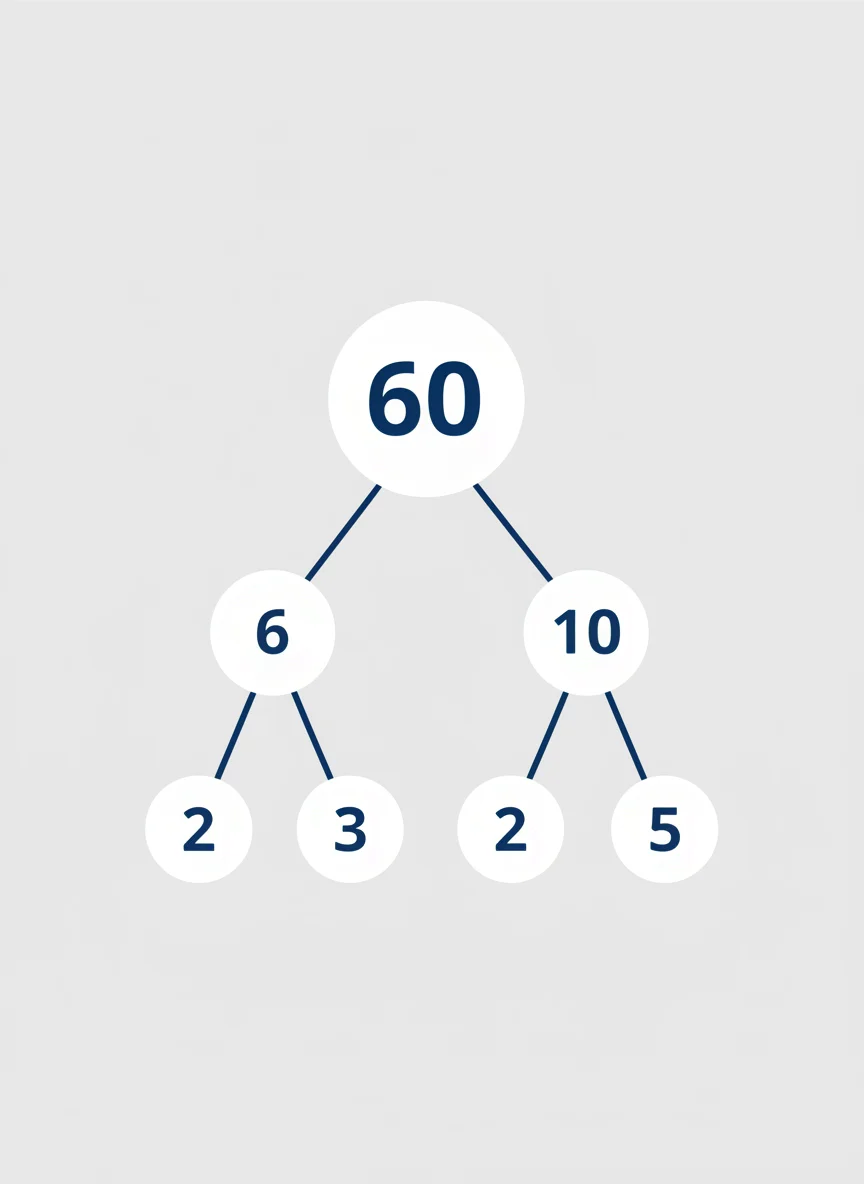
60 = 6 × 10 6 = 2 × 3, 10 = 2 × 5 All factors are now prime Answer: 60 = 2² × 3 × 5
Method 2: Division Method
Start with the smallest prime (2) Divide repeatedly until you can't Move to next prime (3, 5, 7...) Stop when quotient equals 1
20 more slides available after you open the deck.
Download all 32 slides