
Powers, Fractions, and Algebraic Equations
Year 10 Mathematics Consolidating indices and fractional manipulation 60-minute lesson

Quick Mental Warm-Up
Calculate: 3² × 3³ What does a^(1/2) represent? Simplify: x³ × x⁴ Find: 9^(1/2)
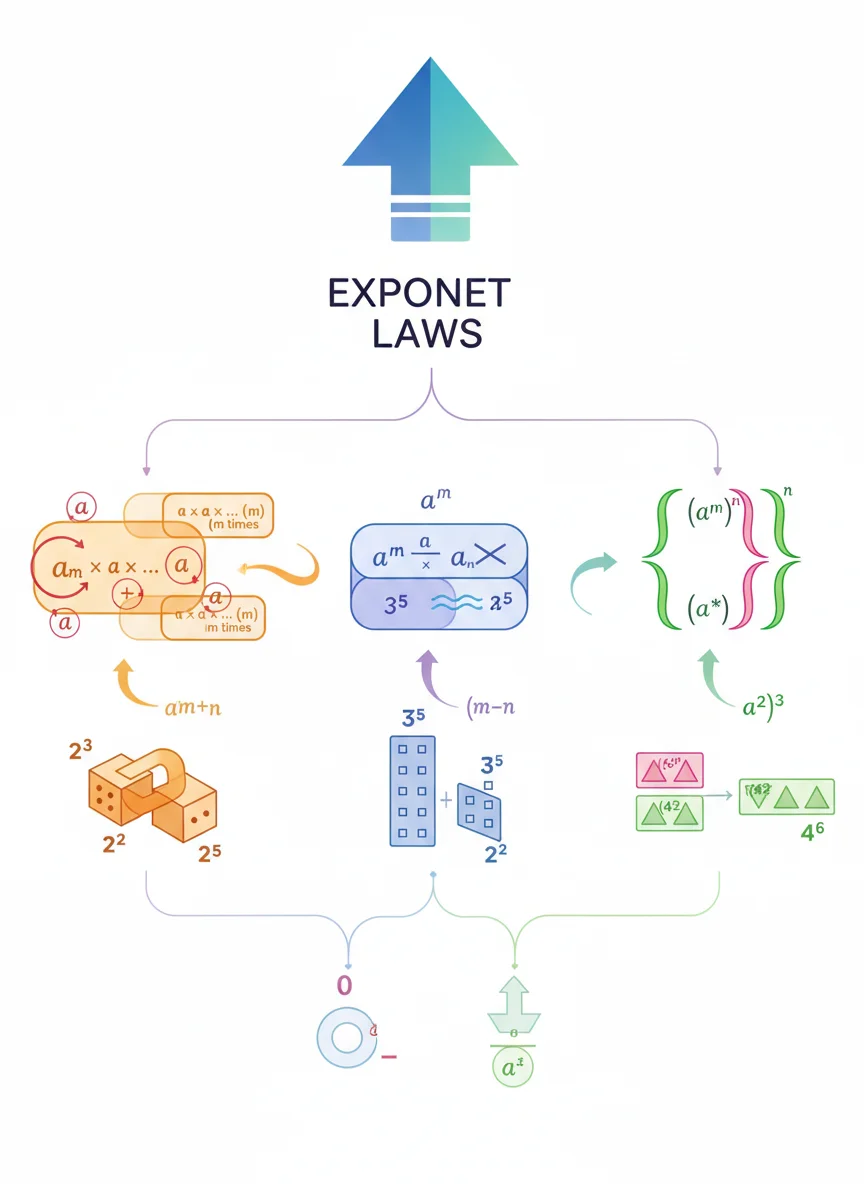
Laws of Indices Refresher
Multiplication: a^m × a^n = a^(m+n) Division: a^m ÷ a^n = a^(m-n) Power of a power: (a^m)^n = a^(mn) Fractional indices: a^(1/n) = ⁿ√a Negative indices: a^(-n) = 1/a^n

Practice: Fractional Indices
Simplify: 4^(3/2) Calculate: 8^(-1/3) Simplify: (x³y⁻¹)² What is 27^(2/3)?
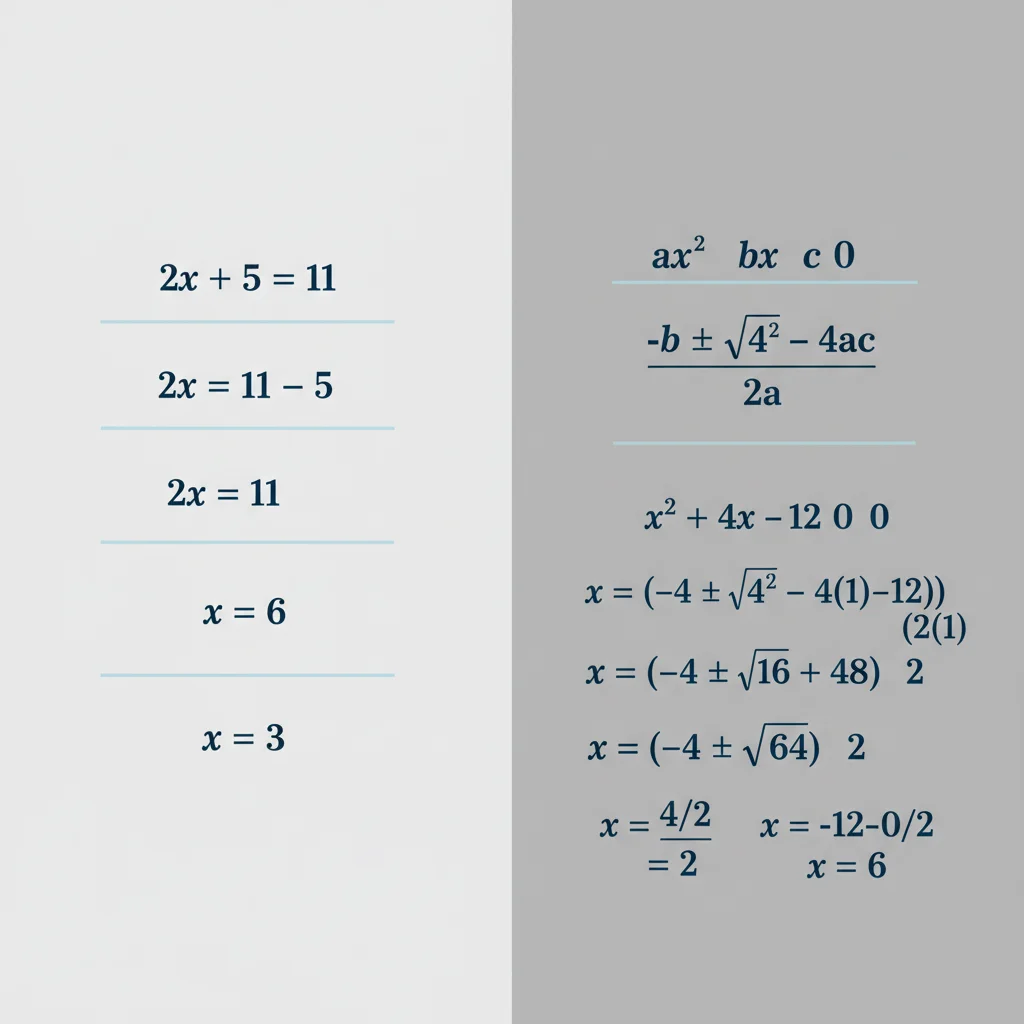
Solving Equations with Fractional Powers
{"left":"Solve: x^(2/3) = 16\nRaise both sides to power 3/2\nx = 16^(3/2) = (16^(1/2))³ = 4³ = 64","right":"Solve: (1/2)x - 4 = 1/3\nAdd 4 to both sides: (1/2)x = 1/3 + 4\nMultiply by 2: x = 2(13/3) = 26/3"}

Equation Matching Challenge
Match simplified expressions with their complex forms Work in pairs to justify your matches Use correct mathematical vocabulary Explain your reasoning aloud
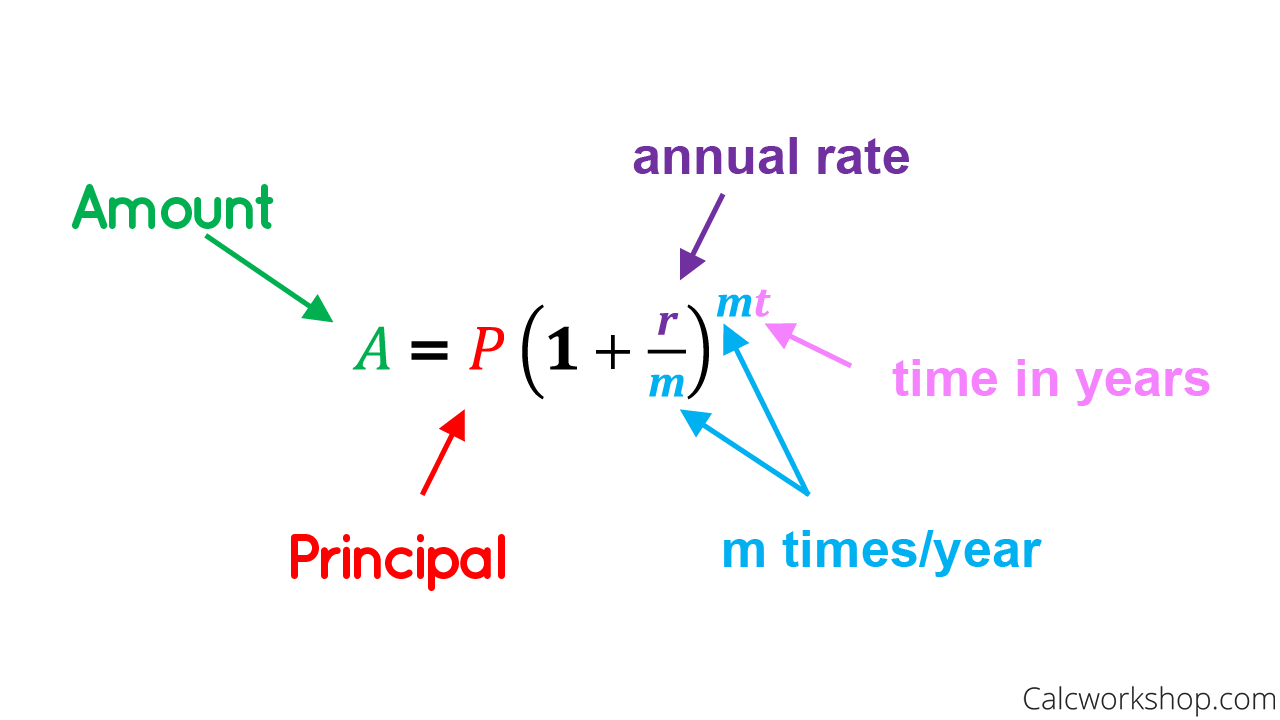
Real-World Applications of Fractional Powers

Key Takeaways
Fractional powers are another way to write roots Index laws apply to all types of powers Always show your working step by step Practice makes perfect with algebraic manipulation