:max_bytes(150000):strip_icc()/460717063-58b5b74e3df78cdcd8b38f03.jpg)
Introduction to Chemical Reaction Rates
Year 10 Science Understanding How Fast Reactions Happen Exploring the Science Behind Speed

Think About This...
Why does sugar dissolve faster in hot tea than cold tea? Why do we keep food in the refrigerator? Why does wood burn faster as kindling than as logs?
What is Reaction Rate?
The speed at which a chemical reaction happens Measured by how quickly reactants disappear Or how quickly products are formed Think of it like the speedometer in a car - but for chemistry!

Real-World Reaction Rates
Match each example to its reaction speed: Rusting of iron - Very slow (years) Burning paper - Fast (seconds) Digesting food - Medium (hours) Explosion - Extremely fast (milliseconds)
Factors That Affect Reaction Rates
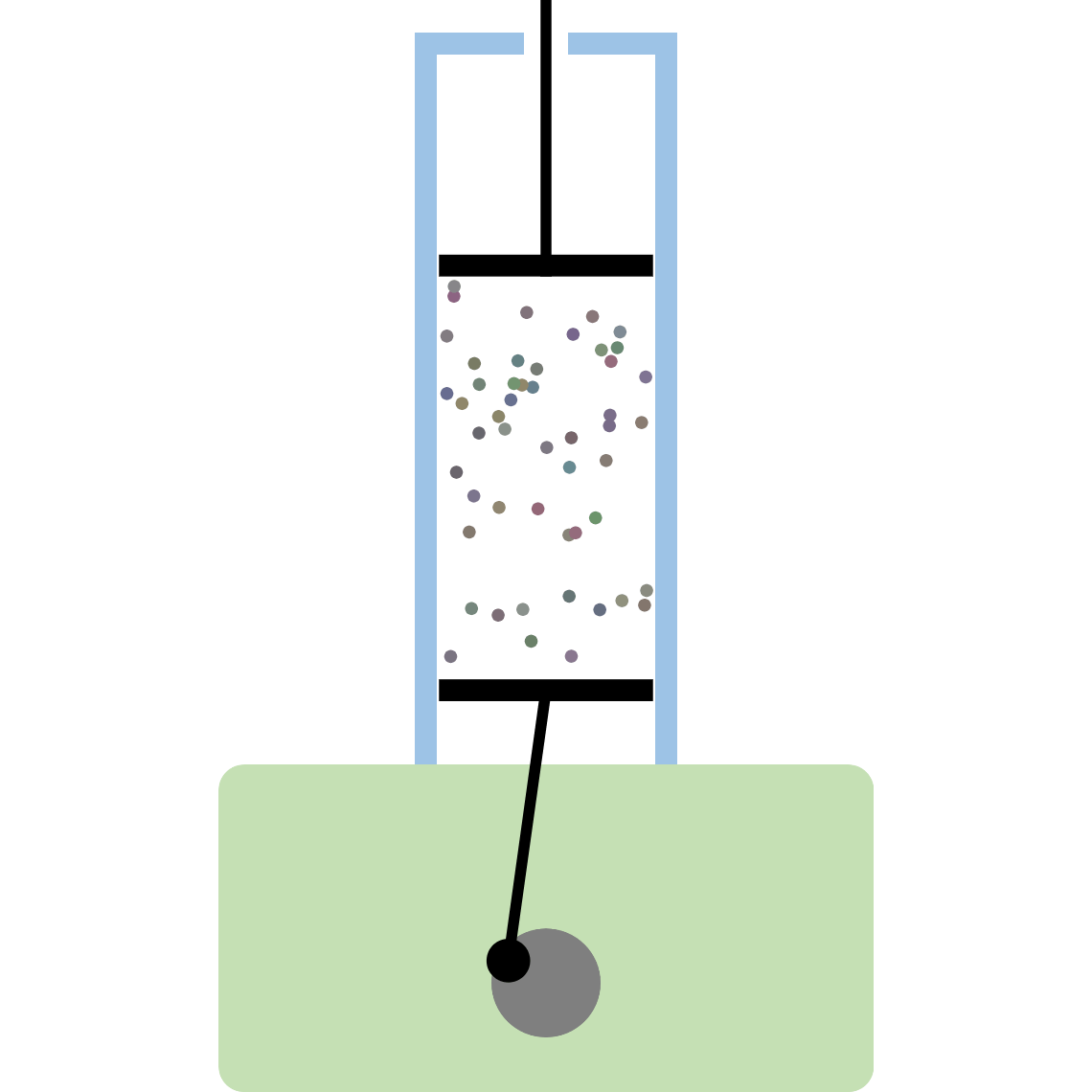
Temperature - Heat speeds up reactions Concentration - More particles mean more collisions Surface Area - Smaller pieces react faster Catalysts - Special substances that speed up reactions
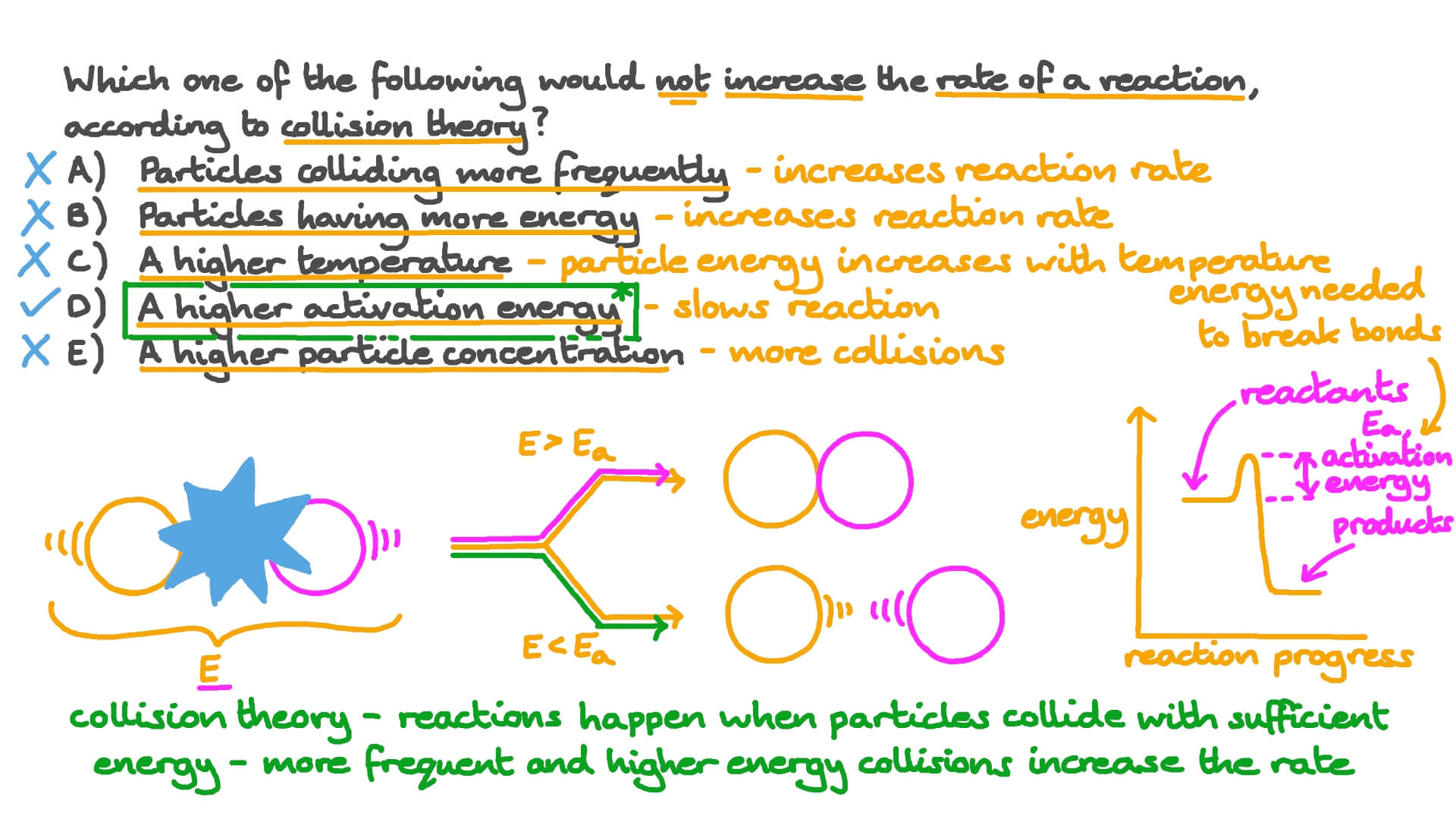
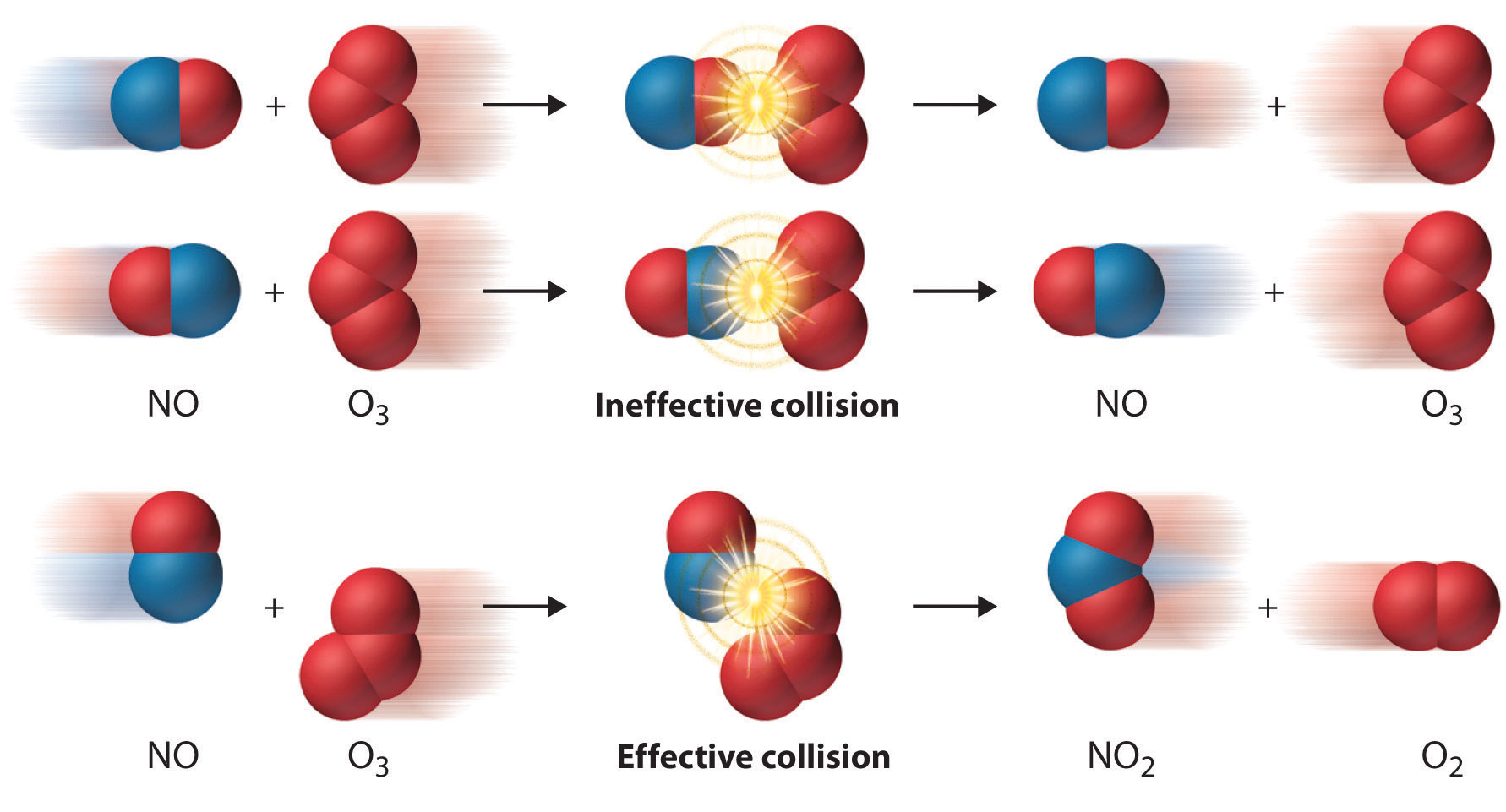
Collision Theory Explained
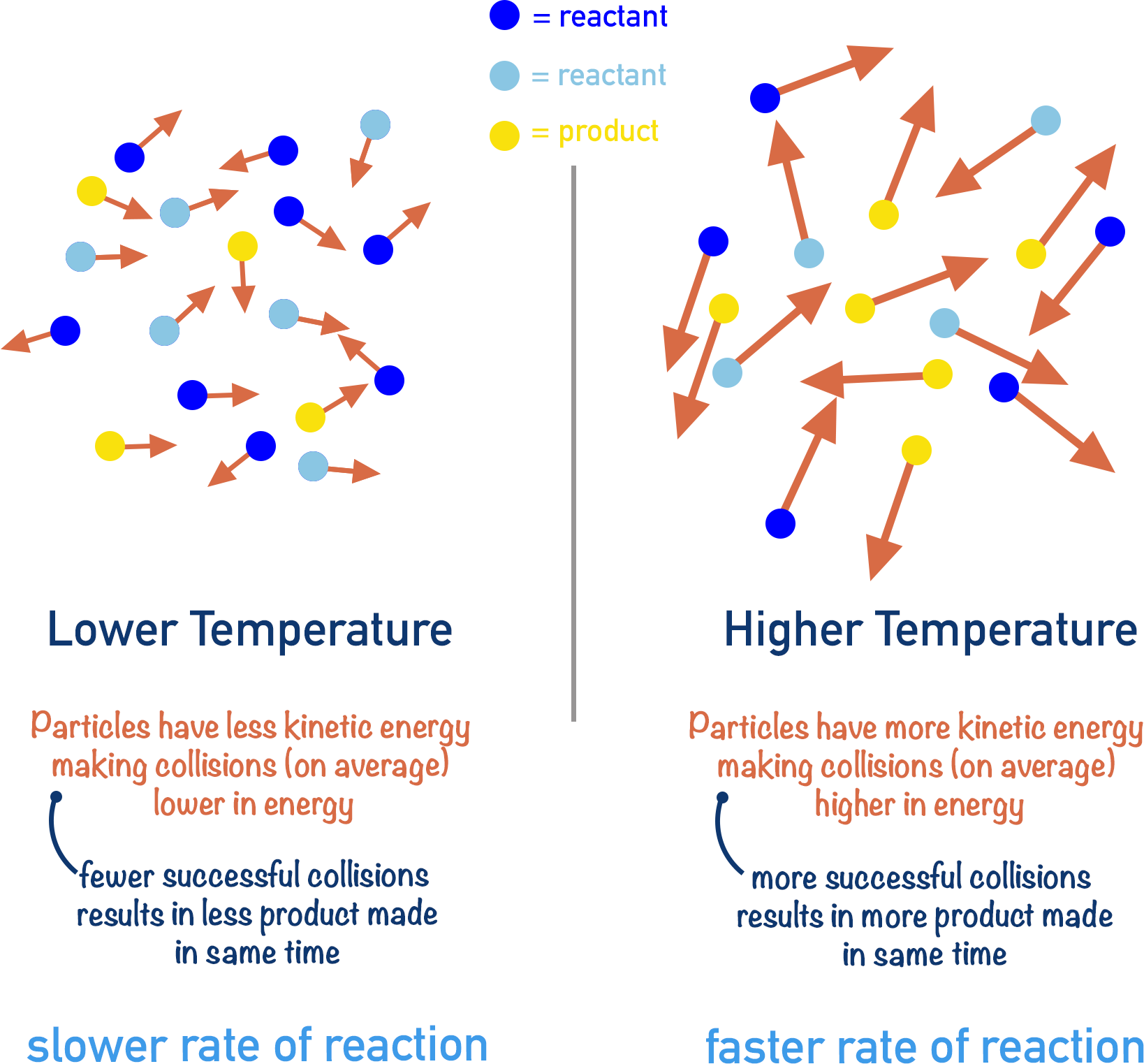
Temperature and Collision Theory
{"left":"At low temperature: Particles move slowly, Few high-energy collisions, Reaction rate is slow","right":"At high temperature: Particles move quickly, Many high-energy collisions, Reaction rate is fast"}
Key Takeaway
Understanding reaction rates helps us control chemical processes in cooking, medicine, industry, and environmental protection