
Bubble Sort: Step-by-Step Algorithm Learning
Year 8 Technology Understanding Sorting Algorithms Computational Thinking Skills
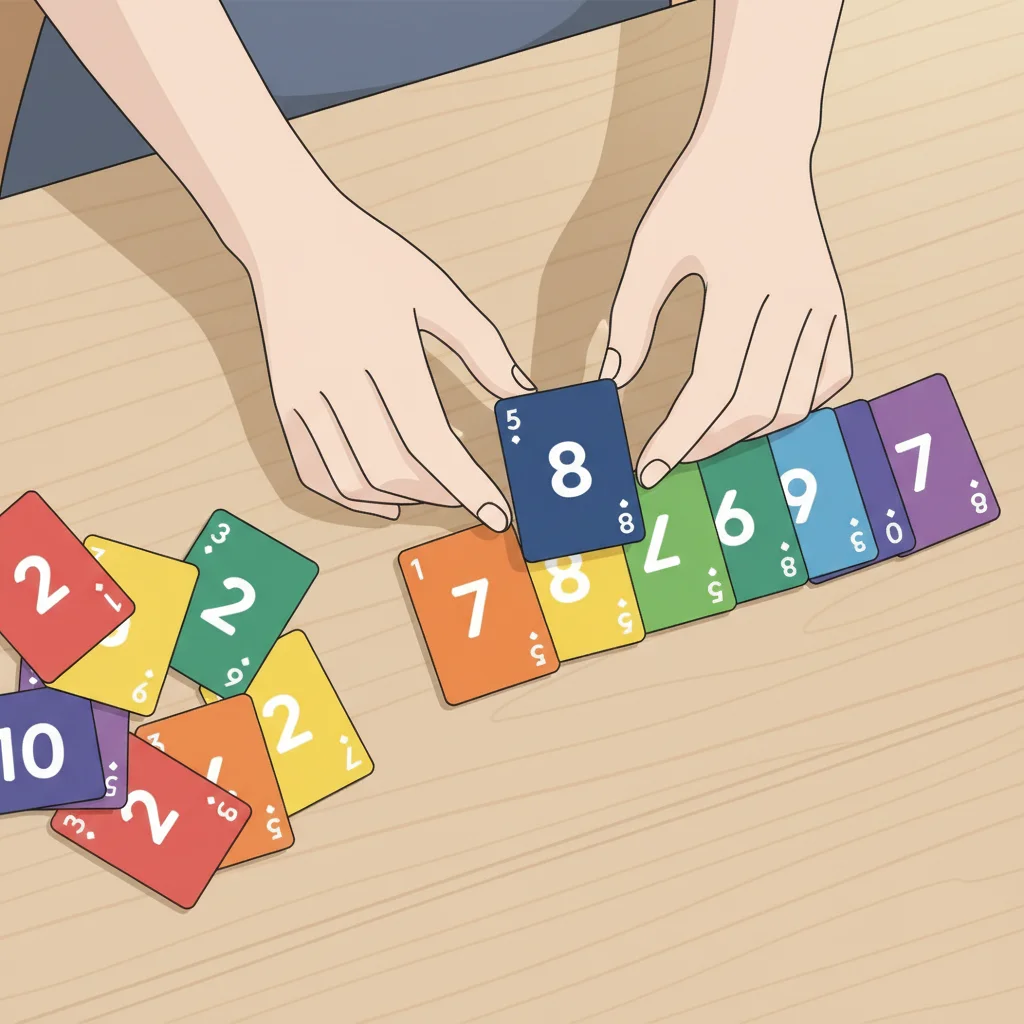
How Do You Sort Things in Real Life?
Think about organizing your books Arranging playing cards by number Putting items in alphabetical order What steps do you follow?

What is Bubble Sort?
A simple sorting algorithm Compares adjacent items in a list Swaps them if they're in wrong order Repeats until the list is sorted Called 'bubble' because large values 'bubble up' to the end
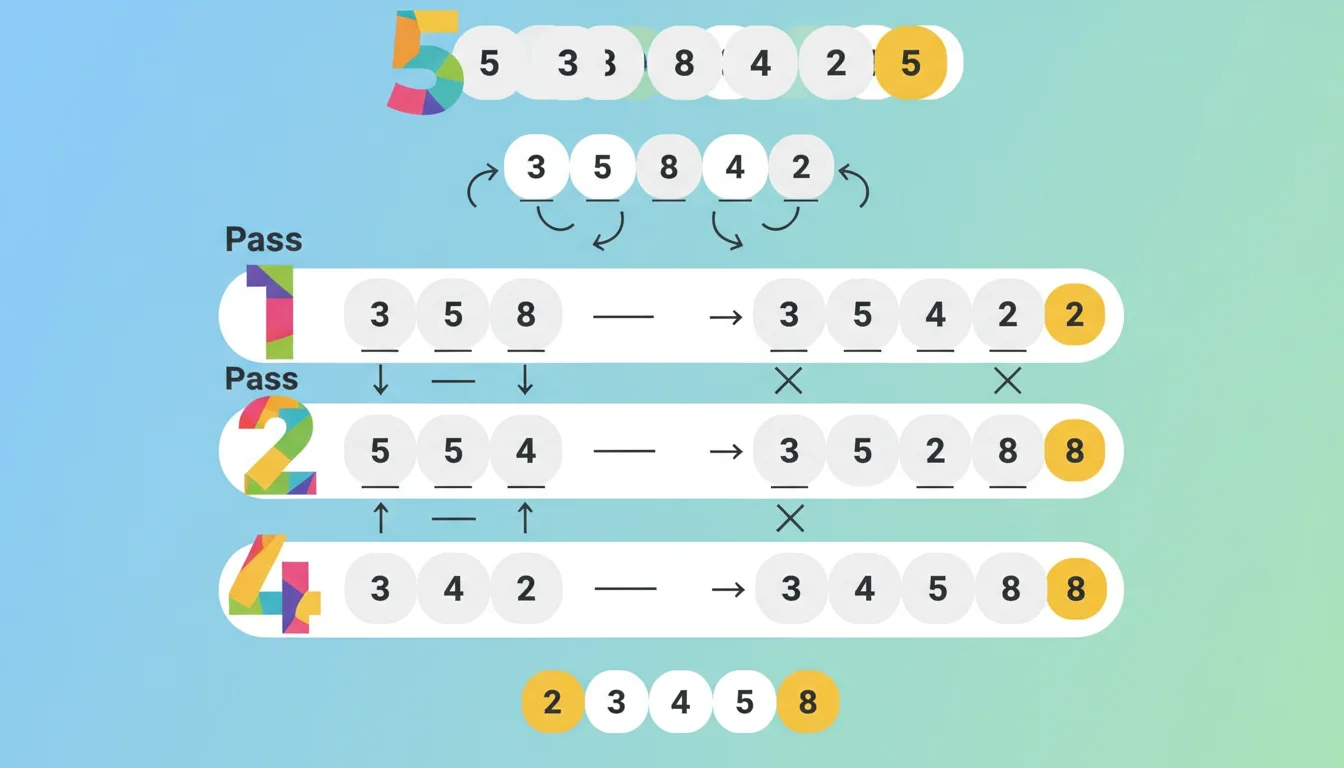
Bubble Sort Step-by-Step Process

I DO: Teacher Demonstration
Watch as I sort [5, 3, 8, 4, 2] Follow each comparison and swap Count the number of passes needed Notice the pattern that emerges

Simple Bubble Sort Code
{"left":"def bubble_sort(arr):\n n = len(arr)\n for i in range(n):\n for j in range(0, n-i-1):\n if arr[j] > arr[j+1]:\n arr[j], arr[j+1] = arr[j+1], arr[j]","right":" return arr\n\n# Example usage:\nnumbers = [5, 3, 8, 4, 2]\nsorted_numbers = bubble_sort(numbers)\nprint(sorted_numbers)"}

WE DO: Guided Practice
Work in pairs with the list [7, 2, 9, 1, 5] Manually perform the first two passes Then code it together step by step Ask questions if you need help!

YOU DO: Independent Practice
Write your own bubble sort program Test it with different number lists Add print statements to show each pass Challenge: Count the total number of swaps

Bubble Sort: Strengths and Limitations
Strengths: • Simple to understand and implement • Works well for small datasets • Good for learning algorithm concepts Limitations: • Very slow for large datasets • Many unnecessary comparisons • Not used in real-world applications

Reflection and Assessment
Exit Ticket Questions: 1. Explain how bubble sort works in 2-3 sentences 2. Name one strength and one limitation 3. How many passes would a list of 6 numbers need at most? Share your thoughts with a partner!