Cotton: From Plant to Clothing
A free science worksheet ready for your classroom. Open in Kuraplan to grab the print-ready PDF, customize it for your students, or generate a fresh version in seconds.
Cotton: From Plant to Clothing
📖 Reading: Cotton - Nature's Versatile Fibre
Cotton is one of the world's most important natural fibres, grown on plants in the genus Gossypium. The cotton plant produces fluffy white bolls that contain seeds surrounded by soft fibres. These fibres are made primarily of cellulose, a natural polymer that gives cotton its strength and absorbency.
Where Cotton Grows: Cotton thrives in warm climates and is grown in over 80 countries worldwide. The largest producers include China, India, the United States, Brazil, and Pakistan. In the Southern Hemisphere, Australia is a significant cotton producer, particularly in Queensland and New South Wales.
From Plant to Fabric: The journey begins when cotton bolls are harvested, either by hand or machine. The fibres are then separated from seeds through a process called ginning. Next, the fibres are cleaned, carded (combed), and spun into yarn. This yarn is then woven or knitted into fabric, which can be dyed, printed, and sewn into clothing.
Properties: Cotton is valued for being breathable, absorbent, soft, and easy to care for. It can be machine washed and is comfortable to wear in warm weather, making it ideal for t-shirts, jeans, and bed linens.
🧠 Part 1: Understanding Cotton
1. _________________ 2. _________________
✏️ Part 2: From Plant to Wardrobe
_____ Weaving or knitting into fabric
_____ Harvesting cotton bolls
_____ Sewing fabric into garments
_____ Ginning (separating fibres from seeds)
_____ Spinning fibres into yarn
_____ Carding (combing) the fibres
Country chosen: _________________
About This Worksheet
Free in Kuraplan
Sign up free, grab the PDF, and customize it for your class.
Print-Ready
Formatted for standard paper. Clean layout, easy to read.
AI-Generated
Created with Kuraplan's AI, designed for real classroom use.
For Teachers & Parents
Use in classrooms, for homework, tutoring, or homeschool.
Need a custom version of this worksheet?
Kuraplan's AI generates custom worksheets in seconds — differentiated for every learner, aligned to your curriculum.
Generate Custom Worksheets — FreeMore Science Worksheets
Variables in Science Investigations
Free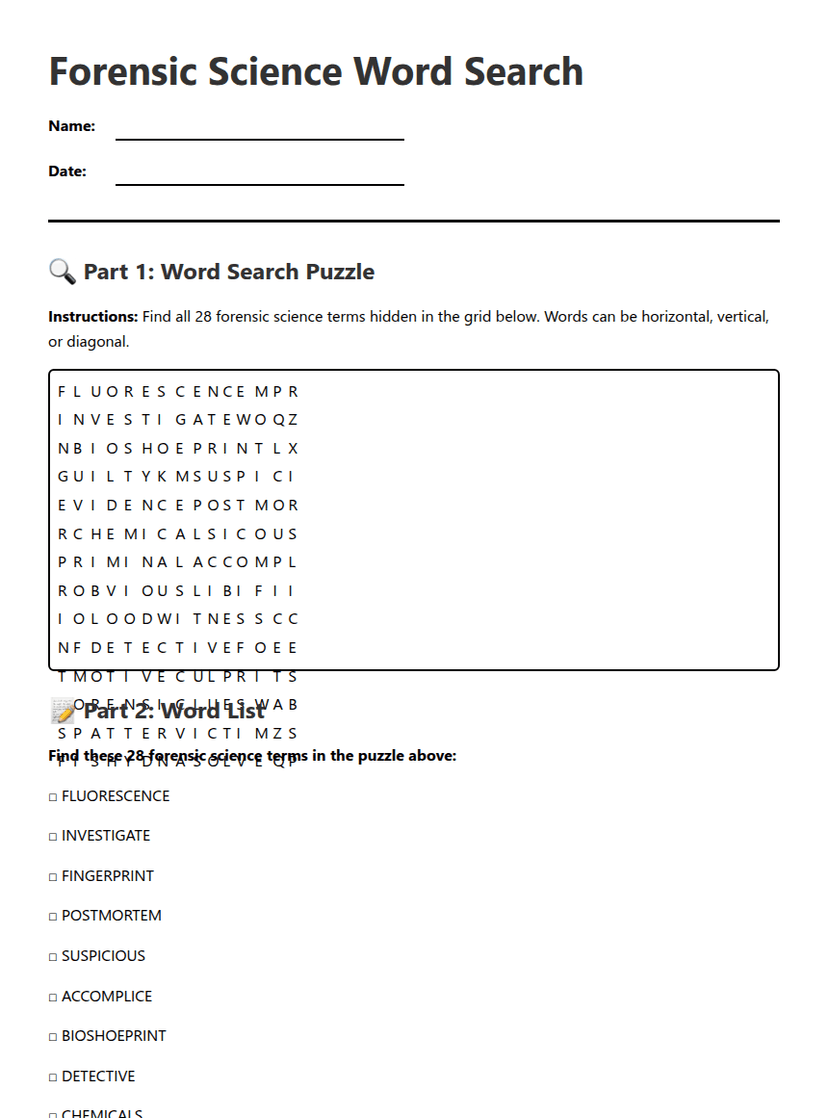
Forensic Science Word Search
Free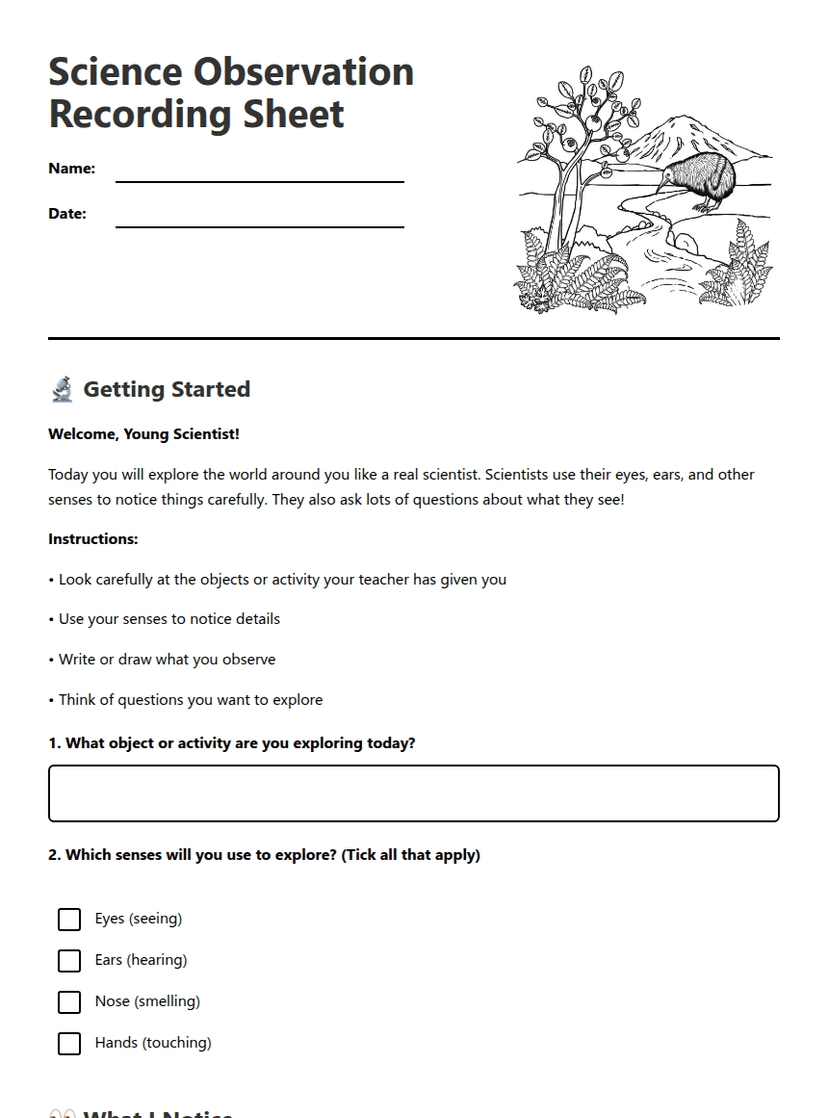
Science Observation Recording Sheet
Free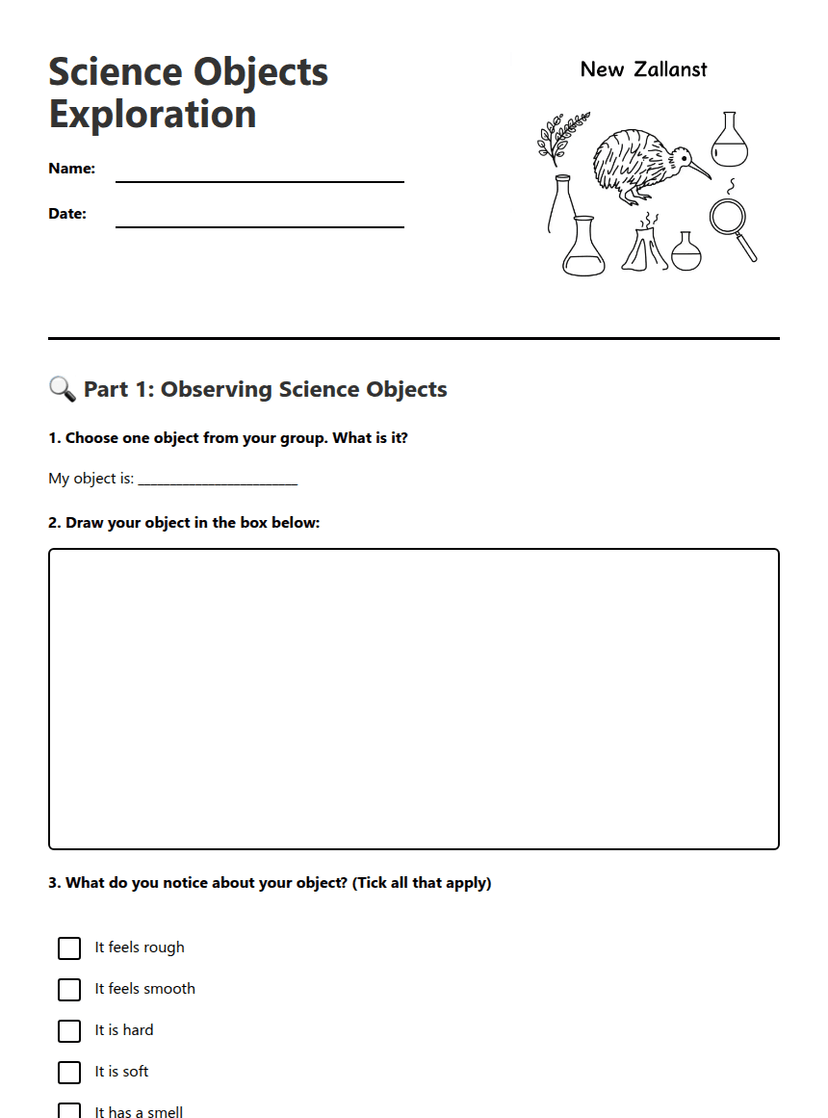
Science Objects Exploration
Free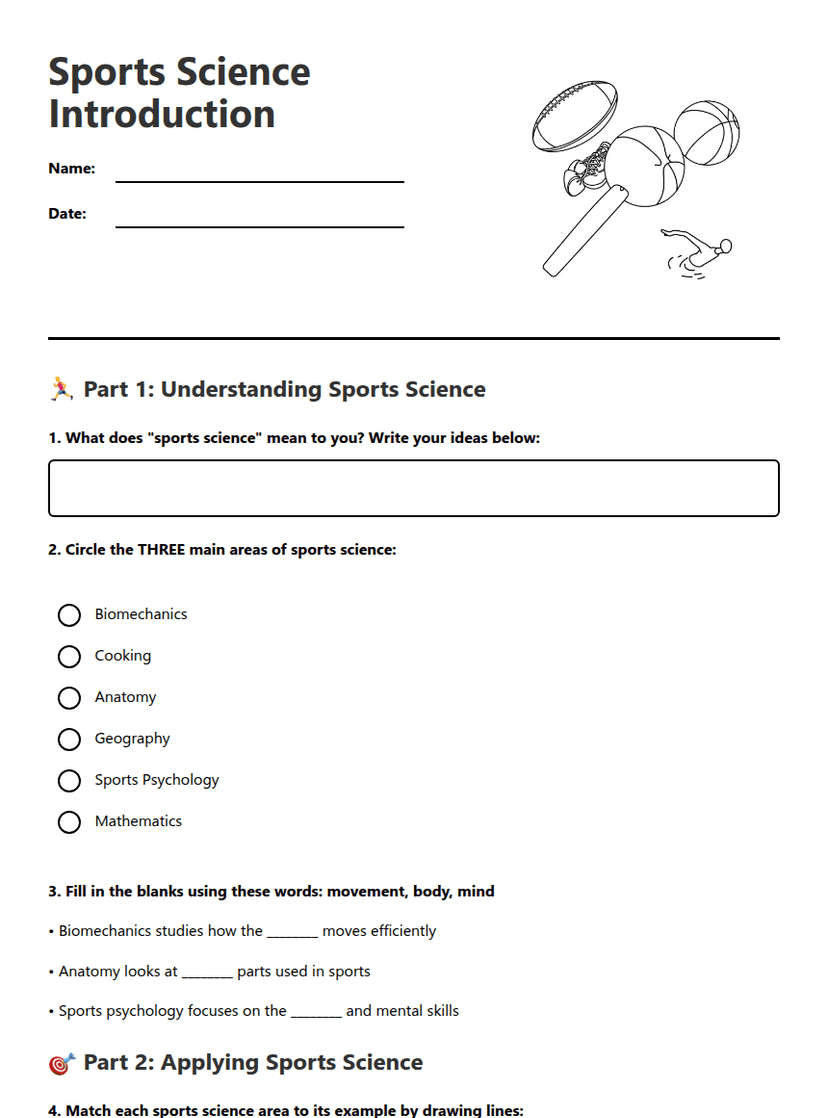
Sports Science Introduction
Free
Senior Social Science Icebreaker
Free
What is Science?
Free