Shapes That Fit: Exploring Tessellations
Year 5 Mathematics Geometry and Measurement 60 minutes
WALT - We Are Learning To
Identify and describe shapes that tessellate Create tessellation patterns using transformations Understand how shapes fit without gaps or overlaps Use mathematical language to describe tessellations
Success Criteria
I can explain what a tessellation is I can identify shapes that tessellate perfectly I can create patterns using translation, rotation, reflection I use correct vocabulary: edges, vertices, tessellation I can describe the transformations I used

What is a Tessellation?
Shapes that fit together perfectly No gaps or overlaps between shapes Creates a repeating pattern Like tiles on a floor or wall Found in nature and art
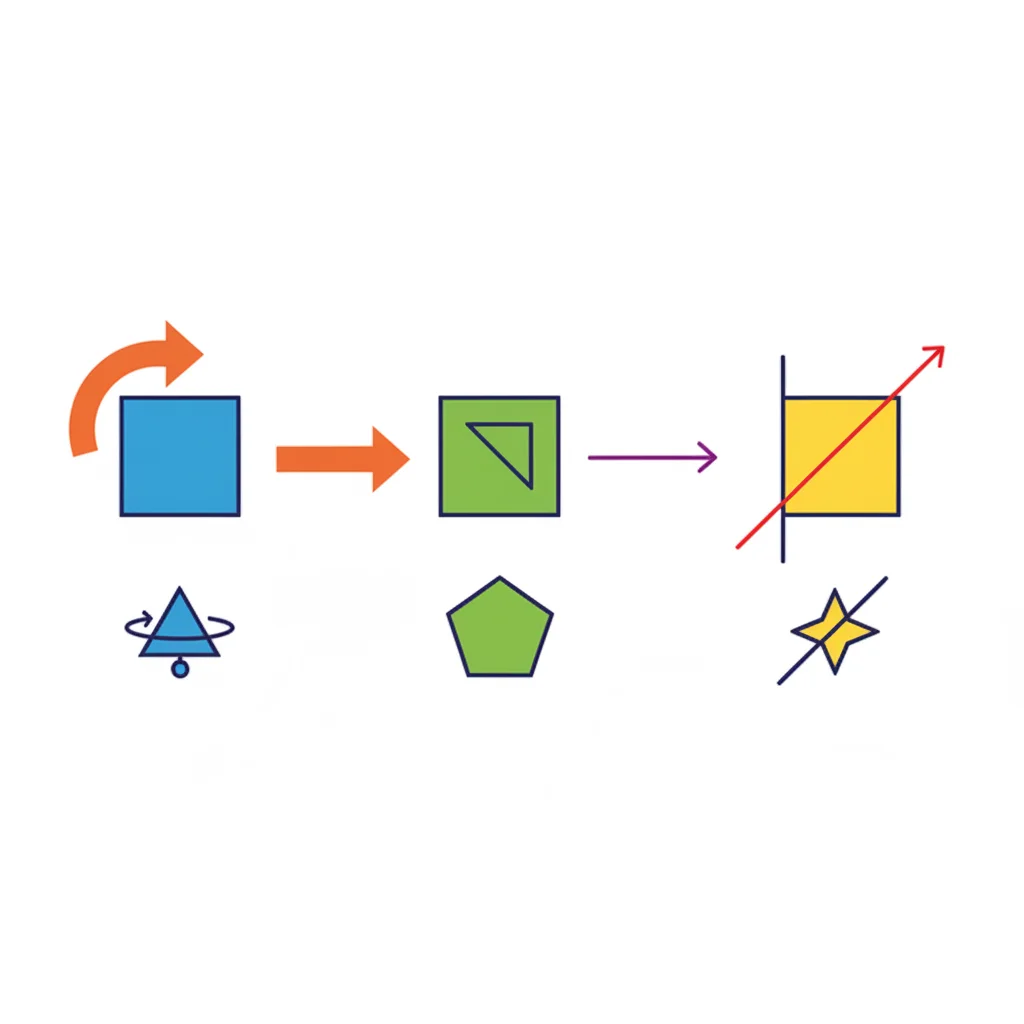
Key Vocabulary
{"left":"Tessellation: shapes fitting together perfectly\nTranslation: sliding a shape to a new position\nRotation: turning a shape around a point","right":"Reflection: flipping a shape like in a mirror\nEdges: the sides of a shape\nVertices: the corners where edges meet"}
Hands-On Tessellation Creation
Use cut-out shapes and grid paper Try triangles, squares, and hexagons Experiment with different transformations Work in pairs to share ideas Use mirrors to explore reflections
Which Shapes Tessellate?
Think about the shapes you've tried Which ones fit together perfectly? Why do some shapes work better than others? What do you notice about the angles?
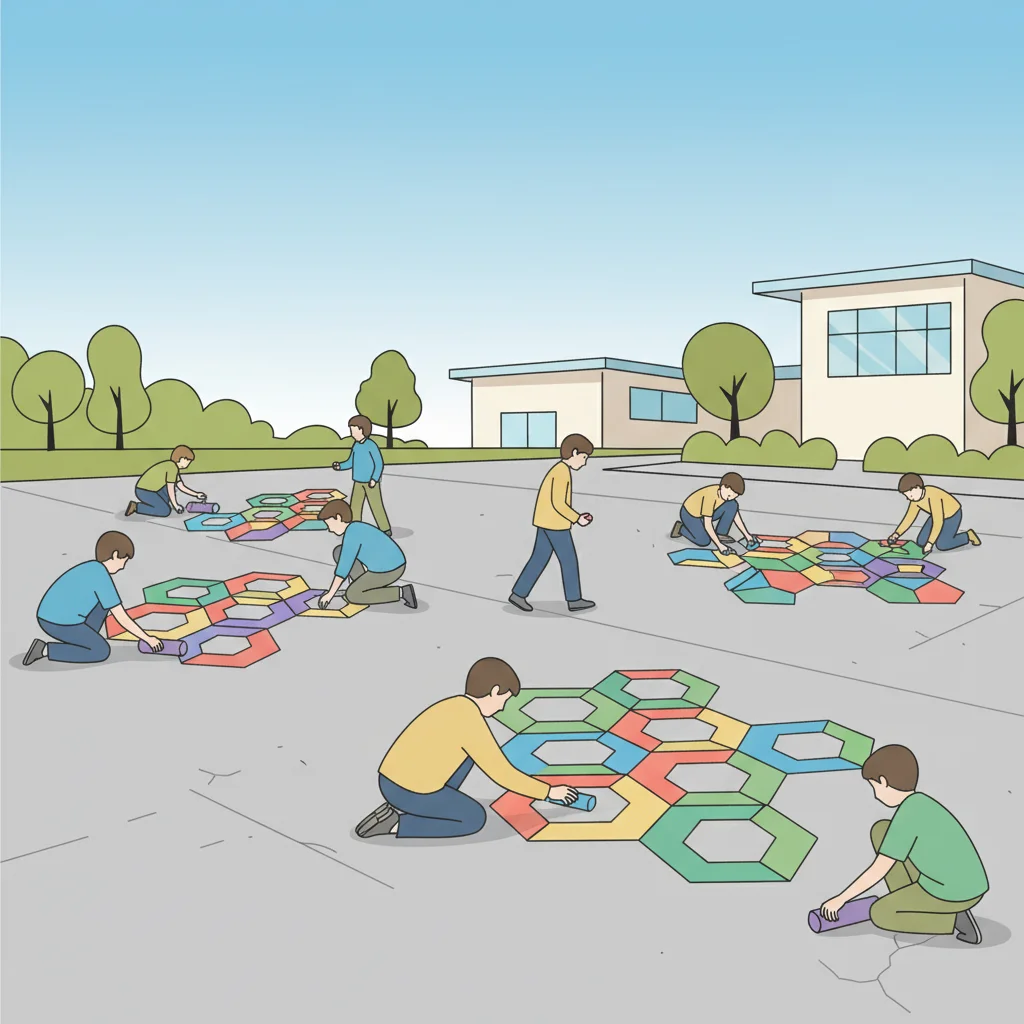
Outdoor Large-Scale Tessellations
Move outside with chalk Create tessellations on the ground Use your whole body to trace shapes Work in small groups Make patterns big enough to walk on
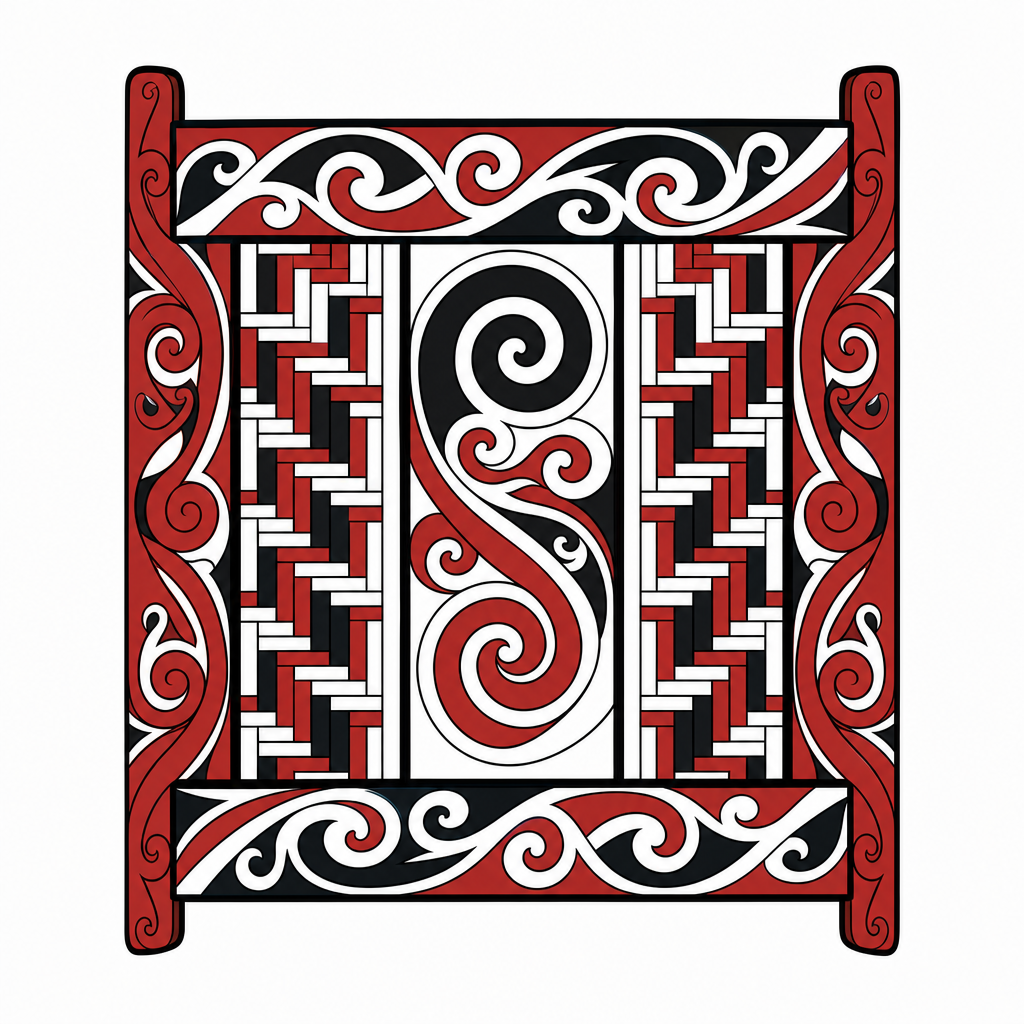
Tessellations in New Zealand Culture
Māori tukutuku panels use tessellating patterns Kowhaiwhai designs show geometric repetition Traditional weaving creates tessellation-like patterns Art and culture connect to mathematics

Reflection and Extension
What made some shapes easier to tessellate? How did transformations help create patterns? Extension: Try irregular shapes or create Māori-inspired patterns Use digital tools at home to explore more Think about tessellations you see every day