
Projectile Motion: The Science of Basketball
Understanding the physics behind the perfect shot Year 13 Physics Applying science to sport
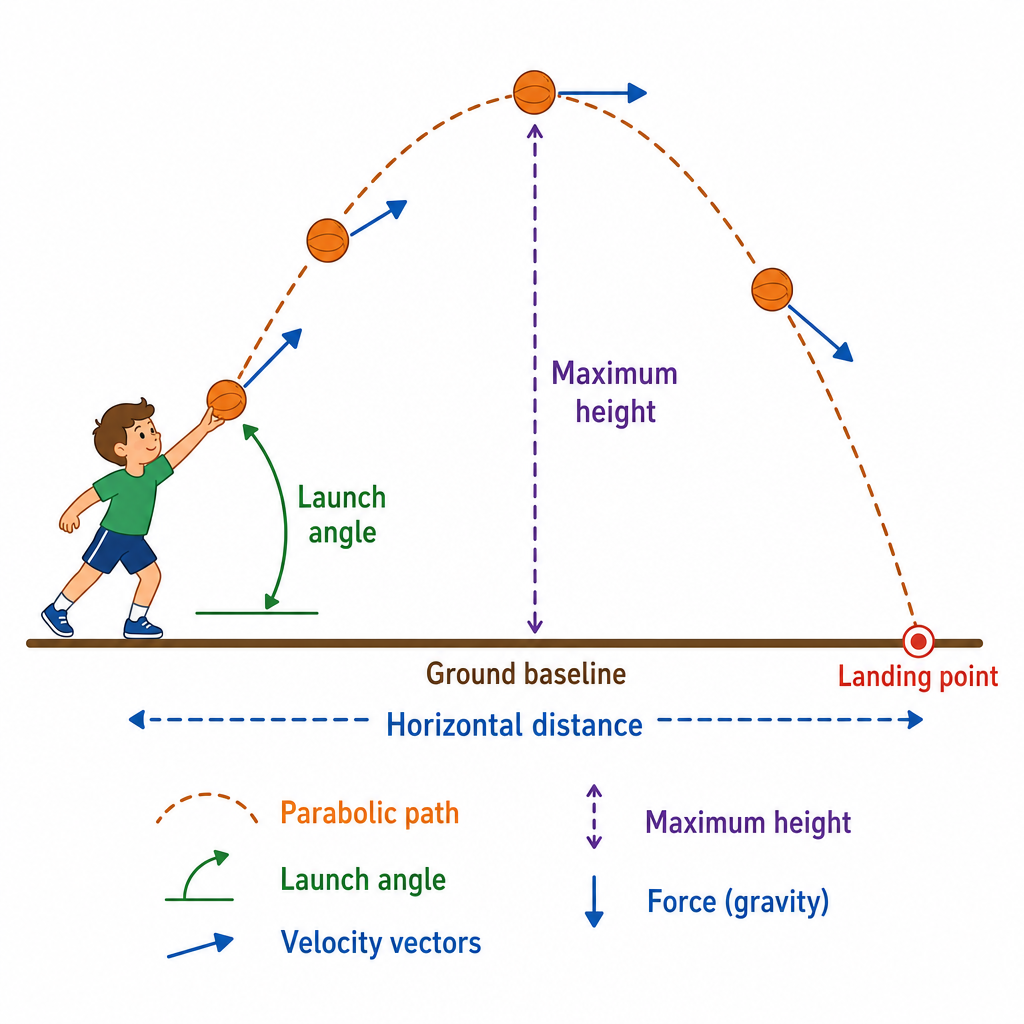
What is Projectile Motion?
Motion of an object launched into the air Follows a curved path called a parabola Only gravity acts on the object (ignoring air resistance) Horizontal and vertical motions are independent Examples: basketball shots, javelin throws, cannonballs

Three Factors Affecting Projectile Motion

Factor 1: Height of Release
Higher release point = longer flight time Allows steeper angle into the basket Reduces chance of defender blocking Tall players have natural advantage Jump shots increase release height
Factor 2: Speed of Release
Faster release = flatter trajectory Slower release = higher arc Must match distance to target Too fast = ball bounces off rim Too slow = ball falls short
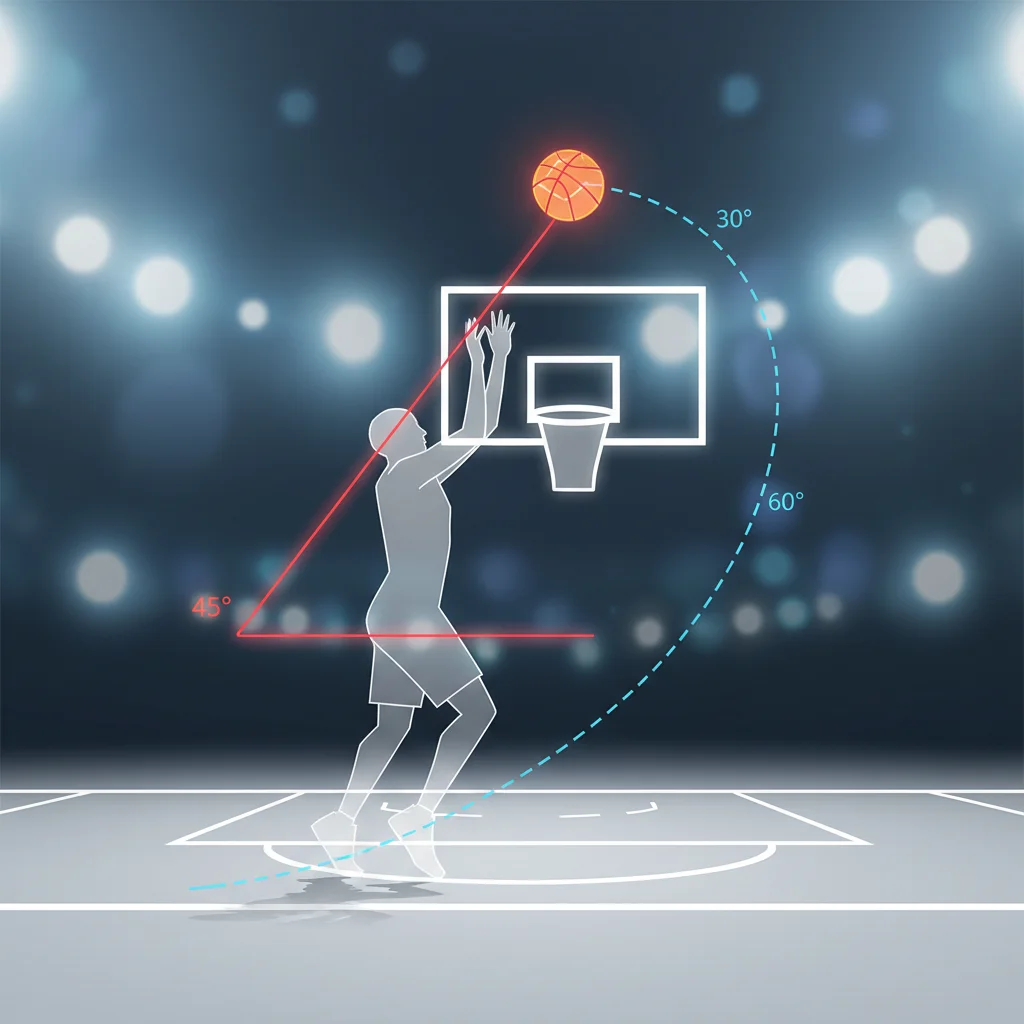
Factor 3: Angle of Release & Basketball Application
Optimal basketball shot angle: 45-50 degrees Higher angles = larger target area Lower angles = faster, harder shots Must consider basket height and distance Practice different angles for different shots