Painting Poetry With Sensory Words
Exploring Imagery and Sensory Details in Narrative Poetry Year 7 & 8 English Lesson 2 of 5

What is Imagery in Poetry?
Words that create pictures in our minds Appeals to our five senses Makes poetry come alive Helps readers feel like they're part of the story

Listen and Visualize
Close your eyes and listen What pictures form in your mind? What senses are awakened? Jot down words that create strong images

Our Five Senses in Poetry
{"left":"SIGHT: Colors, shapes, movement, light\nSOUND: Music, voices, nature sounds, silence\nSMELL: Fresh bread, flowers, rain, ocean","right":"TASTE: Sweet, sour, bitter, spicy flavors\nTOUCH: Rough, smooth, warm, cold textures"}

Sensory Word Brainstorm
Work in small groups Choose one everyday place (school playground, kitchen, park) List sensory words for that place Share your most vivid descriptions

The Power of Sensory Language
"Poetry is when an emotion has found its thought and the thought has found words." - Robert Frost

Create Your Own Sensory Poetry
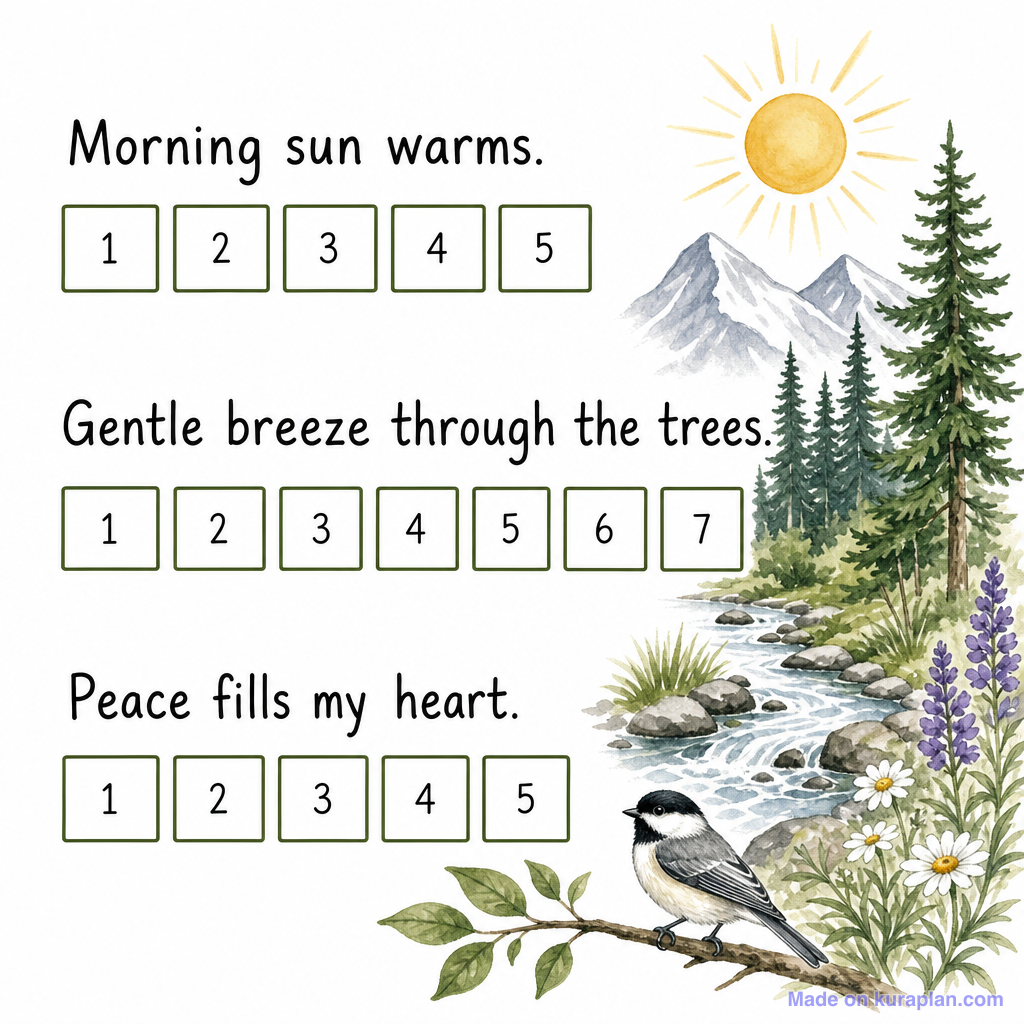
Choose your own everyday experience Write 3-5 sentences using sensory details Include at least one simile or metaphor Make your reader feel like they're there with you

Bringing It All Together
Imagery makes poetry memorable Sensory details help readers connect Every sense can create powerful pictures Practice noticing sensory details in everyday life
More Descriptive Writing slide decks
Other ready-to-teach decks on descriptive writing.


Free Poetry images
Drop these illustrations straight into your lesson.