Inference Detective: Which Image Matches?
English/Literacy Activity Year 6 Using clues and evidence to make inferences

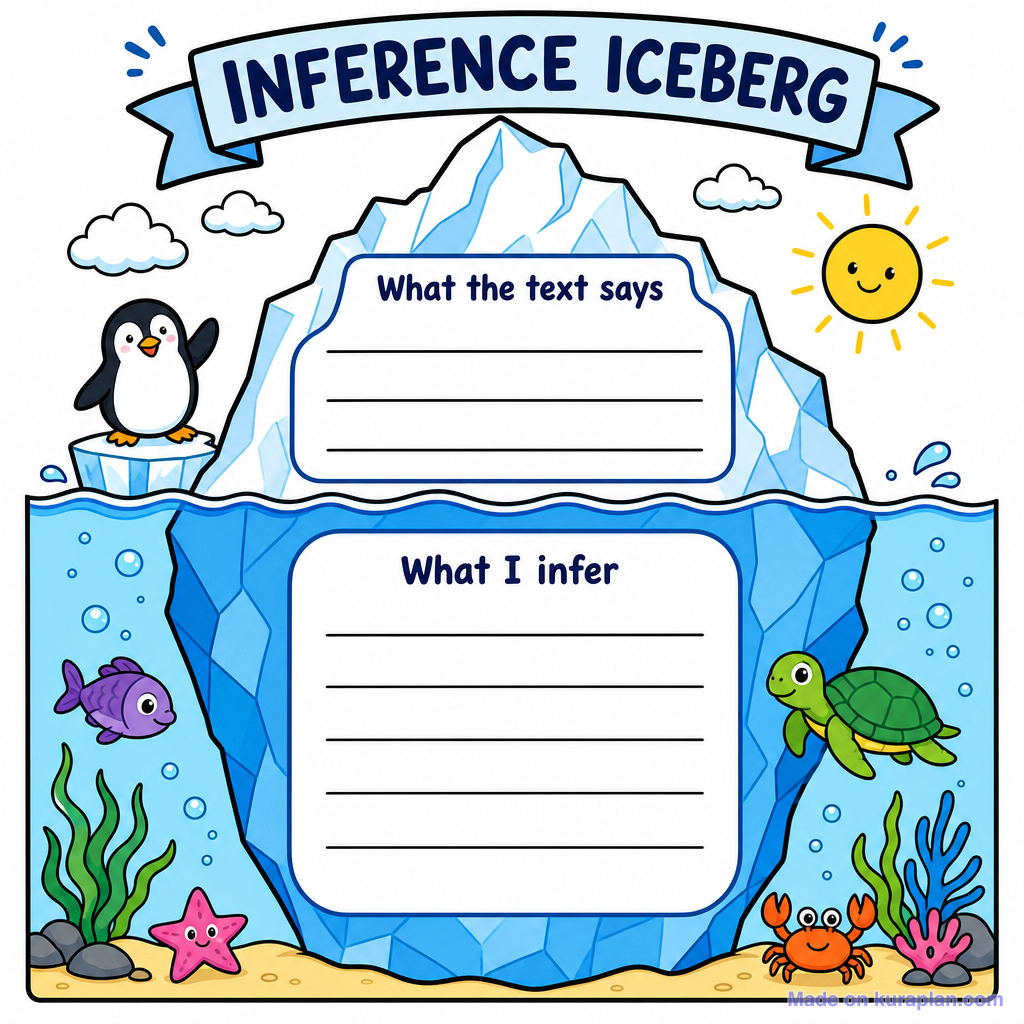
What is Inference?
Making educated guesses based on evidence Using clues from what we see, hear, or read Combining our observations with what we already know Detective work with information!

How to Play Inference Detective
1. Read the inference statement aloud 2. Show students both images 3. Students decide which image best supports the inference 4. Explain reasoning using clues and evidence

Round 1: Working Hard and Exhausted
Inference: This person has been working very hard and is exhausted. Image A: Person asleep at desk, surrounded by papers and books Image B: Person relaxing on a beach lounger with sunglasses Think: What clues connect to the inference?

Round 1: Answer Reveal
Correct Answer: Image A Evidence clues: Slumped posture at desk, Papers and books around them, Eyes closed mid-work Why not Image B? Shows leisure and rest, not exhaustion from work

Round 2: Shocked and Surprised
Inference: Something unexpected has just happened and this person is shocked. Image A: Person with wide eyes, open mouth, hand over face Image B: Person smiling calmly at camera in a relaxed setting Think: What body language shows shock?

Round 2: Answer Reveal
Correct Answer: Image A Evidence clues: Wide, open eyes, Open mouth expression, Hands raised in surprise Why not Image B? Shows calmness and control, not shock

Inference Detective Skills
Look for visual clues and evidence Consider body language and facial expressions Think about what the scene tells you Use your background knowledge Always explain your reasoning
More Inference slide decks
Other ready-to-teach decks on inference.

Free Inference images
Drop these illustrations straight into your lesson.