:max_bytes(150000):strip_icc()/3749878-dff4534be6114176845f61e0fd0f1c5d.jpg)
Hot Finger Foods: Safety and Execution
Year 10 Health & Life Skills 30-minute presentation Food safety and preparation techniques

What Are Hot Finger Foods?
Think about your favorite party or event What small, hot foods have you enjoyed? How were they different from cold appetizers?

Definition and Characteristics
Small, bite-sized portions served hot Can be eaten with hands without utensils Designed for social gatherings and events Temperature must be maintained for safety Examples: spring rolls, samosas, mini quiches, sliders
Hot vs Cold Finger Foods
{"left":"Require temperature control\nMore complex food safety considerations\nOften involve cooking/reheating\nHigher risk of bacterial growth\nNeed proper holding equipment","right":"Simple storage requirements\nLower food safety risks\nCan be prepared well in advance\nLess equipment needed\nEasier portion control"}

Why Hot Finger Foods Matter
Popular at social events and gatherings Important skill for hospitality industry Demonstrates advanced cooking techniques Teaches temperature control and food safety Builds confidence in food service Cultural significance in many cuisines
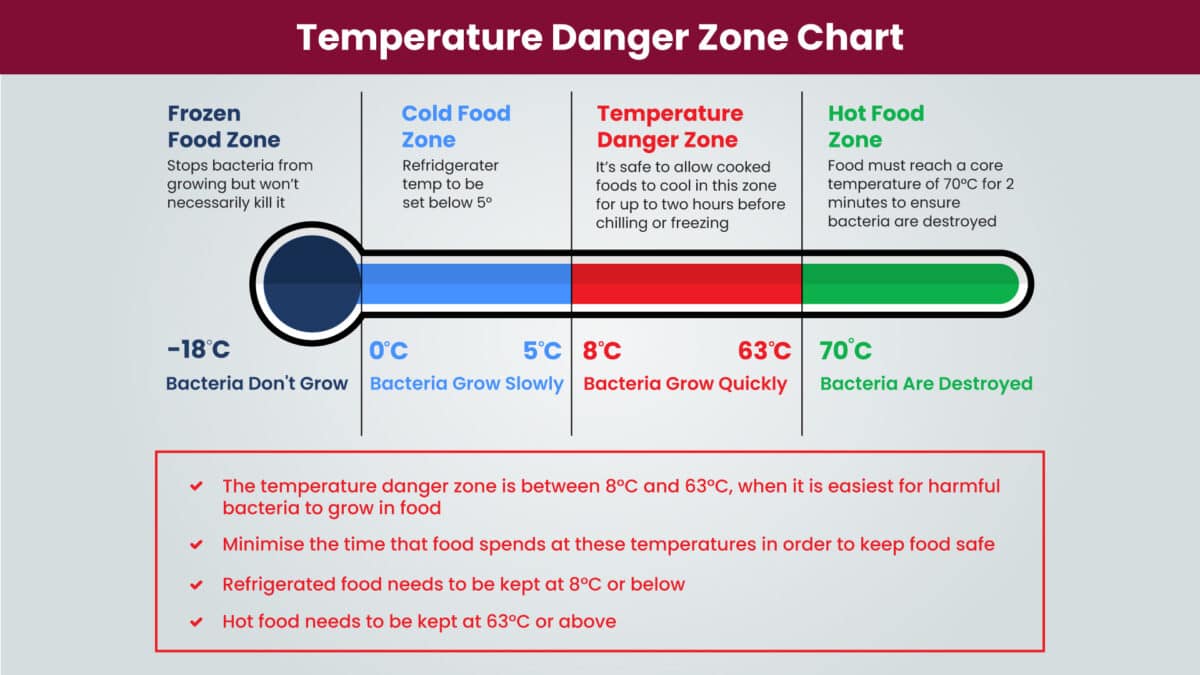
The Danger Zone: Temperature Safety
:max_bytes(150000):strip_icc()/instantreadthermometerdigital2500-5a9f24cbc673350037a2aee6.jpg)
Essential Safety Principles
Keep hot foods HOT (above 60°C) Use proper thermometers to check temperature Never leave food in danger zone for more than 2 hours Reheat thoroughly to 75°C before serving Use clean utensils and equipment Practice good personal hygiene

Safety Scenario Challenge
Work in pairs Read your assigned scenario card Identify the food safety risks Propose solutions using today's principles Present your findings to the class
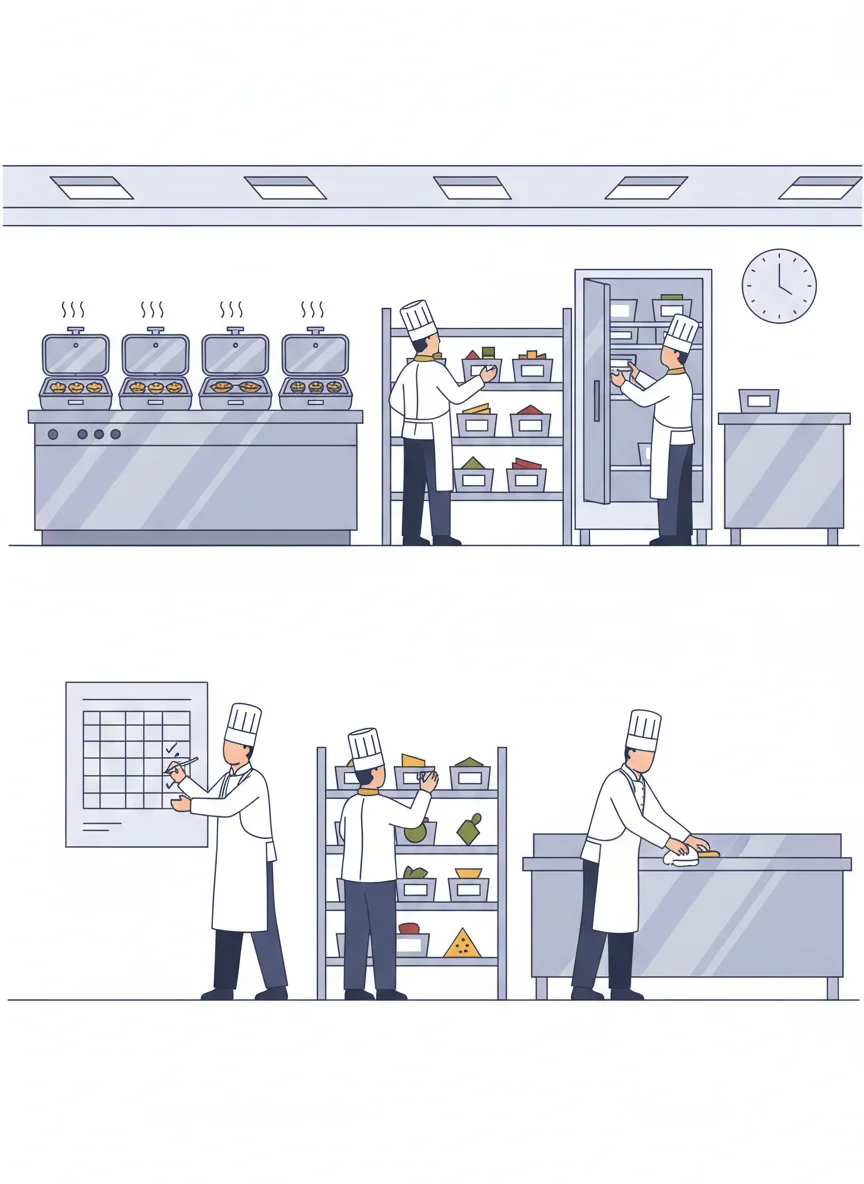
Execution Best Practices
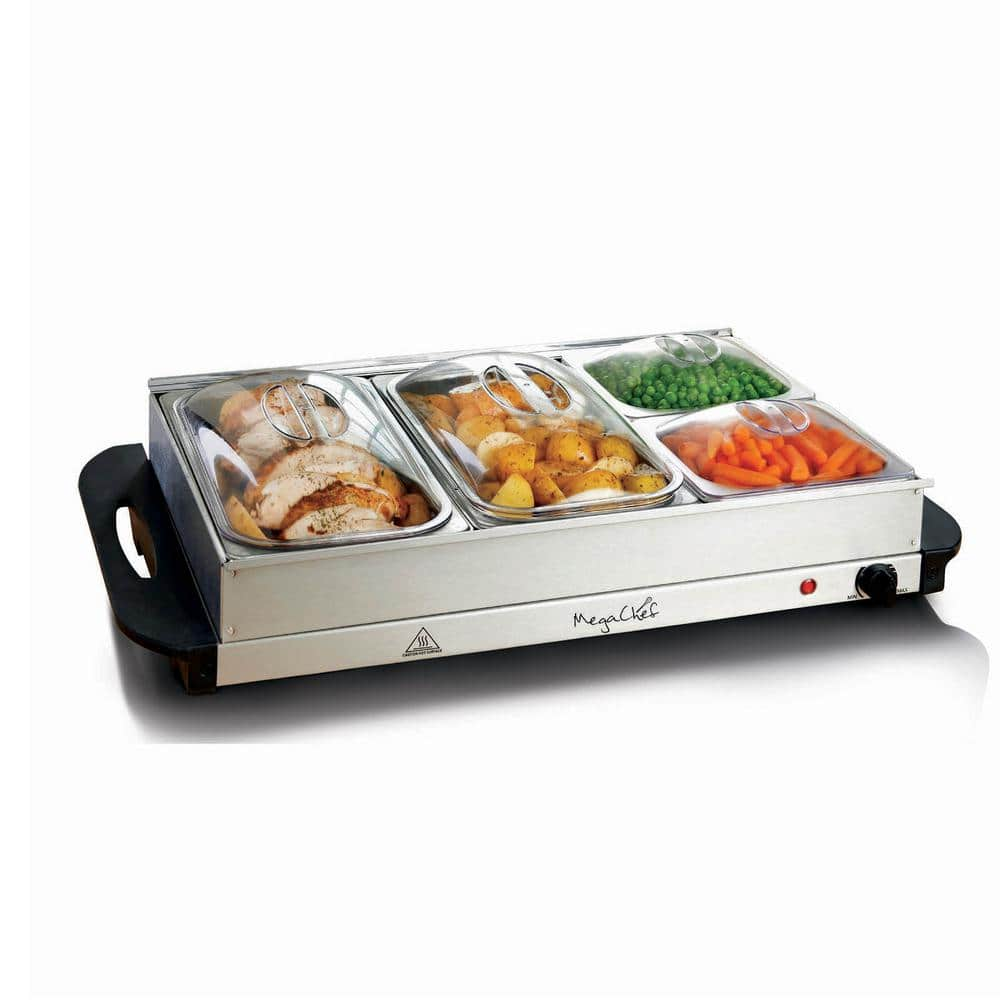
Plan preparation timeline carefully Use appropriate holding equipment (bain-marie, warming trays) Prepare in small batches for freshness Label foods with preparation times Train staff on proper serving techniques Monitor and record temperatures regularly
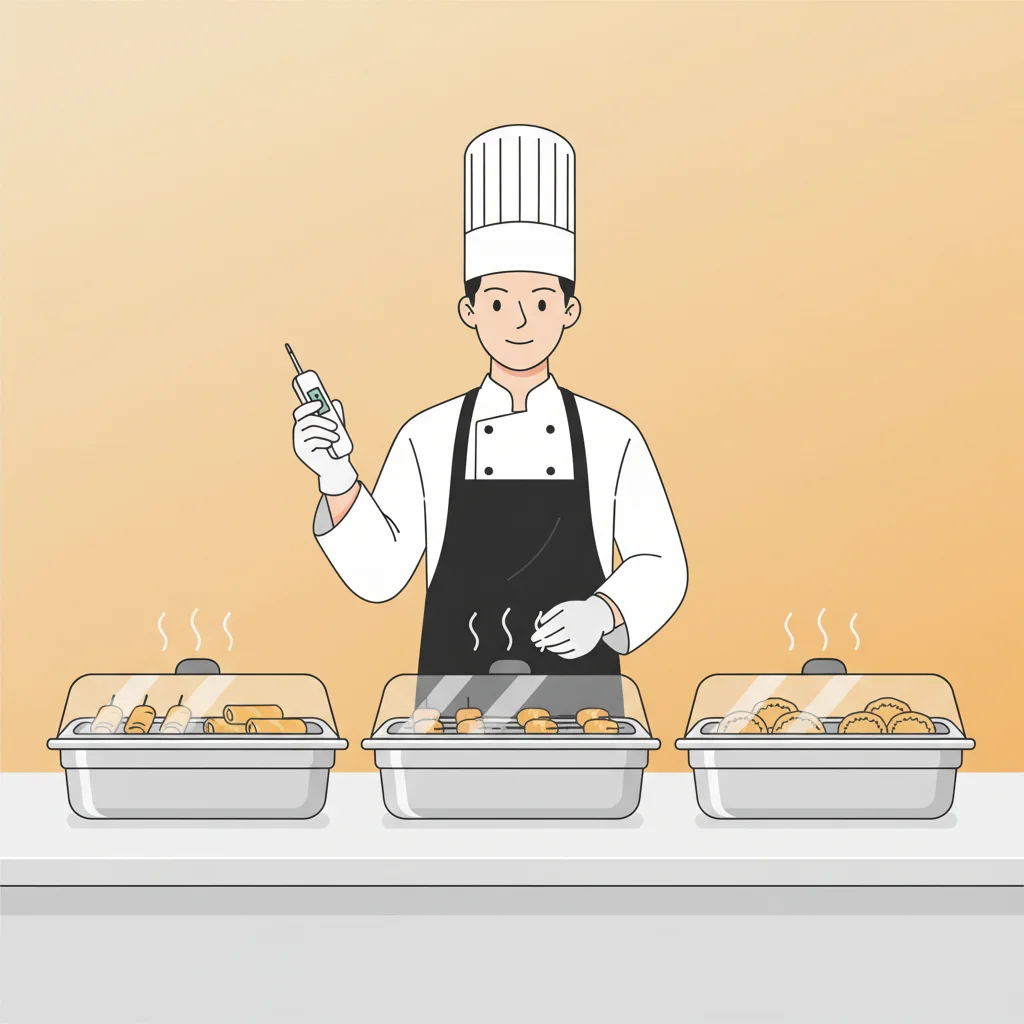
Remember
"Food safety is not negotiable - it protects both your reputation and people's health. Master the basics, and you'll build confidence for more complex culinary challenges."