
Hitler's Rise: Nazi Origins & Putsch
Year 10 History The Road to World War II Understanding the Early Nazi Movement
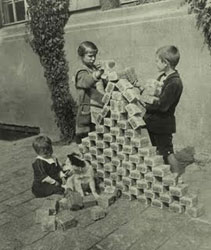
Post-WWI Germany: Setting the Stage
Treaty of Versailles created resentment Economic hardship and hyperinflation Political instability in Weimar Republic Germans felt humiliated and blamed democracy

Birth of the Nazi Party (1919-1921)
Started as German Workers' Party (DAP) in 1919 Hitler joined as member #555 in September 1919 Party renamed to Nazi Party (NSDAP) in 1921 Hitler became leader through powerful speaking skills

Key Vocabulary: Putsch
"A violent attempt to overthrow a government" From German meaning 'to push' or 'thrust' The Munich Putsch was Hitler's first major attempt to seize power
The Munich Putsch: November 8-9, 1923

Why the Munich Putsch Failed
{"left":"Poor planning and timing\nLack of popular support\nBavarian government remained loyal","right":"Army and police opposed the Nazis\nHitler overestimated his influence\nNo support from other German states"}

Think-Pair-Share: Consequences
THINK: What were the consequences of the failed putsch for Hitler and the Nazi Party? PAIR: Discuss your ideas with a partner SHARE: We'll hear some ideas from the class

Lessons Learned: The Path Forward
Hitler's trial became a propaganda platform Wrote 'Mein Kampf' while in prison Decided to gain power through legal means Rebuilt the Nazi Party after his release in 1924 Set the stage for future electoral success