Finding Any Term: Arithmetic Sequences
Year 12 Mathematics New Zealand Curriculum Learning to find the nth term efficiently
Warm-up: What Do You Remember?
Look at this sequence: 3, 7, 11, 15, ... What is the first term (a)? What is the common difference (d)? How would you find the 20th term without listing all terms?
Today's Learning Goal
We will learn to find any term in an arithmetic sequence using a formula, which will help solve problems quickly and efficiently
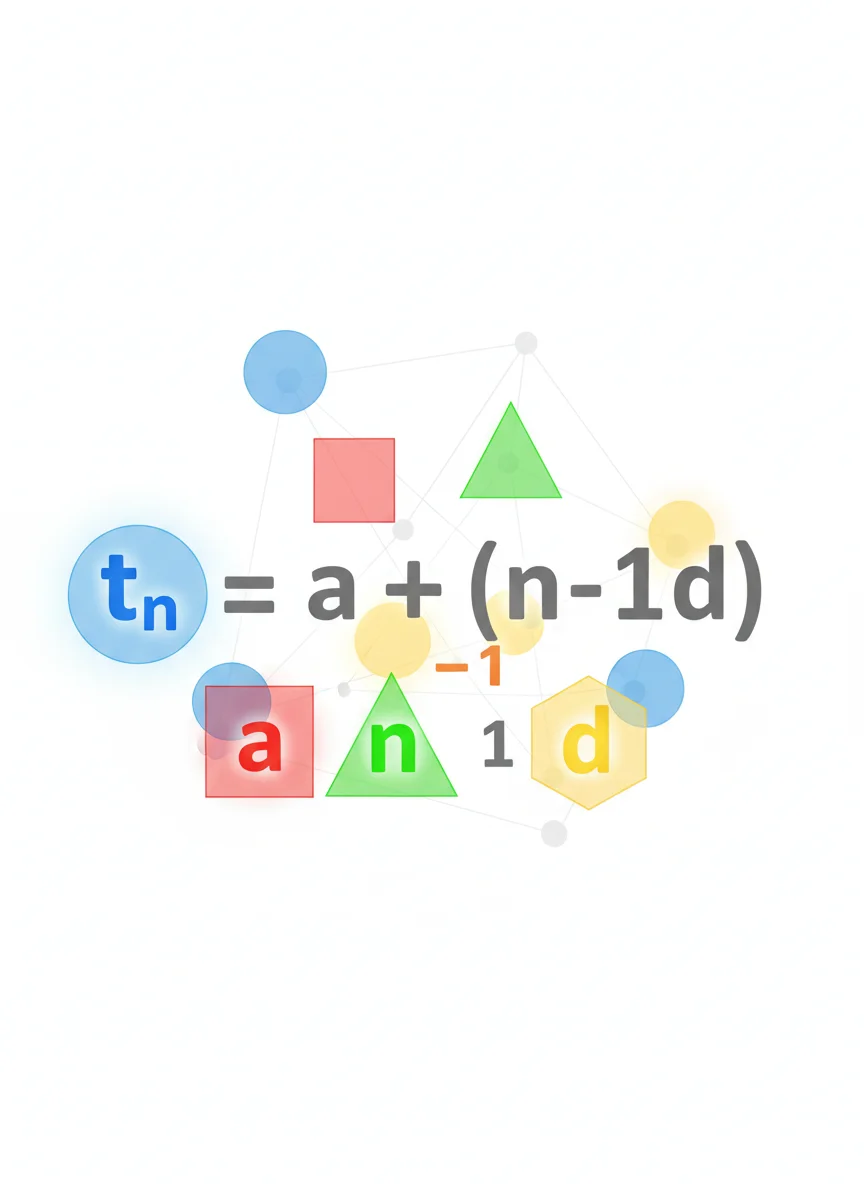
The nth Term Formula
tn = a + (n - 1)d Where: • a = first term • d = common difference • n = term number we want • tn = the value of the nth term
Worked Example Together
Find the 10th term of: 5, 8, 11, 14, ... Step 1: Identify a, d, and n Step 2: Substitute into formula Step 3: Calculate the result Let's work through this step by step!

Real-World Application
{"left":"A gardener plants trees in rows. The first row has 4 trees, and each subsequent row has 3 more trees than the previous row.\nQuestion: How many trees are in the 15th row?","right":"Identify the values: a = 4 (first term), d = 3 (common difference), n = 15 (term we want)\nApply the formula: t₁₅ = 4 + (15-1) × 3 = 4 + 42 = 46 trees"}
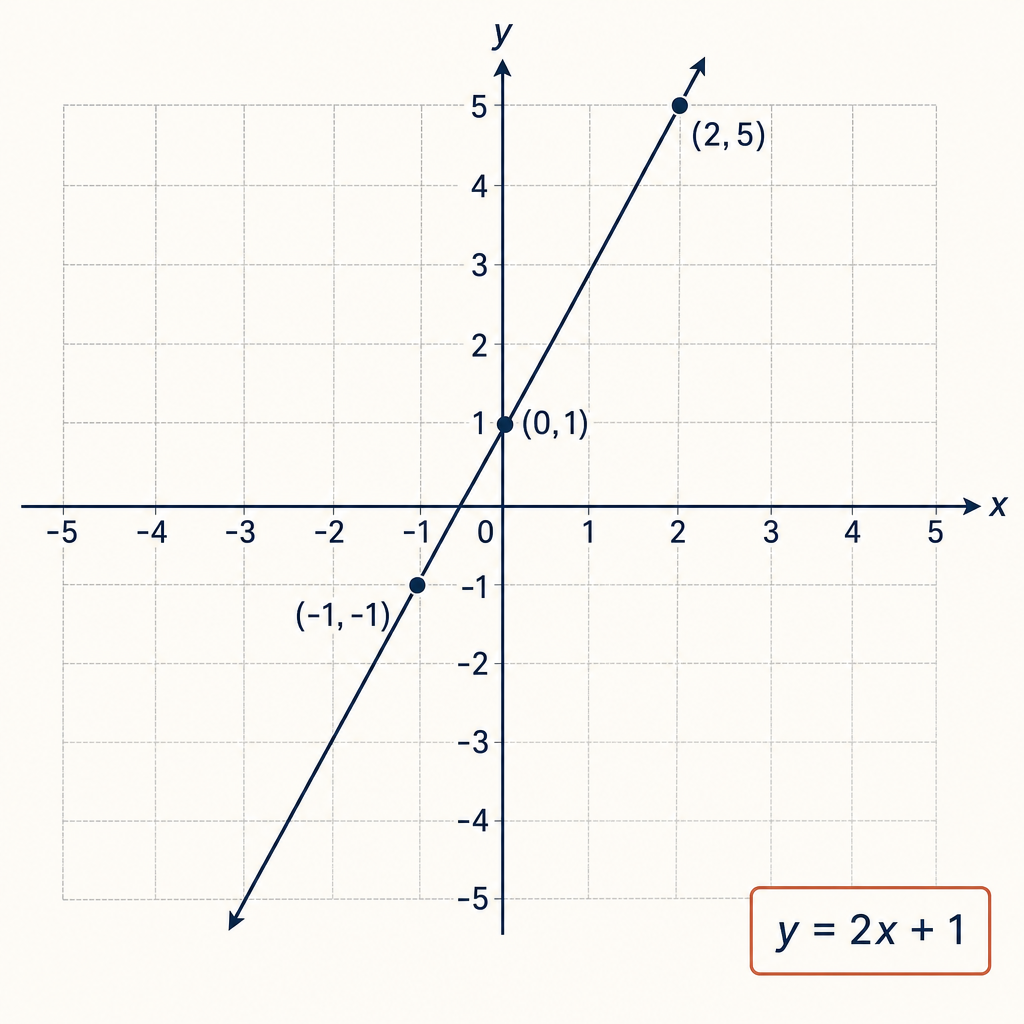
Visual Representation: Arithmetic Sequence Graph
Your Turn: Practice Problems
Problem 1: Find the 12th term of 2, 9, 16, 23, ... Problem 2: The 8th term of a sequence is 31, first term is 3. Find the common difference. Problem 3: A concert hall has 20 seats in the first row, with each row having 4 more seats. How many seats in row 25? Work individually or in pairs - I'll circulate to help!
Check Your Understanding
Quick Quiz: What would happen to our formula if the common difference was negative? Example: 20, 15, 10, 5, ... How would this change our calculation?

Key Takeaways & Next Steps
Formula: tn = a + (n-1)d works for ANY arithmetic sequence Always identify a, d, and n before substituting Check your answers for reasonableness Next lesson: Adding up terms in arithmetic sequences Optional challenge: Create a sequence spreadsheet at home