
Quadratic Function Transformations Explored
Grade 11 Mathematics Understanding how quadratic functions change shape and position
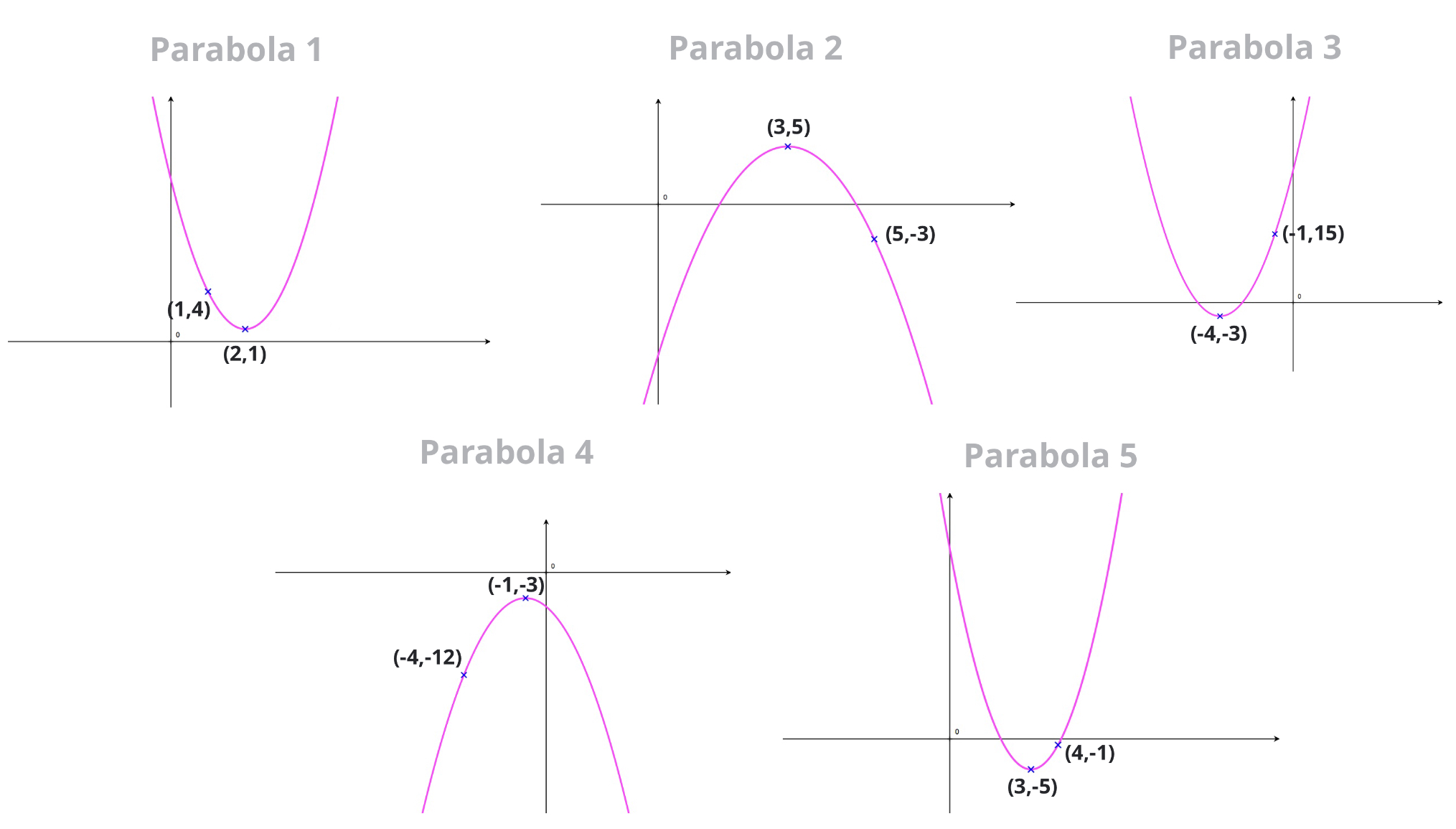
What is a Quadratic Function?
General form: f(x) = ax² + bx + c Creates a U-shaped curve called a parabola The coefficient 'a' determines if it opens up or down Vertex form: f(x) = a(x - h)² + k
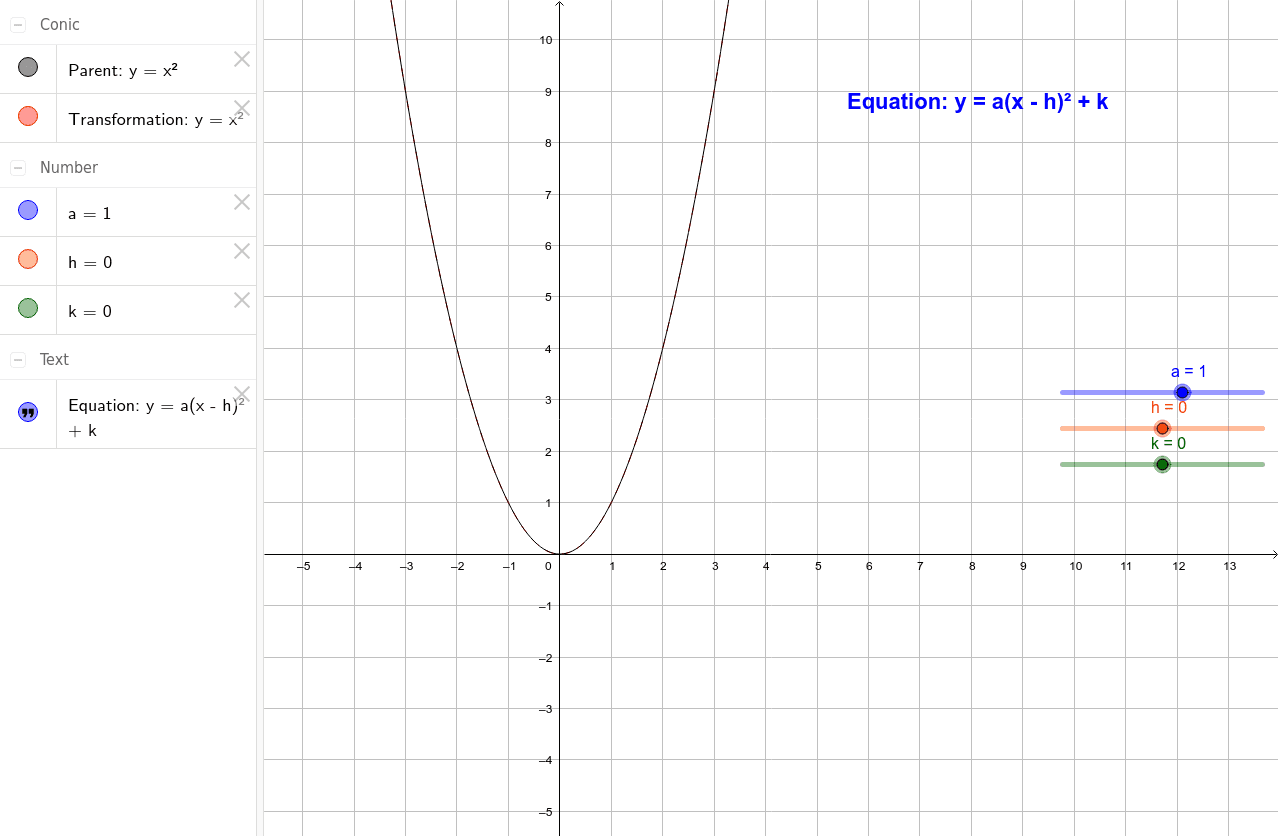
The Parent Function: f(x) = x²
Simplest quadratic function Vertex at origin (0, 0) Opens upward Axis of symmetry: x = 0 This is our starting point for all transformations

Types of Transformations
{"left":"Vertical translations (up/down shifts)\nHorizontal translations (left/right shifts)\nVertical stretches and compressions","right":"Horizontal stretches and compressions\nReflections across x-axis\nReflections across y-axis"}
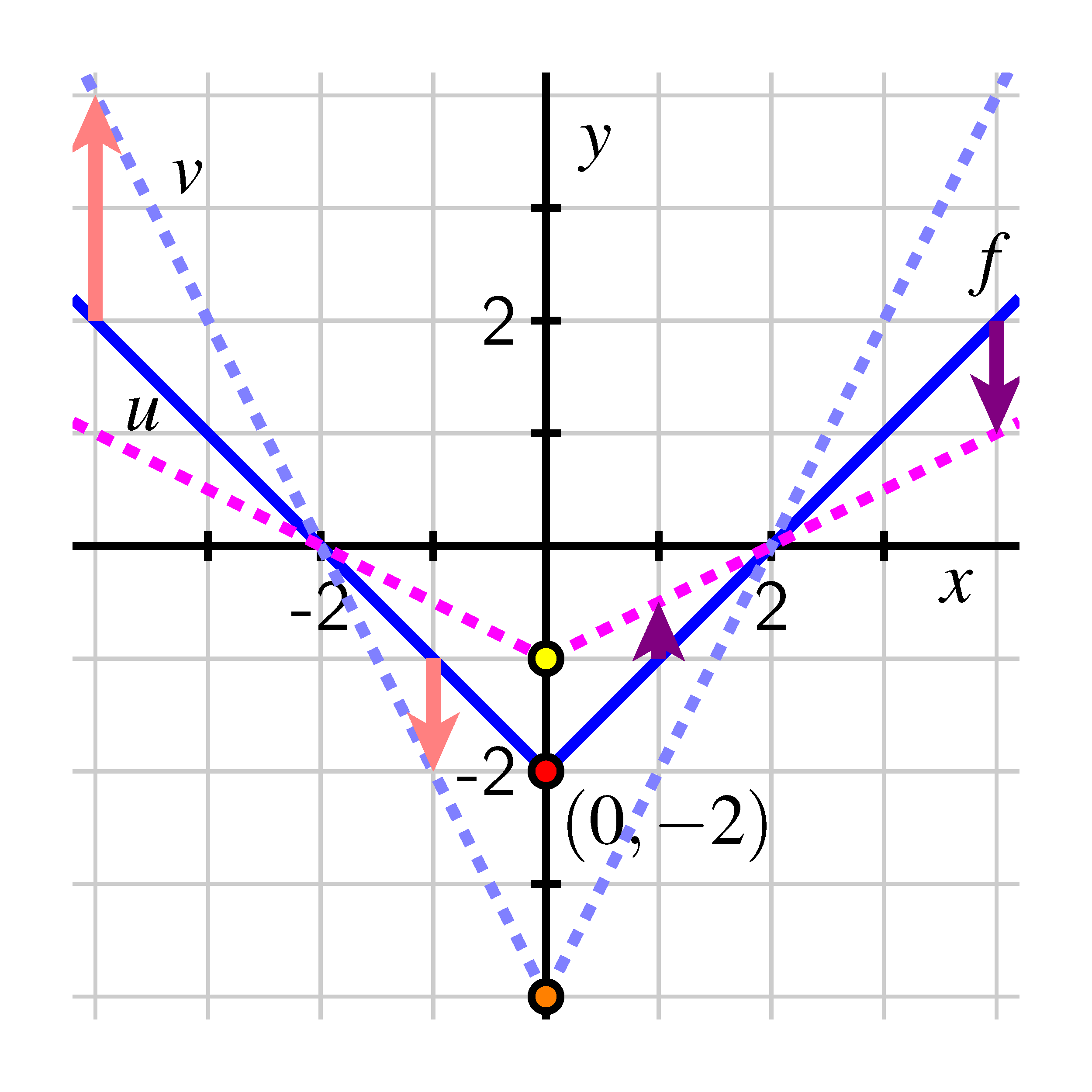
Vertical Translations: f(x) = x² + k
When k > 0: graph shifts UP When k < 0: graph shifts DOWN The vertex moves from (0,0) to (0,k) Try: f(x) = x² + 3 and f(x) = x² - 2
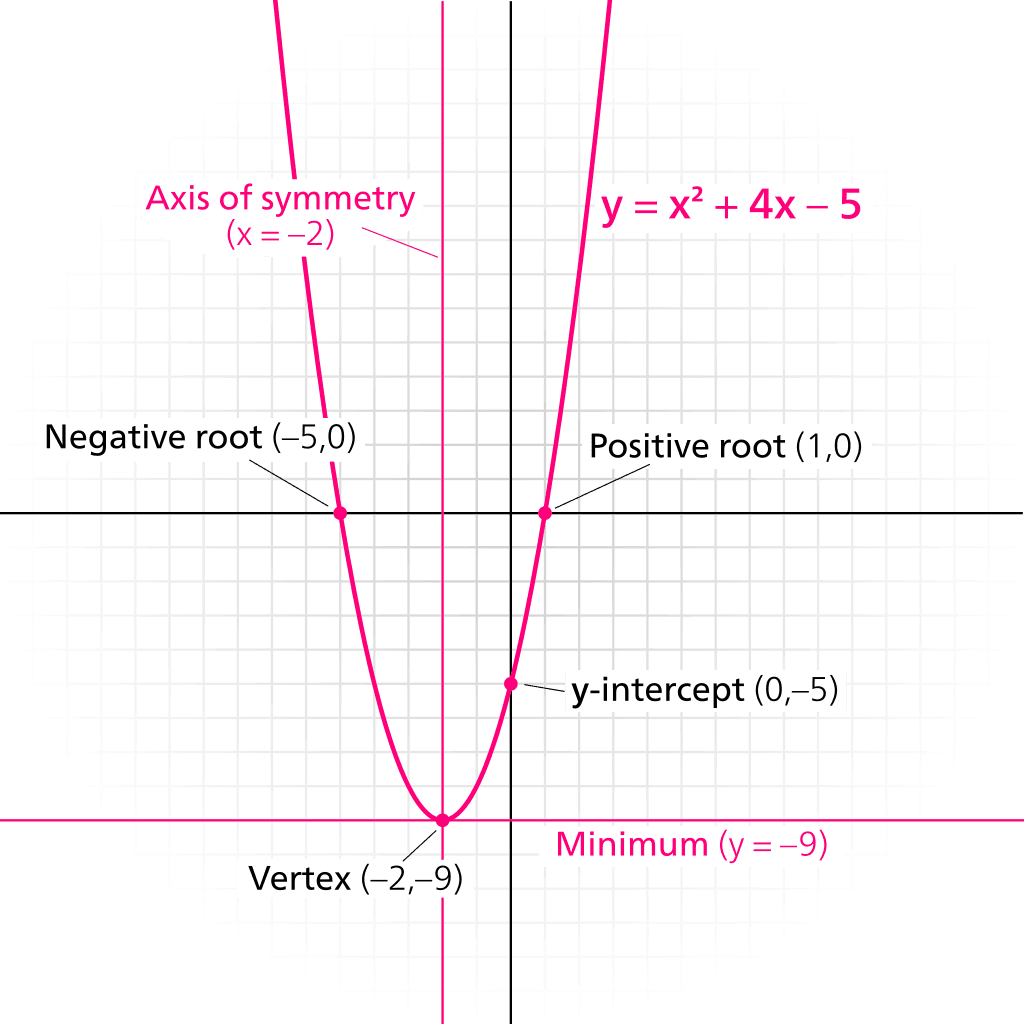
Horizontal Translations: f(x) = (x - h)²
When h > 0: graph shifts RIGHT When h < 0: graph shifts LEFT The vertex moves from (0,0) to (h,0) Try: f(x) = (x - 2)² and f(x) = (x + 3)²

Quick Check: Where's the Vertex?
Given f(x) = (x - 4)² + 2 What are the coordinates of the vertex? Which direction did the parent function move?

Vertical Stretches and Compressions: f(x) = ax²
When |a| > 1: vertical stretch (narrower) When 0 < |a| < 1: vertical compression (wider) When a < 0: reflection over x-axis The larger |a| gets, the narrower the parabola
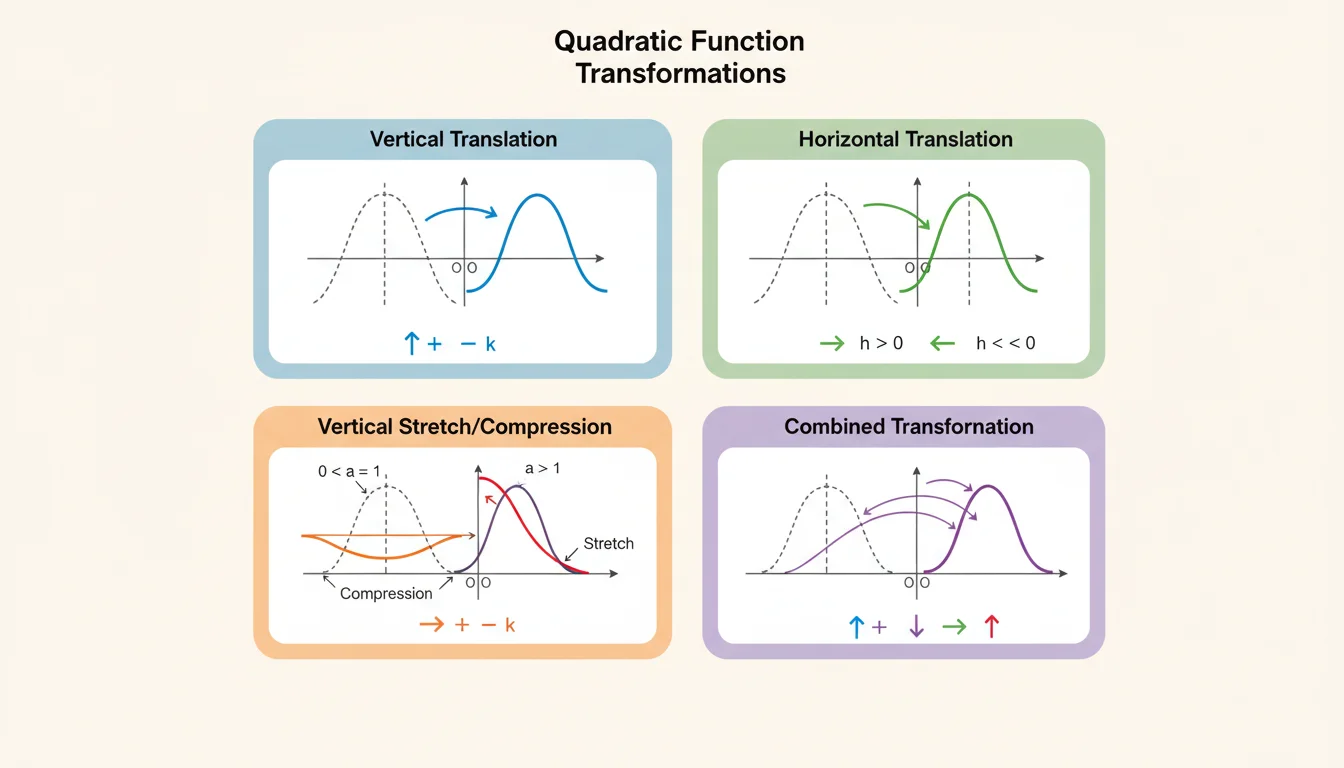
Transformation Summary Chart

Practice Challenge
Graph: f(x) = -2(x + 1)² - 3 Identify all transformations from parent function What is the vertex? Does it open up or down? Work in pairs to solve and verify