
Poetry's Sound Patterns Made Simple
Understanding Rhyme Scheme, Rhythm, and Meter Grade 10 English Language Arts Using Robert Frost's 'The Road Not Taken'

Learning Objectives - I Can Statements
I can identify rhyme schemes by labeling end sounds with letters I can recognize rhythm patterns by listening to the natural beat of poetry I can understand meter as patterns of stressed and unstressed syllables I can analyze how sound patterns connect to a poem's meaning

Success Criteria & Differentiation
Success: You can label a rhyme scheme and clap to rhythm For ELL students: We'll use visual patterns and physical movement For dyslexia-friendly learning: Audio recordings and color-coding available Extension: Advanced learners will explore variations in meter

Our Focus Poem
Two roads diverged in a yellow wood, And sorry I could not travel both And be one traveler, long I stood And looked down one as far as I could To where it bent in the undergrowth;
Part 1: What is Rhyme Scheme?
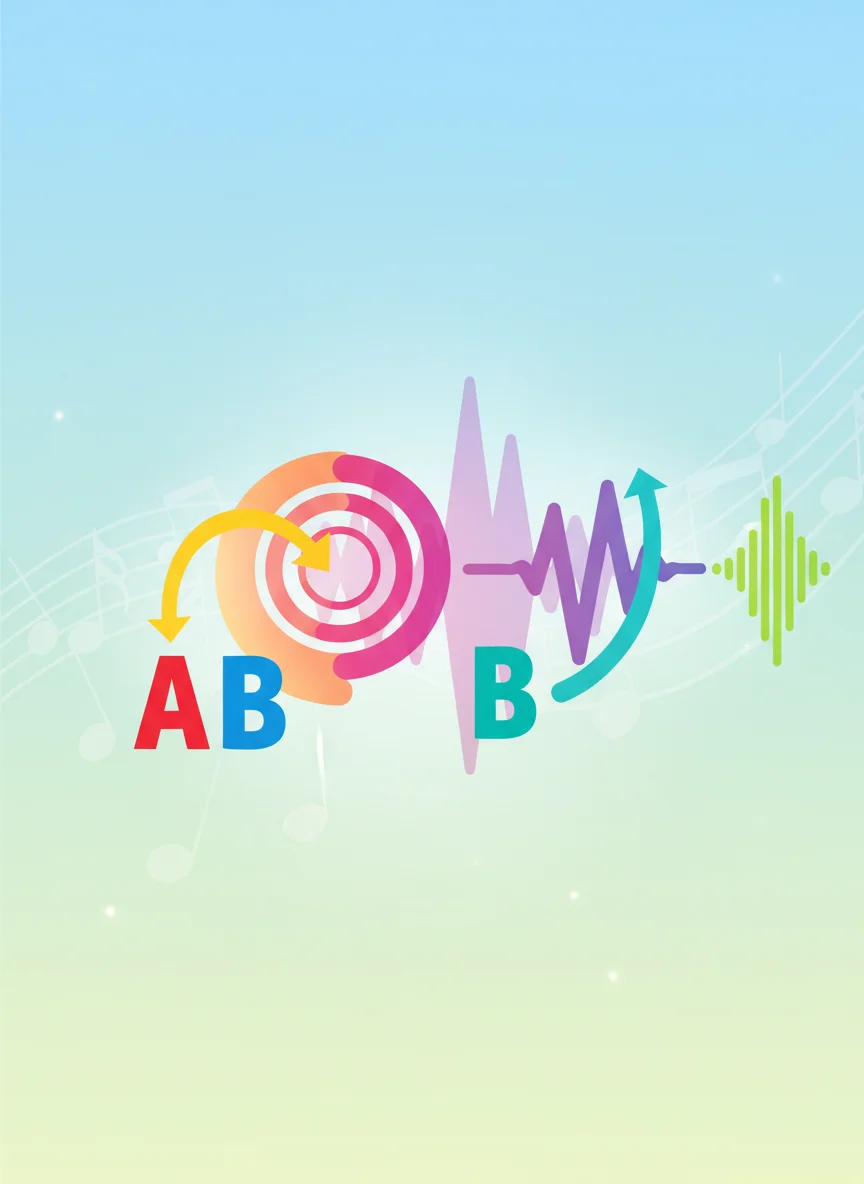
Rhyme scheme = the pattern of end sounds in a stanza We label matching sounds with letters First sound → A New sound → B If a sound repeats → use the same letter

Let's Find the Rhyme Scheme Together
Step 1: Circle the last word of each line Step 2: Group words that sound the same Step 3: Label the first group 'A', second group 'B' wood, stood, could = ? both, undergrowth = ?

The Pattern Revealed: A-B-A-A-B
wood (A) both (B) stood (A) could (A) undergrowth (B) Every stanza in the poem follows this same pattern!
Part 2: Understanding Rhythm
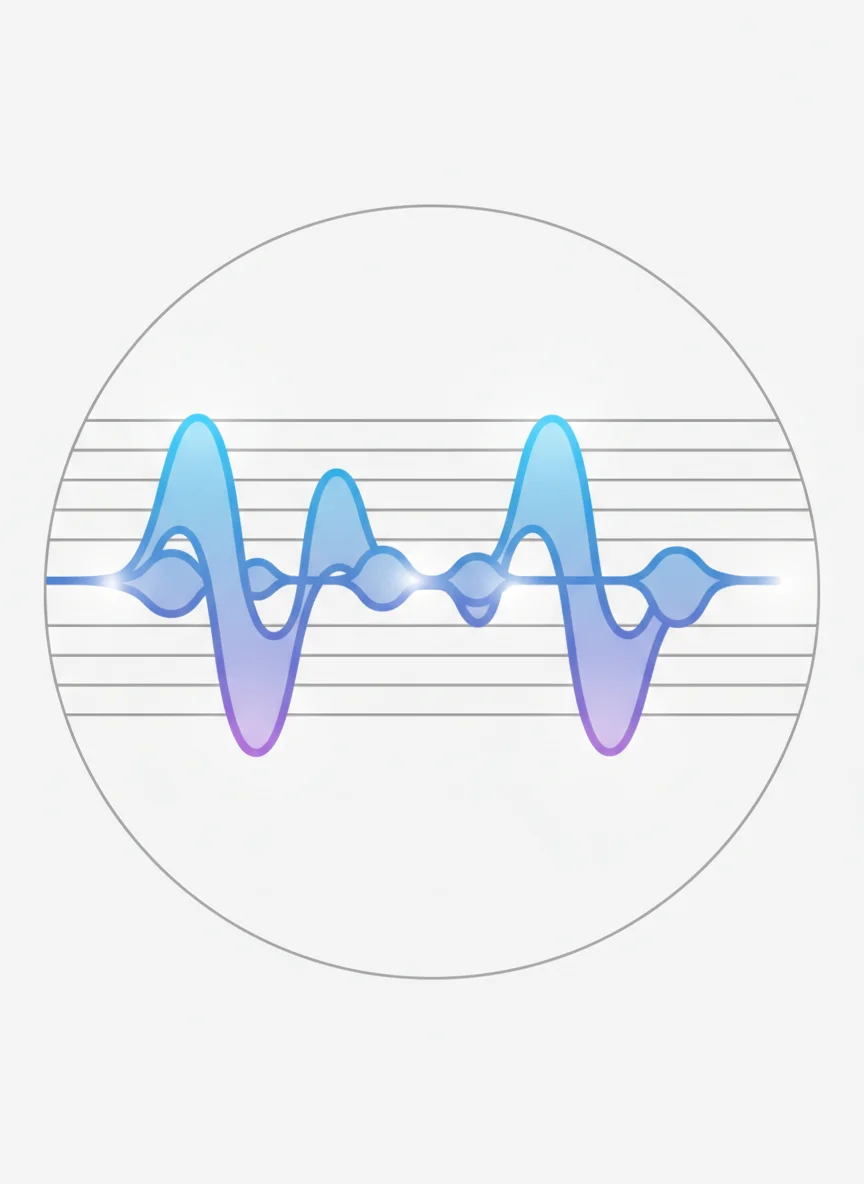
Rhythm = the natural beat of the poem when read aloud Like music Like a heartbeat Try reading: 'Two ROADS diVERGED in a YELlow WOOD' You can hear a steady pattern of beats

Clap the Beat Activity
Listen as I read the line slowly Clap when you hear a STRONG stress Two ROADS | diVERGED | in a YEL | low WOOD How many claps did you count?
Part 3: Understanding Meter
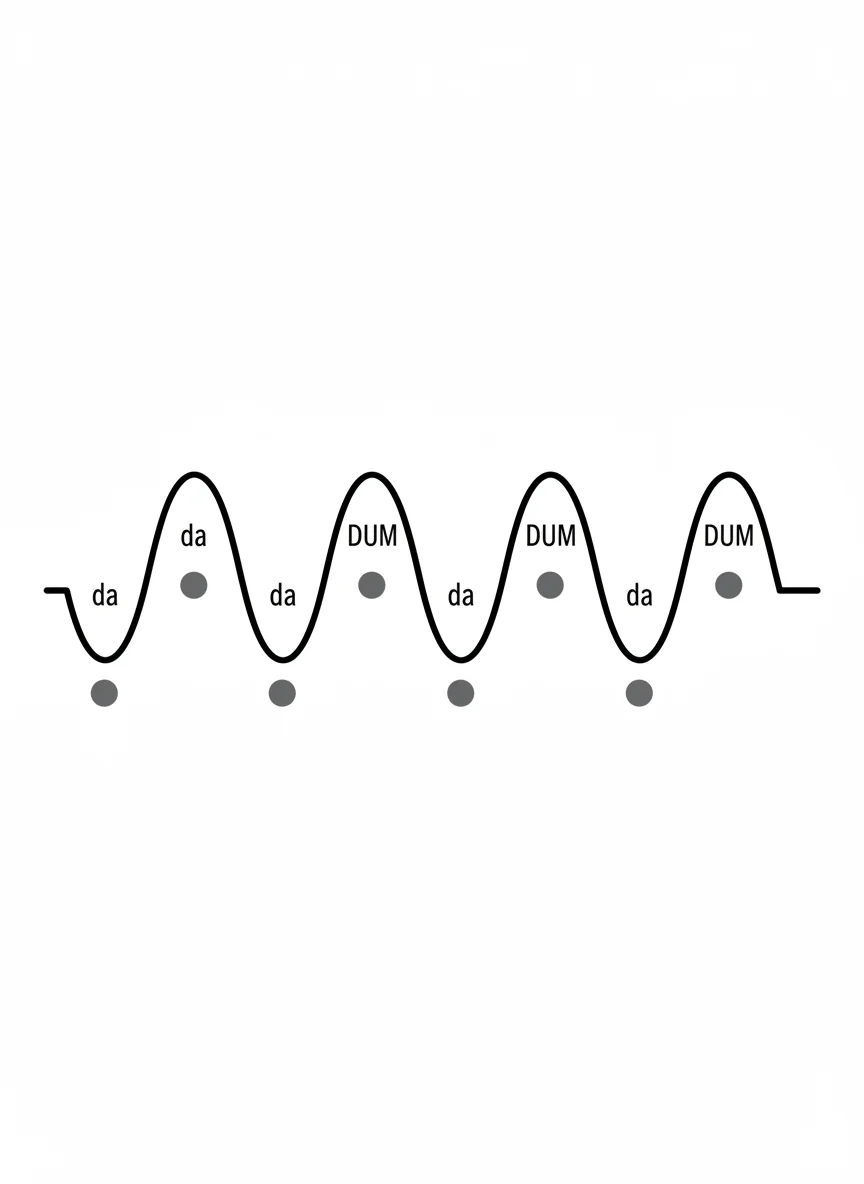
Meter = the pattern of stressed and unstressed syllables English poetry uses 'feet' - units of syllables The Road Not Taken uses: Iambic Tetrameter Iambic = da-DUM pattern (unstressed-stressed) Tetrameter = 4 iambs per line

Scanning the First Line
{"left":"Two roads / diverged / in a / yellow wood\nTwo ROADS | diVERGED | in a YEL | low WOOD","right":"da-DUM | da-DUM | da-DUM | da-DUM\nThis is iambic tetrameter in action!"}

Why Does This Matter?
How do these sound patterns connect to the poem's meaning? Think about: What kind of feeling does a steady rhythm create? What does a controlled pattern suggest about the speaker's mind?
2 more slides available after you open the deck.
Download all 14 slides