
Parallelogram Area: Sliding Into Understanding
Grade 7 Mathematics Discovering area through transformation

Warm-Up Wonder
A rectangle has a base of 8 cm and height of 4 cm. 1. What is its area? 2. If I slide part of the rectangle sideways (without stretching it), do you think the area changes? Why or why not?
What is Area?
Area measures the space inside a shape Measured in square units (cm², m²) For rectangles: Area = length × width Base and height must be perpendicular

Meet the Parallelogram
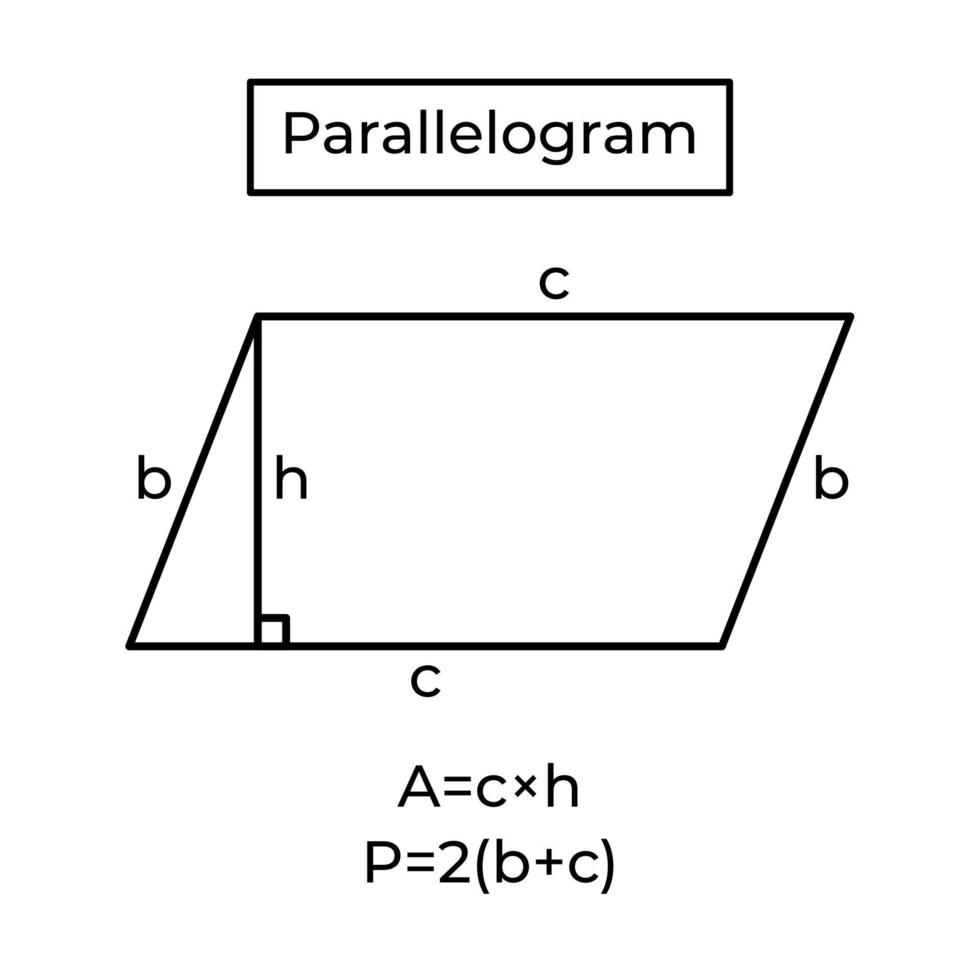
A four-sided shape with two pairs of parallel sides Opposite sides are equal in length The shape can be 'slanted' or tilted Height is NOT the same as the side length

The Magic Sliding Triangle
Watch as we cut a triangle from one side Slide it to the other side What shape do we get? Did the area change? Why or why not?
The Big Discovery
Area of parallelogram = base × height The area stays the same when we slide the triangle! Height must be perpendicular to the base

Try It Together
Work in pairs or groups of 3 Identify the base on your parallelogram Draw the perpendicular height carefully Calculate the area using A = base × height Check each other's work!

Key Takeaways
Area measures space inside a shape Parallelograms have the same area formula as rectangles Height must always be perpendicular to the base Sliding parts of a shape doesn't change its area Practice makes perfect!