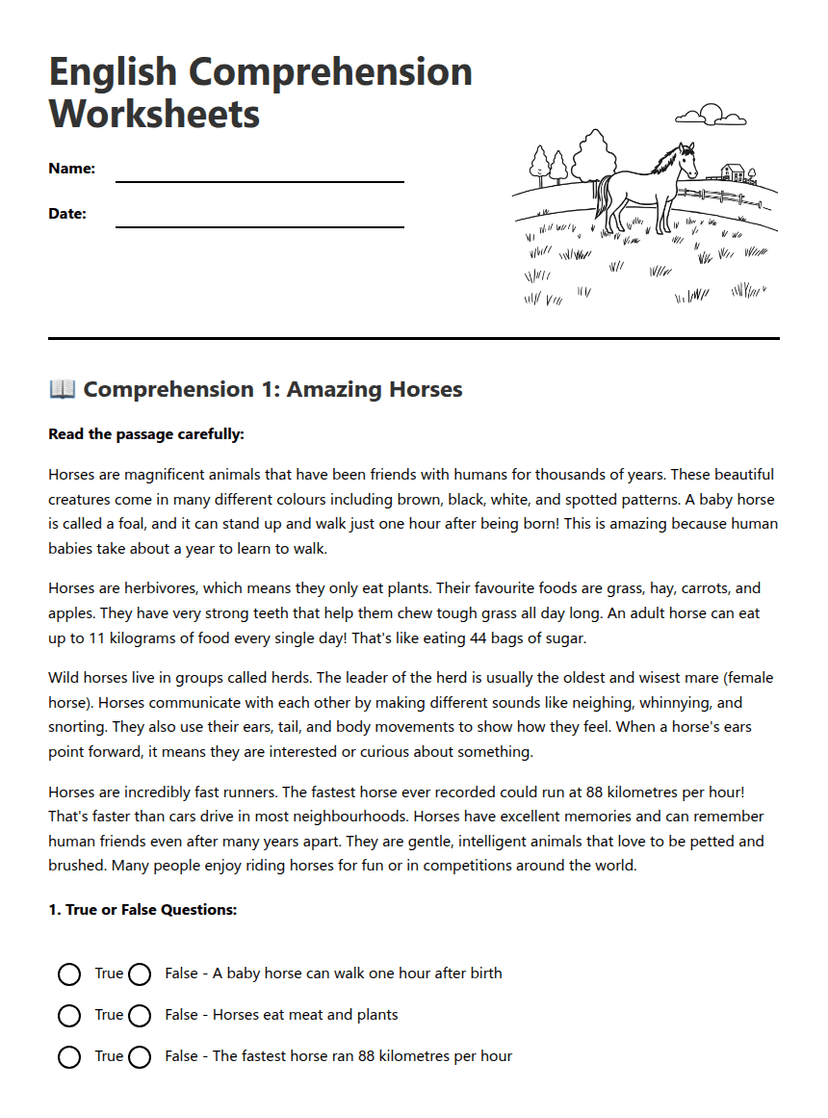
Cane Toads Reading Levels
A free english worksheet ready for your classroom. Open in Kuraplan to grab the print-ready PDF, customize it for your students, or generate a fresh version in seconds.
Cane Toads Reading Levels
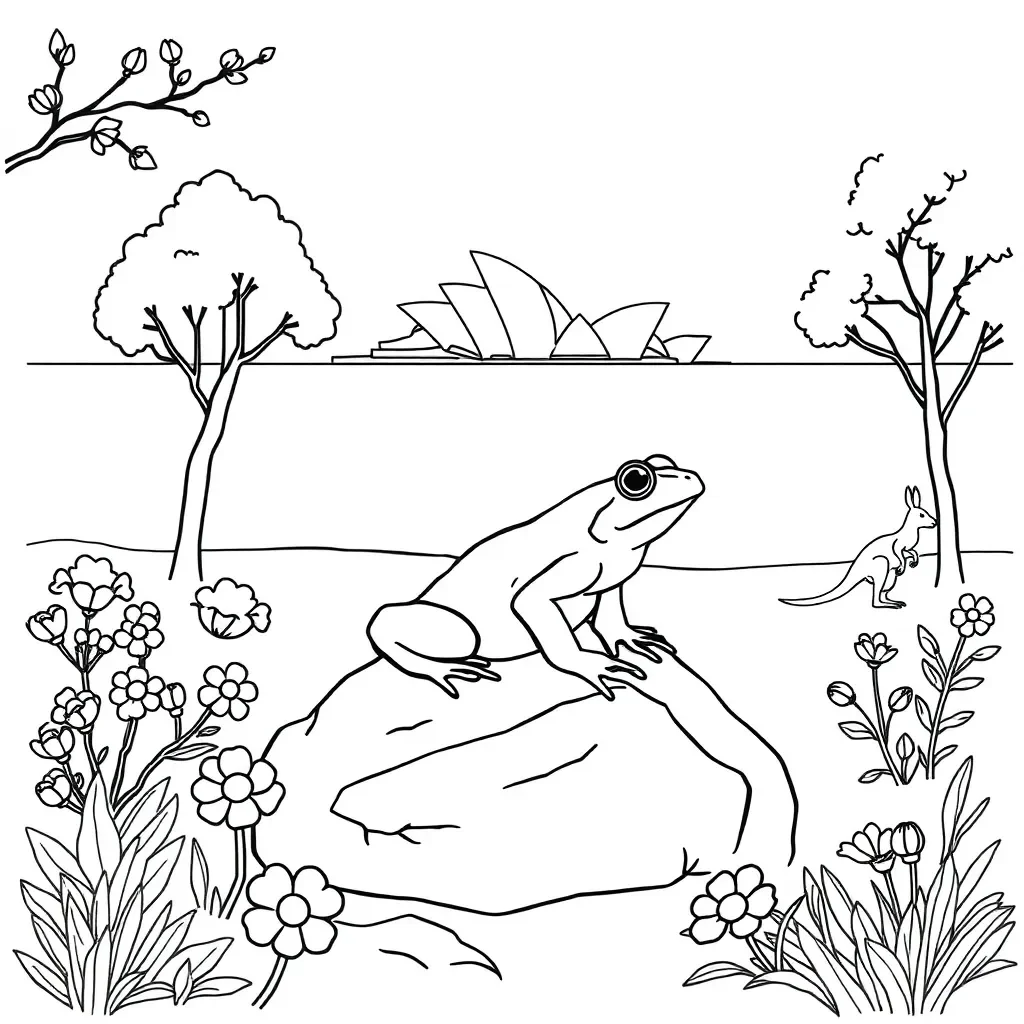
🐸 Level 1: Emerging Readers (Ages 7-8)
Focus: Reading simple sentences and finding basic facts about cane toads.
Cane Toads in Australia
Cane toads are big, brown toads. They came to Australia in 1935. People brought them to eat bugs that hurt sugar cane plants. But the cane toads did not eat the bugs. Instead, they ate other animals. Now there are millions of cane toads in Australia. They are poisonous. When other animals try to eat them, the animals get sick or die. This is a big problem for Australian wildlife.
🐸 Level 2: Developing Readers (Ages 9-10)
Focus: Understanding cause and effect relationships in environmental problems.
The Cane Toad Invasion
In 1935, Australian farmers faced a serious problem. Beetles were destroying their sugar cane crops in Queensland. Scientists suggested introducing cane toads from South America to control these pests. However, this biological control experiment went terribly wrong. The cane toads ignored the beetles and instead began eating native frogs, small mammals, and bird eggs. Their toxic skin glands make them deadly to predators like snakes, goannas, and crocodiles. Without natural enemies, cane toad populations exploded. Today, over 200 million cane toads spread across northern Australia at a rate of 40-60 kilometres per year, threatening biodiversity.
🐸 Level 3: Extending Readers (Ages 11-12)
Focus: Analysing complex environmental issues and evaluating solutions.
Cane Toads: An Ecological Disaster
The introduction of cane toads (Rhinella marina) to Australia represents one of the most catastrophic biological invasions in modern history. Originally imported from Hawaii in 1935 to combat the greyback cane beetle, these amphibians have become an unstoppable ecological force. Their failure to control agricultural pests, combined with their voracious appetite for native fauna and lethal bufotoxin secretions, has created a cascade of environmental consequences. Research indicates that cane toad toxins have contributed to the decline of several native predator species, including northern quolls and freshwater crocodiles. Current management strategies include community collection programs, genetic biocontrol research, and barrier fencing, yet their continued westward expansion into the Kimberley region threatens some of Australia's most pristine ecosystems.
About This Worksheet
Free in Kuraplan
Sign up free, grab the PDF, and customize it for your class.
Print-Ready
Formatted for standard paper. Clean layout, easy to read.
AI-Generated
Created with Kuraplan's AI, designed for real classroom use.
For Teachers & Parents
Use in classrooms, for homework, tutoring, or homeschool.
Need a custom version of this worksheet?
Kuraplan's AI generates custom worksheets in seconds — differentiated for every learner, aligned to your curriculum.
Generate Custom Worksheets — FreeMore English Worksheets
English for Logistics Worksheet
Free
English Support Worksheet
Free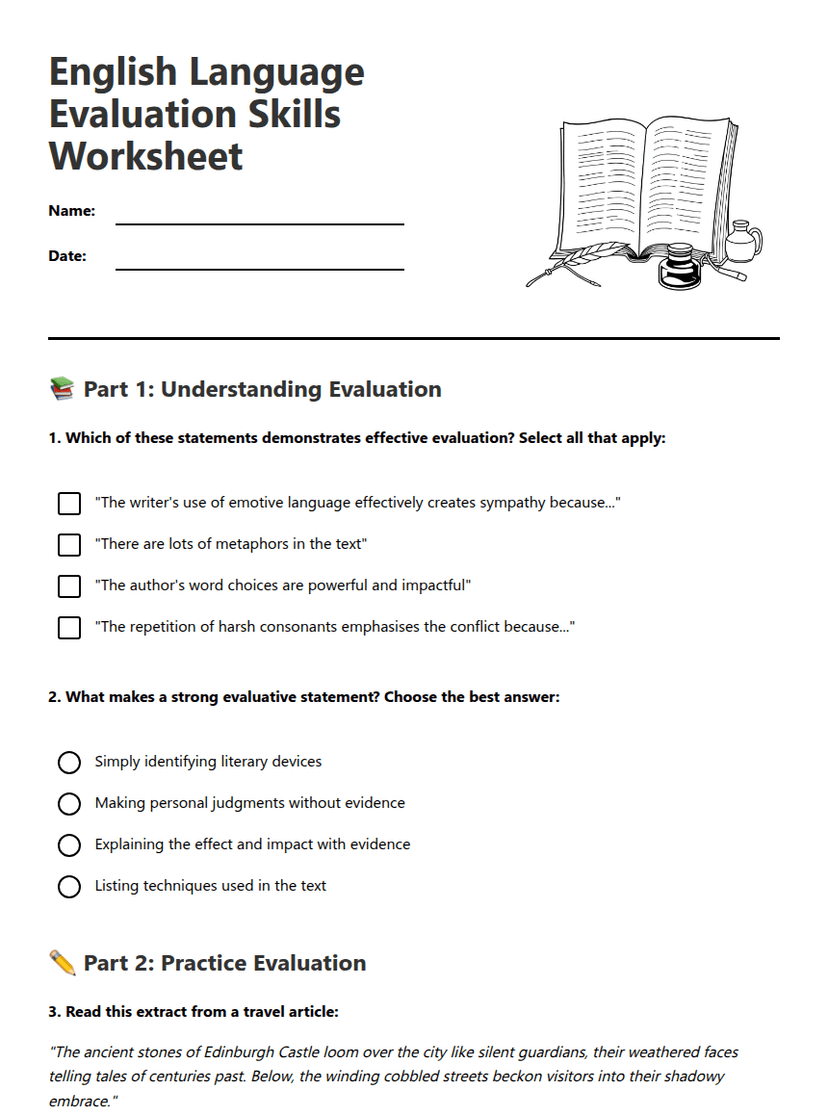
English Evaluation Skills Worksheet
Free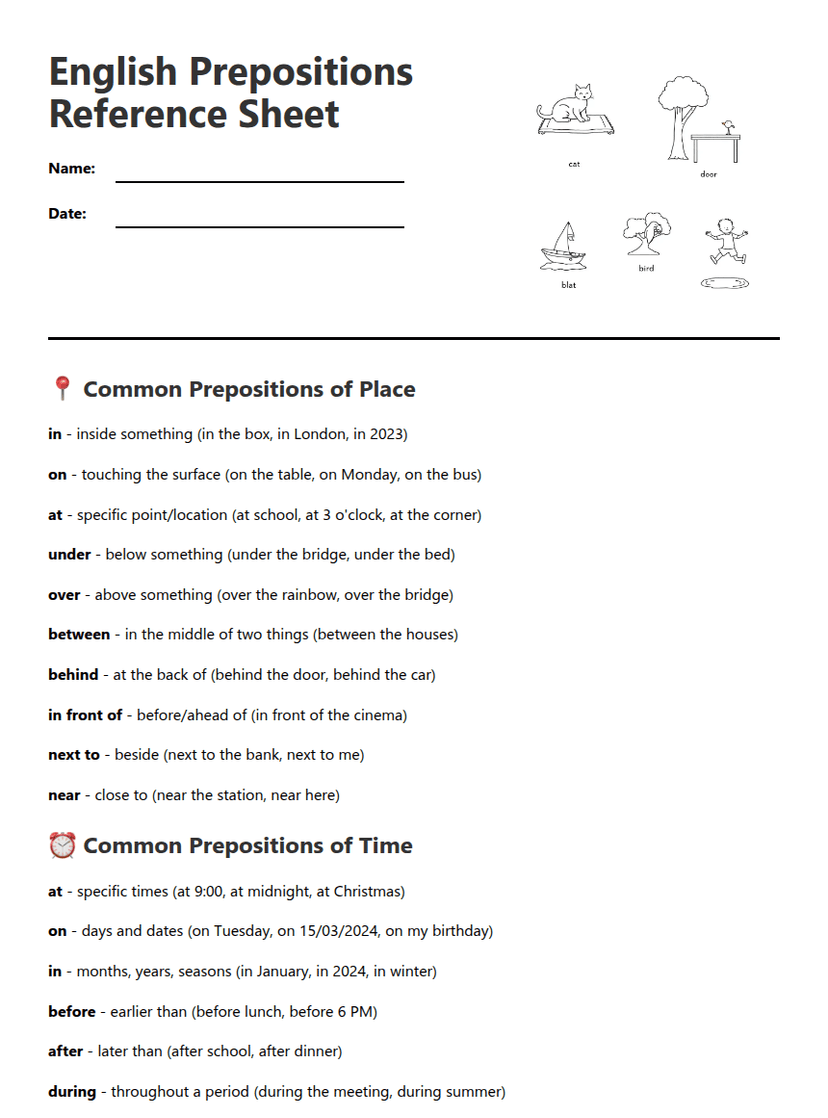
English Prepositions Reference Sheet
Free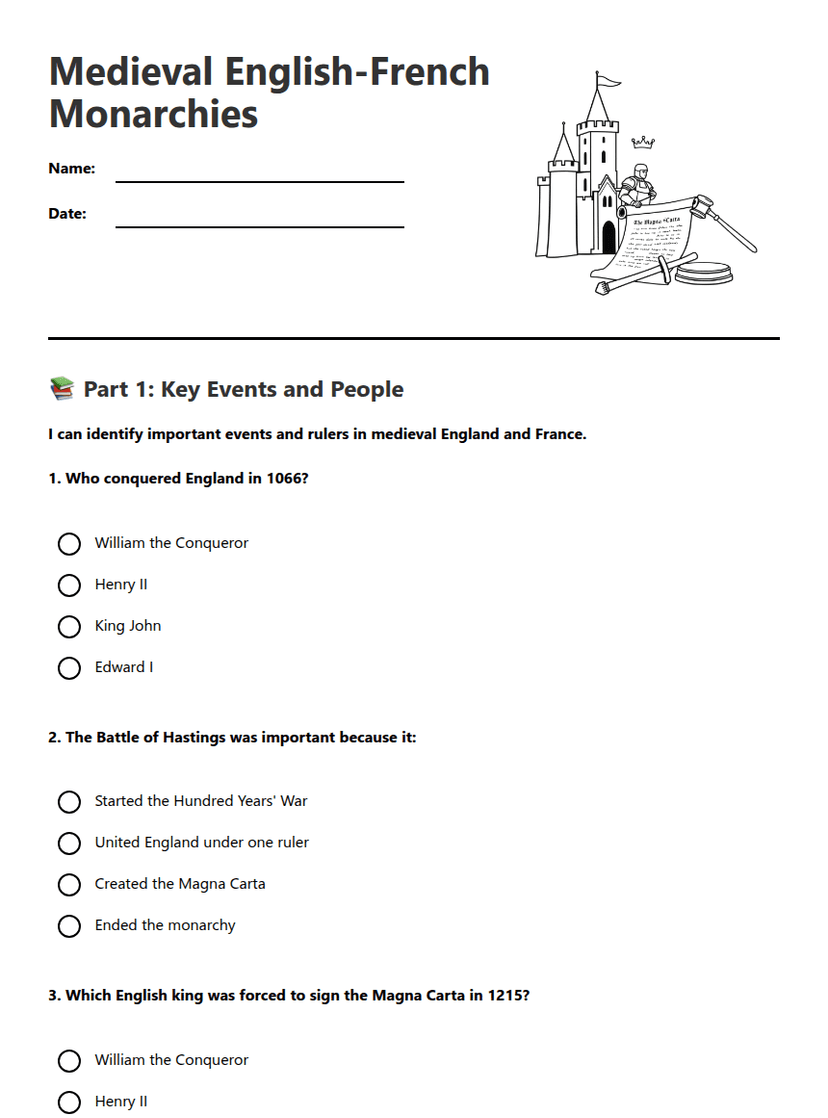
Medieval English-French Monarchies
Free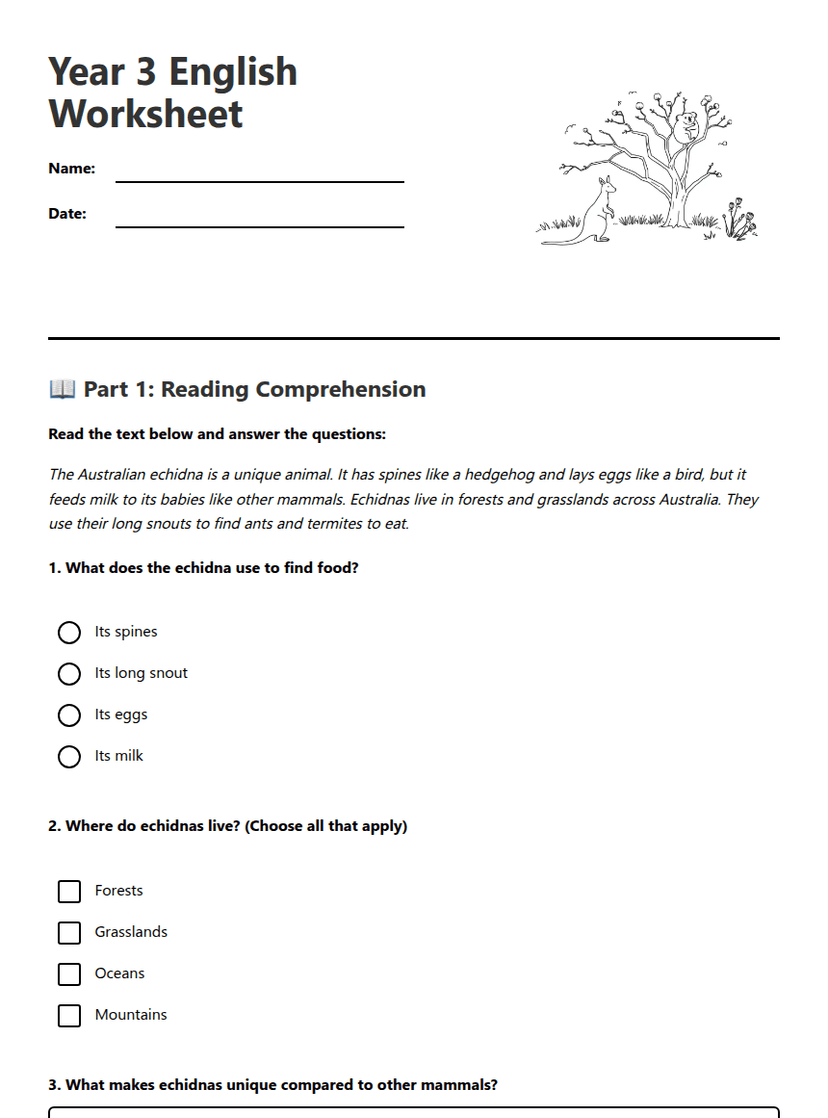
Year 3 English Worksheet
Free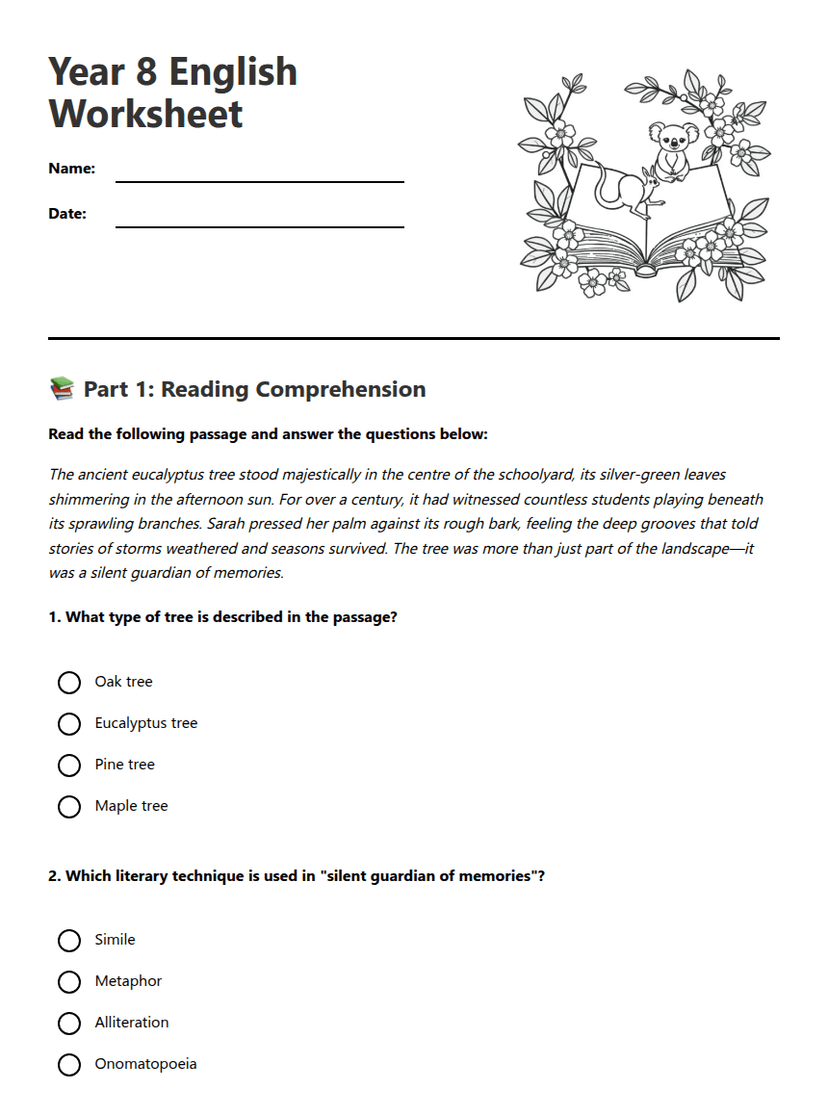
Year 8 English Worksheet
Free