Understanding Emotions and Self-Regulation Strategies
Year 6 Health and Physical Education Building emotional intelligence and self-management skills NSW Curriculum Outcomes: PH3-RRS-01, PH3-SMI-01, PH3-CWT-01
WALT (We Are Learning To)
Identify different emotional responses Explain how emotions can influence our decisions and interactions Apply self-regulation strategies to manage strong emotions Communicate understanding of emotional wellbeing through written reflection
WILF (What I'm Looking For)
Students can name and describe different emotions accurately Students can explain how emotions affect their choices and relationships Students can demonstrate at least 3 self-regulation strategies Students can write a clear reflection about emotions and management strategies
TIB (This Is Because)
Understanding emotions helps us make better decisions Self-regulation skills improve our relationships with others Managing emotions keeps us safe online and offline These skills help us succeed in learning and life
Biblical Perspective: Created with Emotions
God created us with the ability to feel emotions 'Be angry and do not sin' - Ephesians 4:26 We can learn to manage our emotions in healthy ways Jesus showed us how to respond with love and self-control
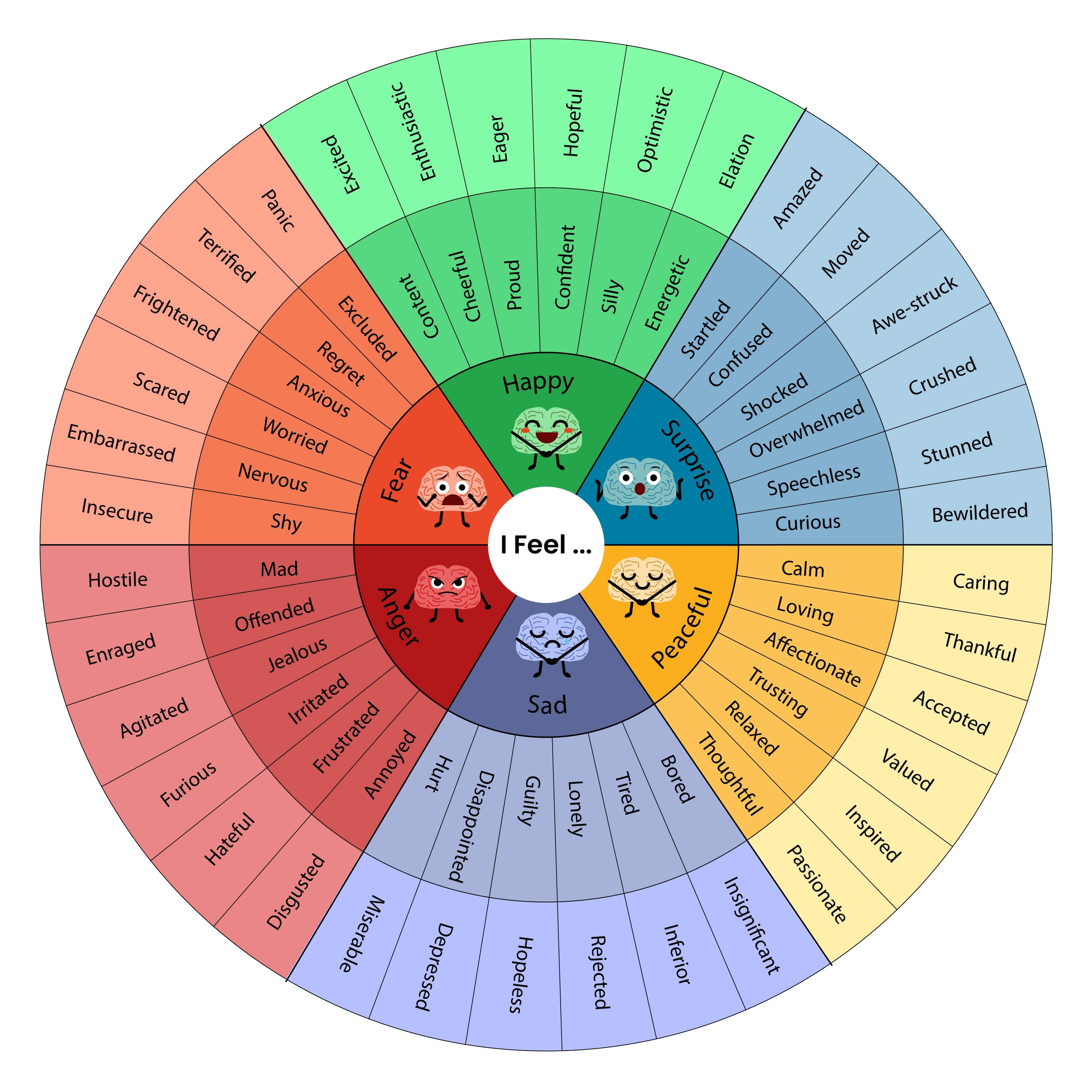
Warm-Up: Name That Emotion
Look at the emotions chart Choose an emotion to act out Use facial expressions and body language only Class will guess your emotion
What Are Emotions?
Natural responses to situations we experience Everyone feels emotions differently Emotions help us understand what's happening around us They can be helpful or challenging depending on how we respond
How Emotions Affect Our Choices
{"left":"When we feel CALM: We think clearly and make good decisions\nWhen we feel ANGRY: We might say hurtful things or act unsafely","right":"When we feel EXCITED: We might forget rules or rush into things\nWhen we feel WORRIED: We might avoid trying new things or asking for help"}
Teacher Role-Play: Losing a Game
Watch two different reactions to the same situation Reaction 1: Calm response Reaction 2: Angry response Discuss which reaction helped relationships
Discussion Questions
How did each reaction affect the other players? Which response helped maintain friendships? How would you feel if someone reacted angrily when you won? What might happen next in each scenario?
Self-Regulation Strategies
Tools to help calm our bodies and minds Help us make better decisions when emotions are strong Everyone can learn and practice these strategies Different strategies work for different people
Strategy 1: Deep Breathing
Breathe in slowly for 4 counts Hold for 1 count Breathe out slowly for 4 counts Let's practice together!
6 more slides available after you open the deck.
Download all 18 slides