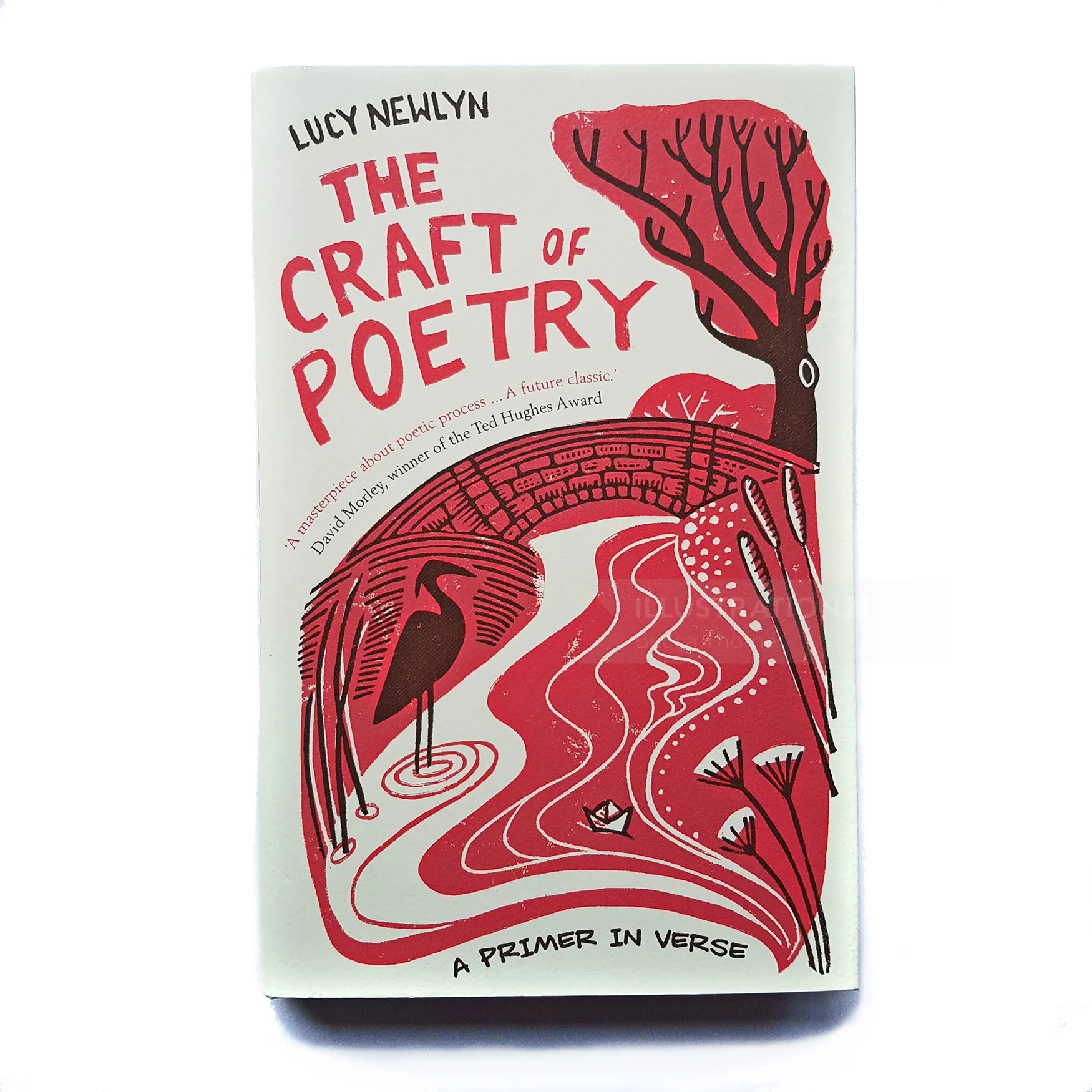
Poetry, Forms & Judith Wright
Year 12 English Exploring Poetic Terminology, Forms & Australian Poetry

Learning Objectives
Define and use key poetic terminology accurately Identify various poetic forms and their characteristics Take organised notes on poetic meter and devices Research and understand Judith Wright's contributions to Australian poetry
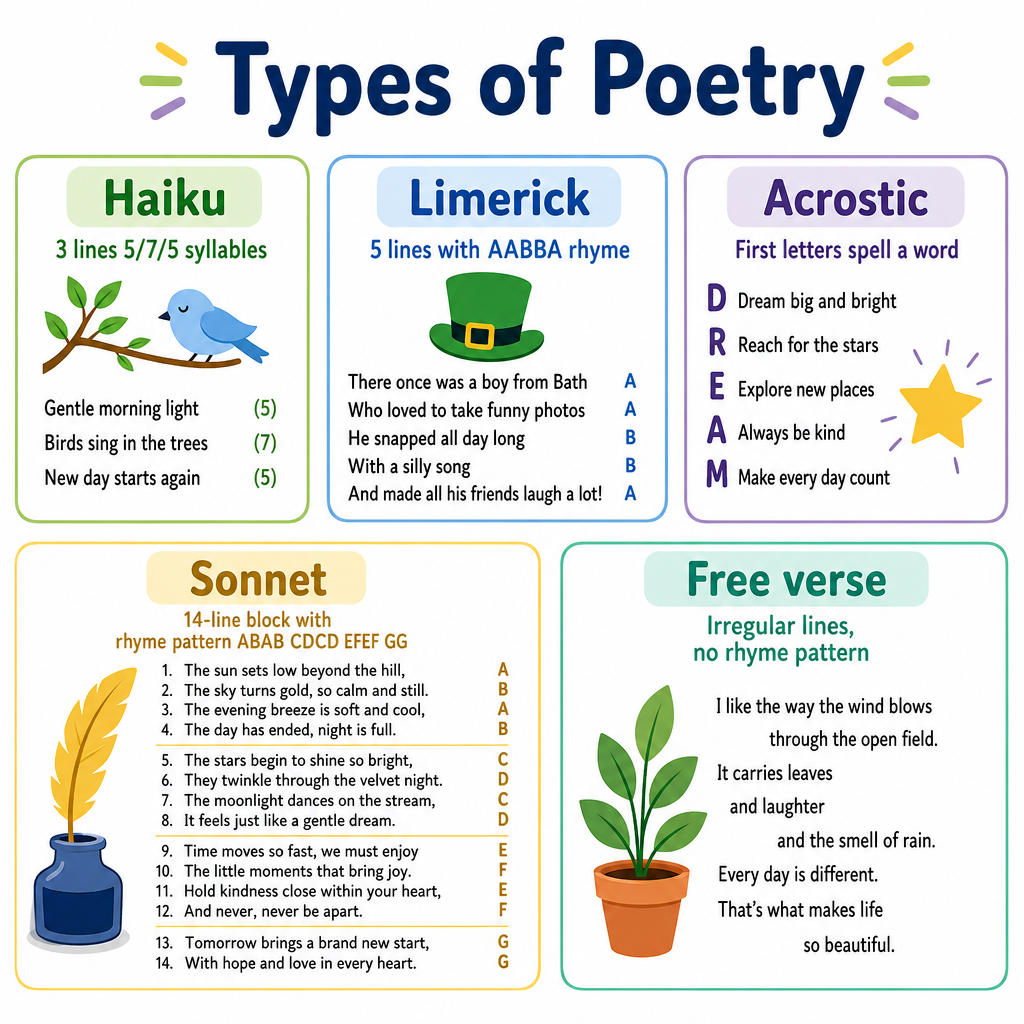
What Do You Already Know?
What poetic forms can you name? What do you know about Australian poetry? Can you think of any poetic devices or terminology?

Poetic Forms Exploration
Work collaboratively to complete the poetic forms table Use the Harvard Poetry Centre resource Include: Sonnet, Ode, Ballad, Free Verse, Villanelle, Haiku Discuss how form influences meaning

Poetic Meter & Terminology
Iamb - unstressed/stressed syllable pattern Trochee - stressed/unstressed syllable pattern Anapest - two unstressed, one stressed Dactyl - one stressed, two unstressed Rhyme scheme - pattern of rhymes Caesura - deliberate pause in a line
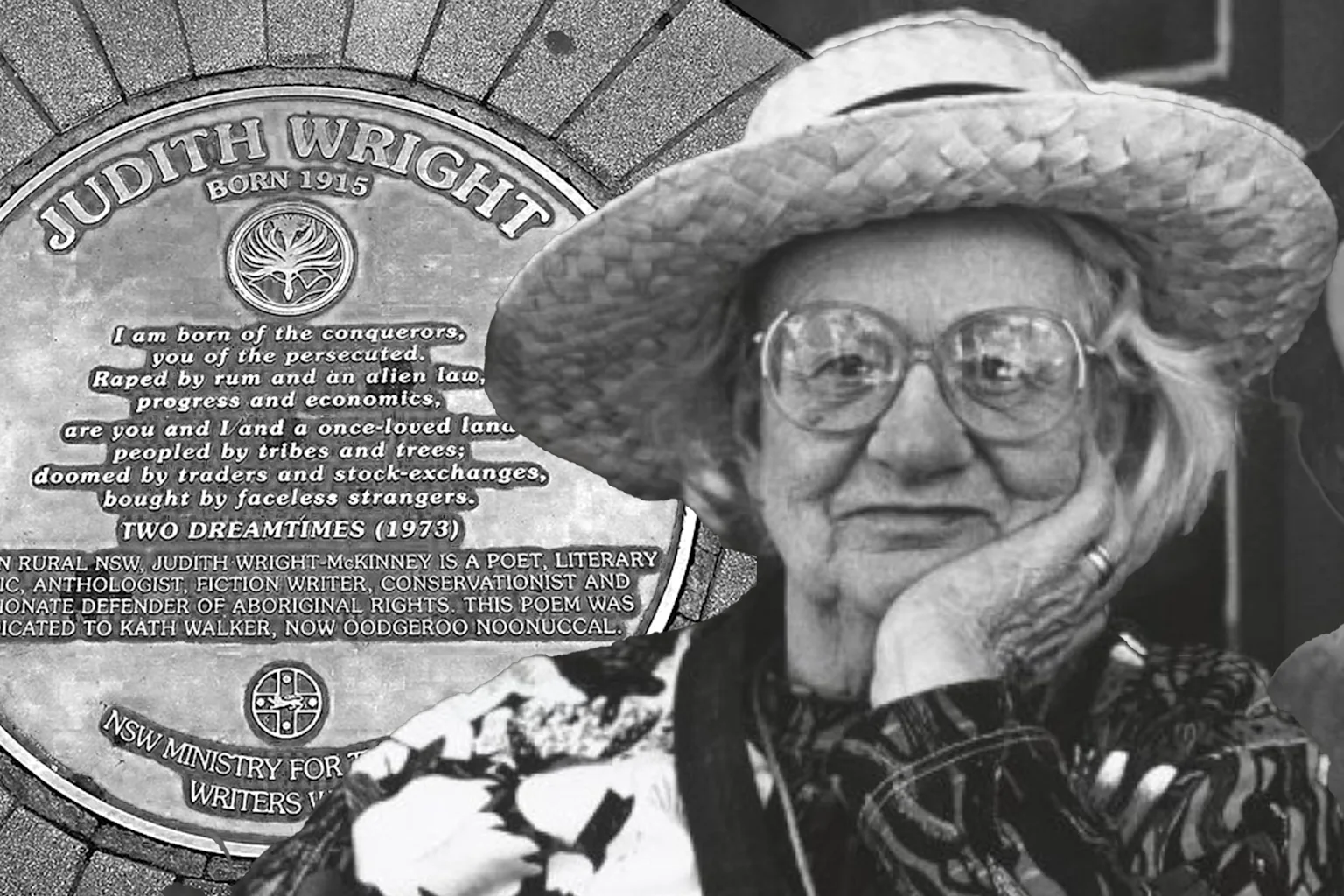
Judith Wright: Australian Poetry Pioneer

Judith Wright's Key Themes
{"left":"Australian landscape and environment\nIndigenous Australian rights and reconciliation\nPersonal reflection and relationships","right":"Women's experiences and perspectives\nEcological concerns and conservation\nAustralian identity and belonging"}

Understanding Poetry Through Analysis
'The generation of mankind is a generation of loneliness.' - Judith Wright How do poetic forms and devices help poets express complex emotions and ideas?