Multiples and Patterns: Skip Count!
Year 3 Mathematics Learning to use multiples to create, describe and continue patterns
How Many Dots?
Look at all these dots! How could we count them easily? What's faster than counting by 1s?
Skip Counting Practice
Let's skip count together! Count by 2s: 0, 2, 4, 6... Count by 5s: 0, 5, 10, 15... Count by 10s: 0, 10, 20, 30...

What is a Multiple?
A multiple is a number we get when we skip count Multiples of 2: 2, 4, 6, 8, 10... Multiples of 5: 5, 10, 15, 20, 25... We can find multiples by adding the same number over and over
Example 1: Dice Patterns
Look at these dice! Each die shows 2 dots Skip count by 2s to find the total 2, 4, 6, 8, 10!
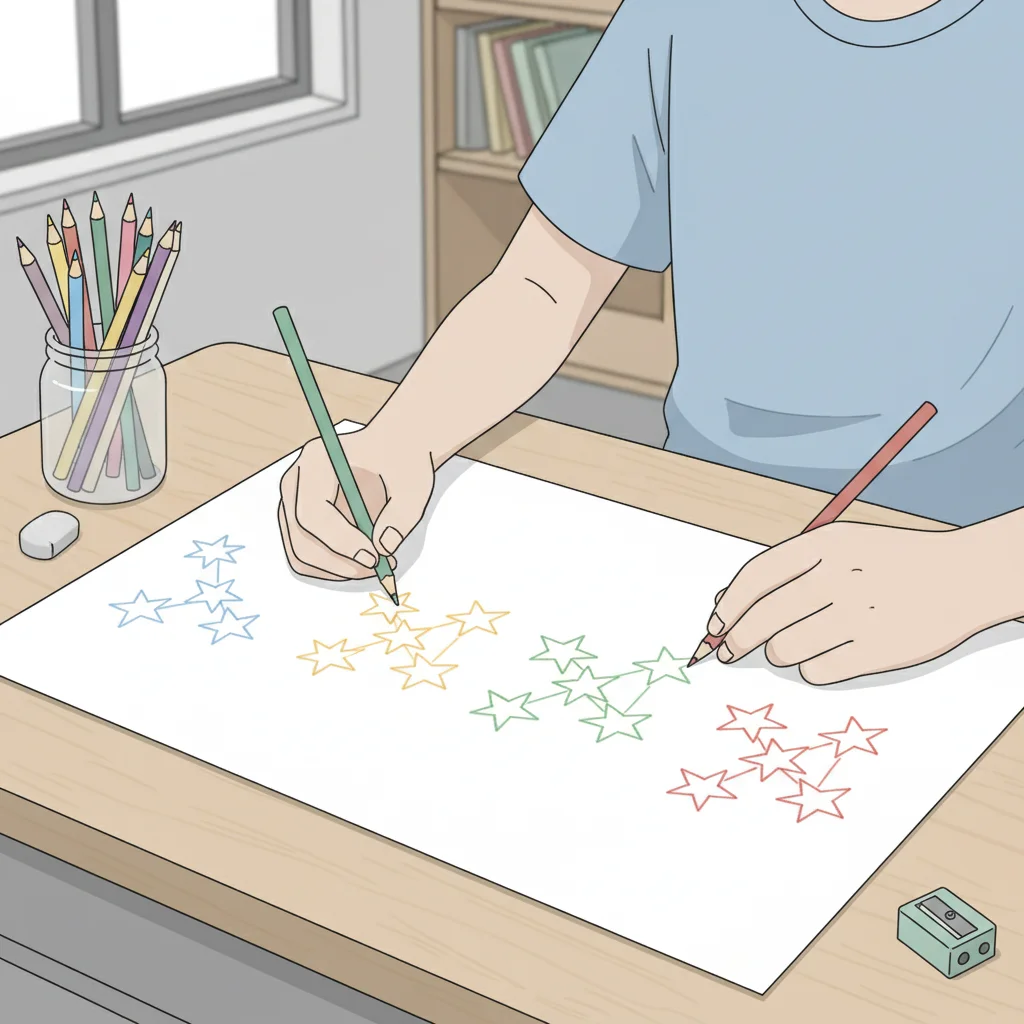
Example 2: Drawing Patterns
Draw groups of 5 objects Continue the pattern Record the multiples of 5 5, 10, 15, 20, 25...
Example 3: Patterns Everywhere
{"left":"Flower petals in groups\nWheels on cars\nFingers on hands","right":"Legs on insects\nDays in weeks\nMonths in years"}

Example 4: Unifix Cube Patterns
Build towers with unifix cubes Make each tower 3 cubes tall How many cubes in total? Count by 3s to find out!
Your Turn to Practice!
Use unifix cubes to make patterns Complete the practice table Try Questions 2 and 3 Work with a partner if you need help
What We Learned Today
Multiples help us count faster and find patterns Skip counting creates number sequences Patterns are everywhere around us! We can use tools like cubes and drawings to show multiples