
German Infinitives: Base Verb Forms
Year 6 German Understanding the foundation of German verbs 75-minute lesson

Was ist ein Infinitiv? (What is an Infinitive?)
The base form of a verb in German Usually ends with -en or -n Like 'to + verb' in English Examples: spielen (to play), essen (to eat), lernen (to learn)
Spot the Infinitive!
Look at these German sentences: Ich möchte essen. (I would like to eat) Wir lernen Deutsch. (We learn German) Du kannst lesen. (You can read) Circle the infinitive verbs!
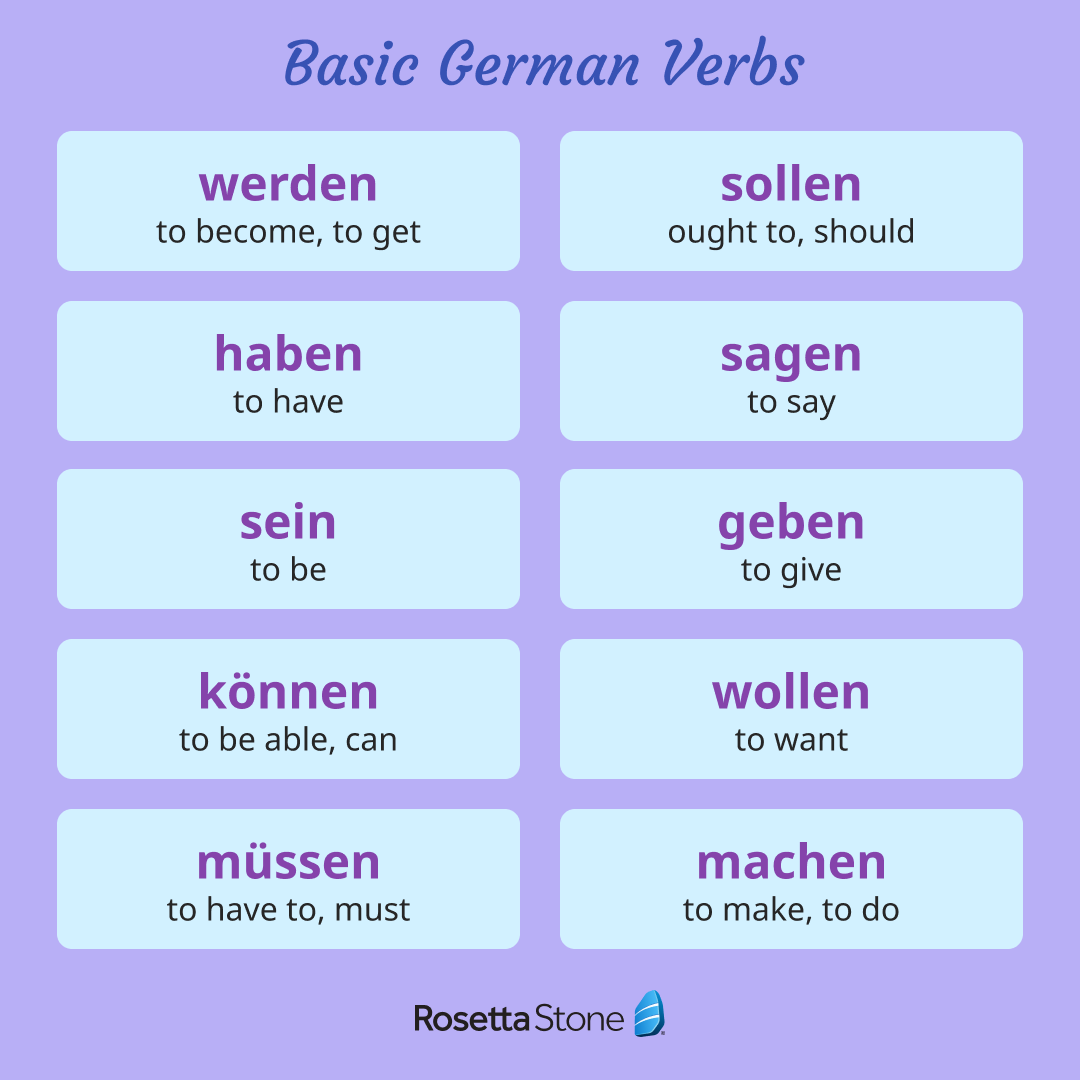
Common German Infinitives
{"left":"spielen (to play)\nessen (to eat)\ntrinken (to drink)\nlesen (to read)\nschreiben (to write)","right":"singen (to sing)\ntanzen (to dance)\nschwimmen (to swim)\nlaufen (to run)\nschlafen (to sleep)"}

Building Sentences with Infinitives
Use modal verbs + infinitives Ich will spielen. (I want to play) Du kannst lesen. (You can read) Wir möchten essen. (We would like to eat) The infinitive goes at the end!

Sentence Building Workshop
Unscramble these words to make correct sentences: spielen / ich / will können / lesen / wir möchte / essen / du Remember: infinitive goes at the end!

Quick Check: Can You Find the Pattern?
Look at these infinitives: spielen, essen, trinken, lesen, schreiben What do they all have in common? How do you know they are infinitives?

Today's Achievement
"Ich kann jetzt Infinitive erkennen und benutzen!" (I can now recognize and use infinitives!) You've learned the foundation of German verbs! Ready for more German adventures!