Fractions, Decimals, and Percentages Explored
Understanding the connections between different number representations Year 8 Mathematics Australian Curriculum (ACARA)
What Are Fractions?
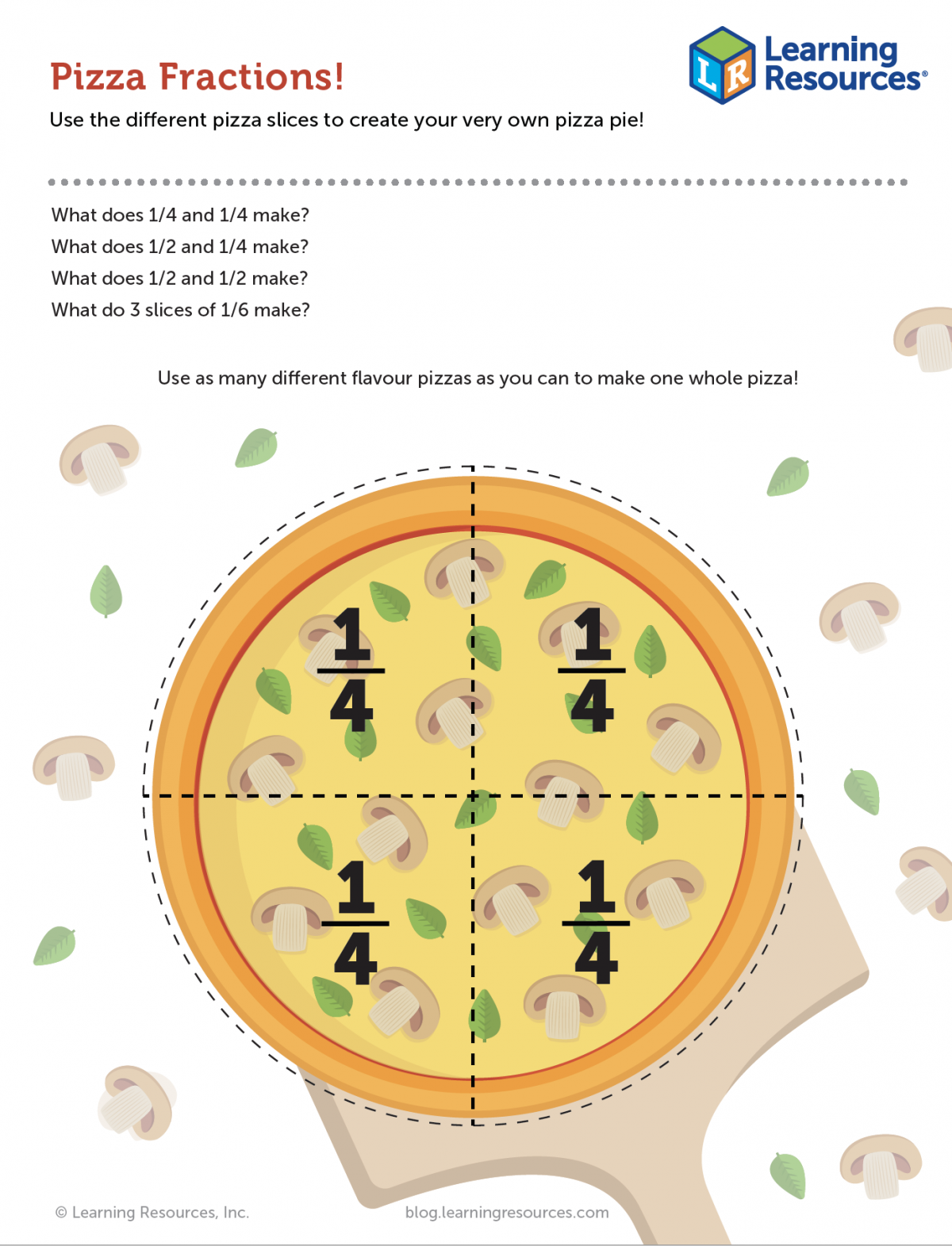
A fraction represents part of a whole Written as numerator/denominator (e.g., 3/4) The denominator shows how many equal parts The numerator shows how many parts we have
Understanding Decimals
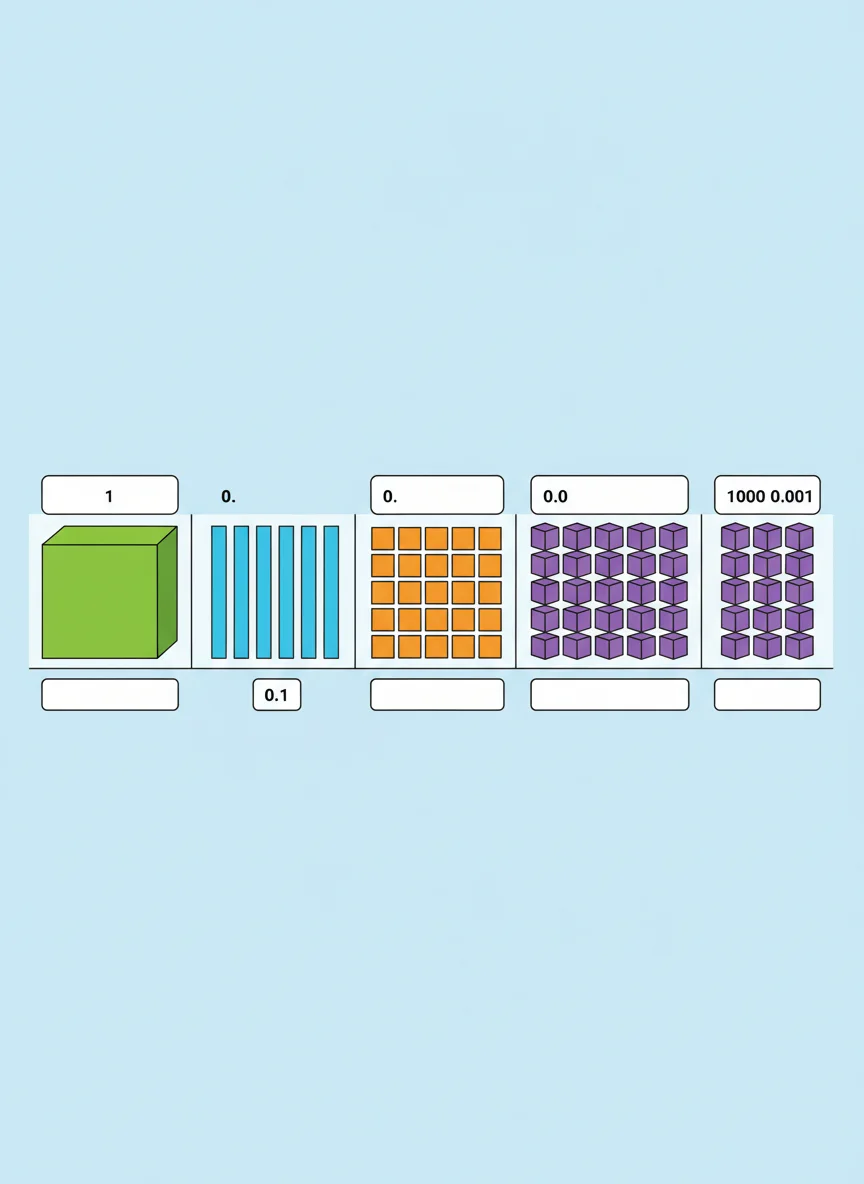
Decimals use place value to show parts of a whole Each position after the decimal point has a specific value Tenths (0.1), Hundredths (0.01), Thousandths (0.001) Decimals are another way to express fractions
Exploring Percentages
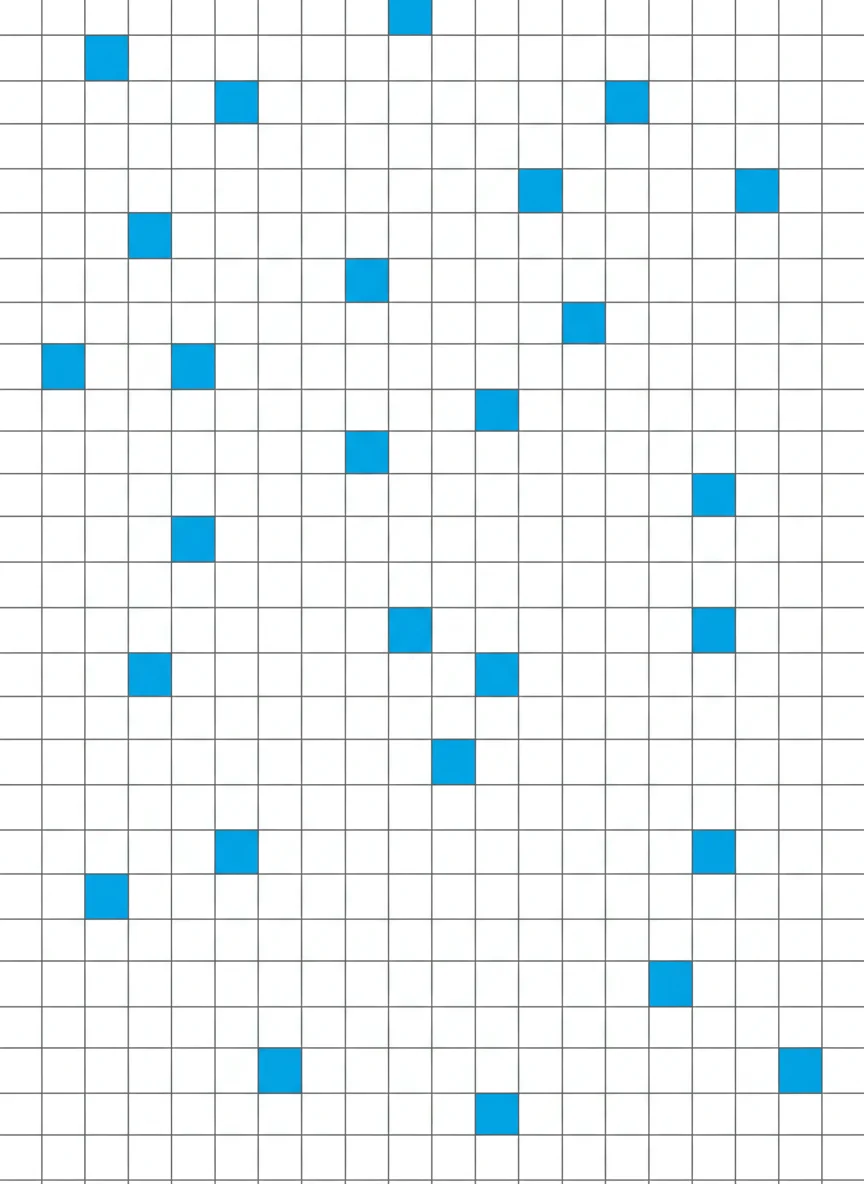
Percentage means 'per hundred' or 'out of 100' The symbol % represents percentage 50% means 50 out of 100 parts Percentages are useful for comparing different quantities
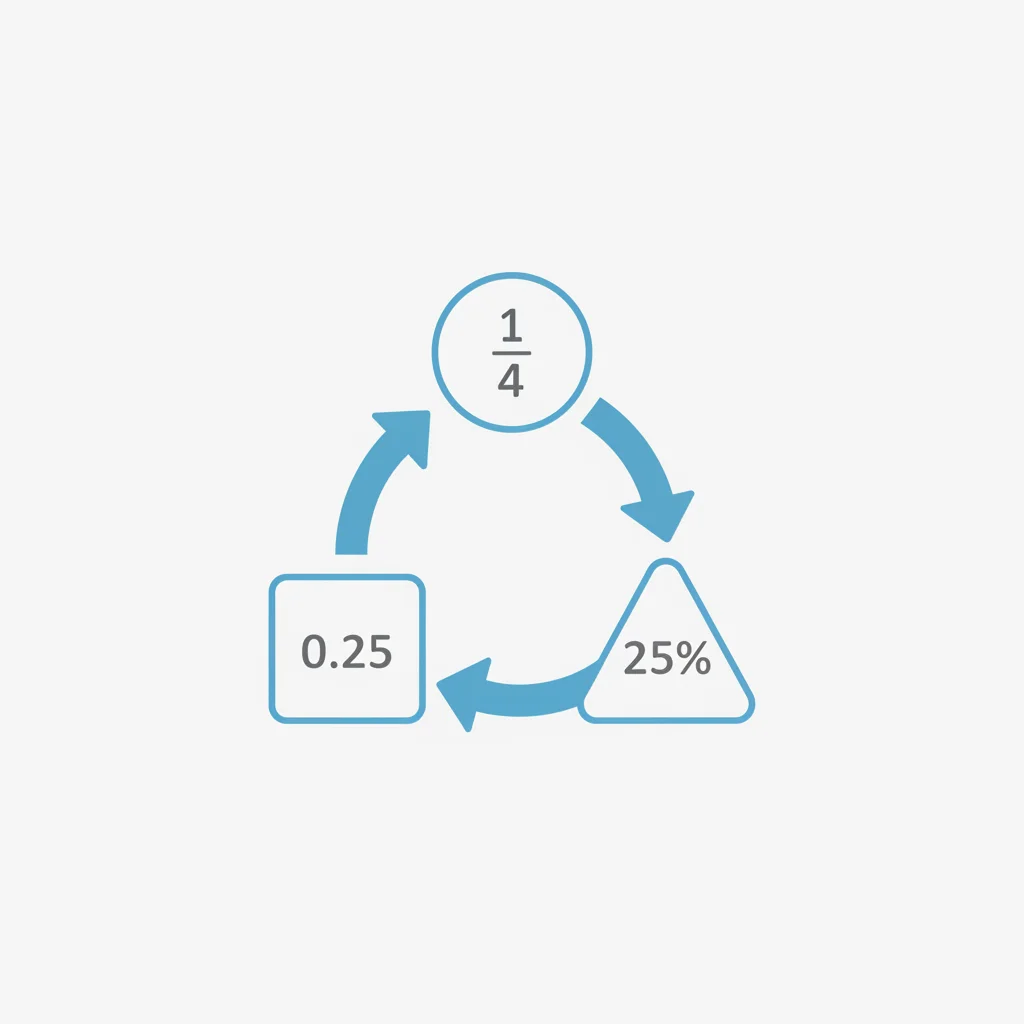
Converting Between Forms
{"left":"Fraction to Decimal: Divide numerator by denominator\nDecimal to Percentage: Multiply by 100 and add % symbol","right":"Percentage to Fraction: Write over 100 and simplify\nFraction to Percentage: Convert to decimal first, then to percentage"}

Fraction-Decimal-Percentage Match
Match equivalent values across different forms Work in pairs to find connections 1/2 = 0.5 = 50% 3/4 = 0.75 = 75% 1/5 = 0.2 = 20%

Quick Check Understanding
Which is larger: 0.6 or 5/8? How would you convert 3/5 to a percentage? What decimal is equivalent to 45%? Discuss your reasoning with a partner
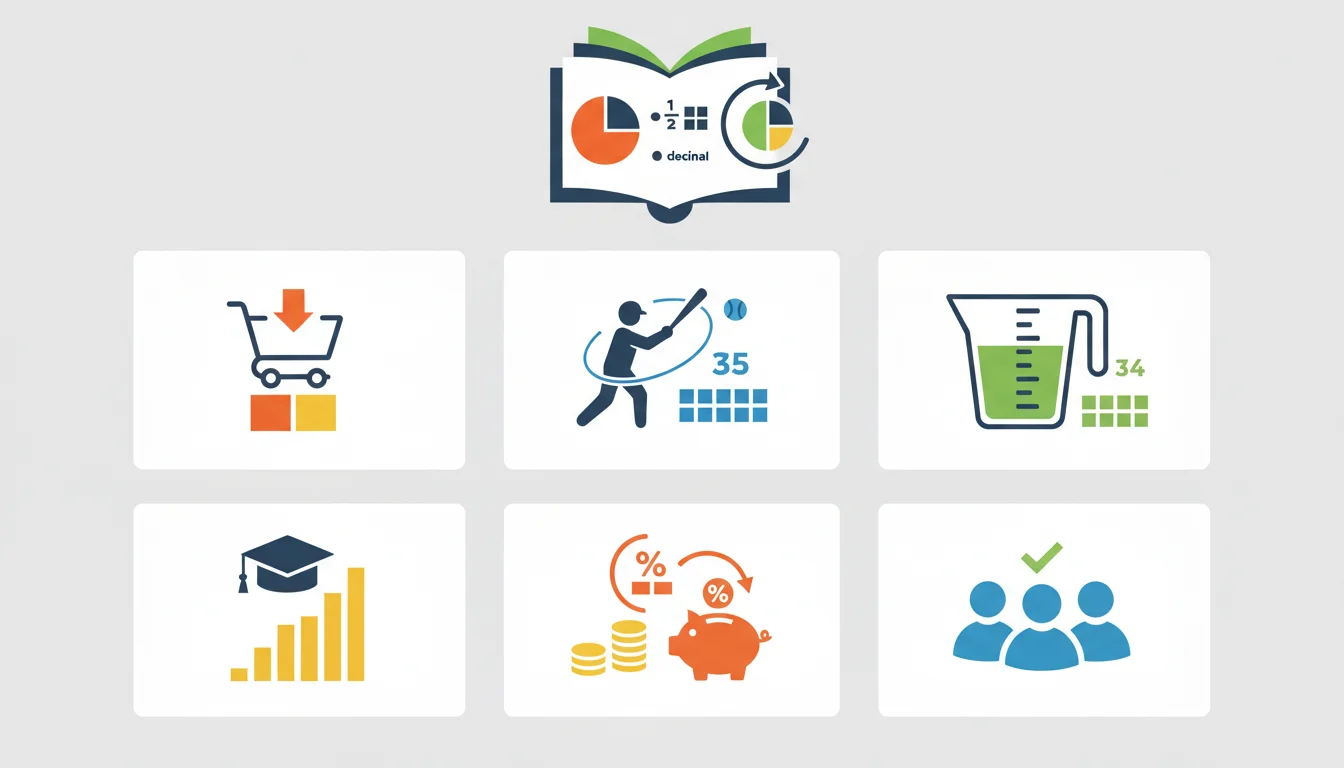
Real-World Applications
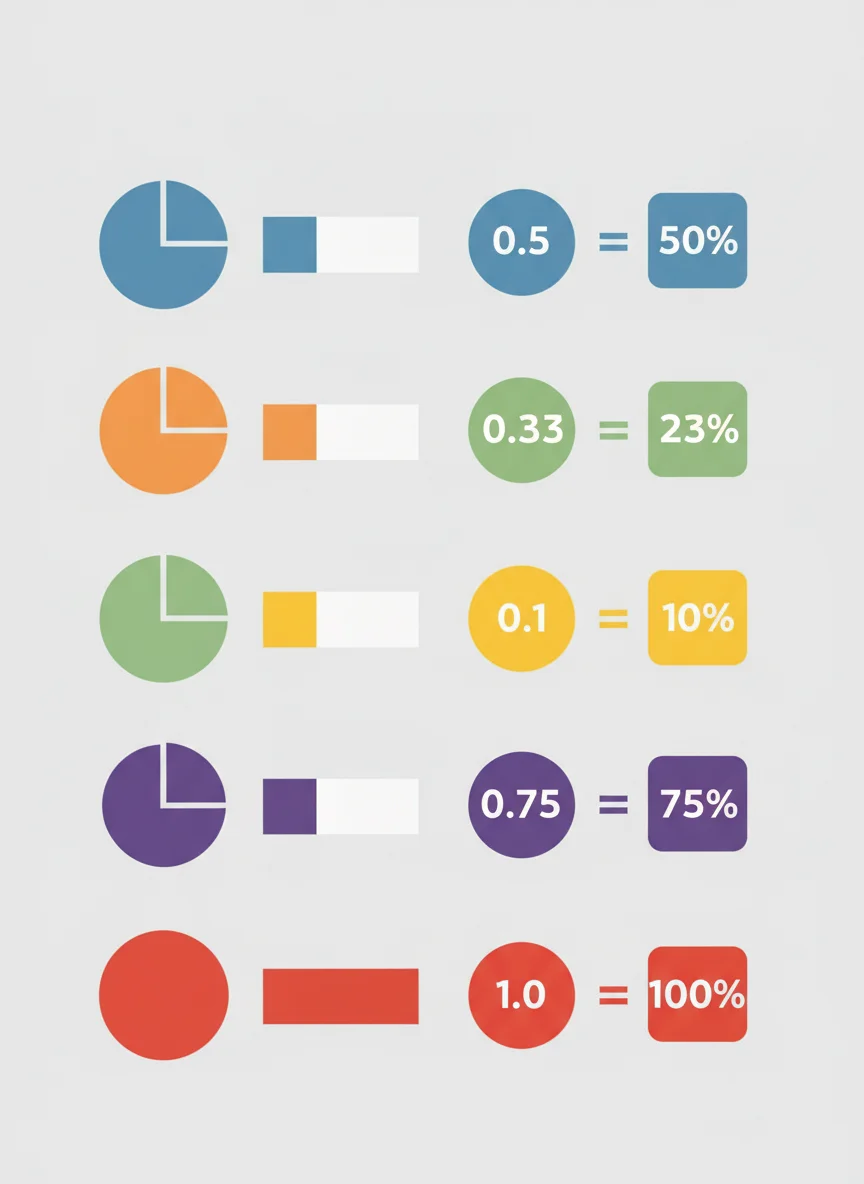
Common Equivalent Values
1/2 = 0.5 = 50% (half) 1/4 = 0.25 = 25% (quarter) 3/4 = 0.75 = 75% (three quarters) 1/10 = 0.1 = 10% (one tenth) 1/5 = 0.2 = 20% (one fifth)
Key Takeaways
Fractions, decimals, and percentages are different representations of the same values Converting between forms follows systematic methods These number forms appear frequently in real-world situations Understanding their connections strengthens mathematical reasoning