Exploring Earth's Biomes and Ecosystems
Year 9 Geography Understanding Earth's diverse environments Australian Curriculum AC9HG9K01

What Makes a Biome?
Think about different environments you've seen or visited What factors might determine what plants and animals live there? How might climate affect the landscape?

What Are Biomes?
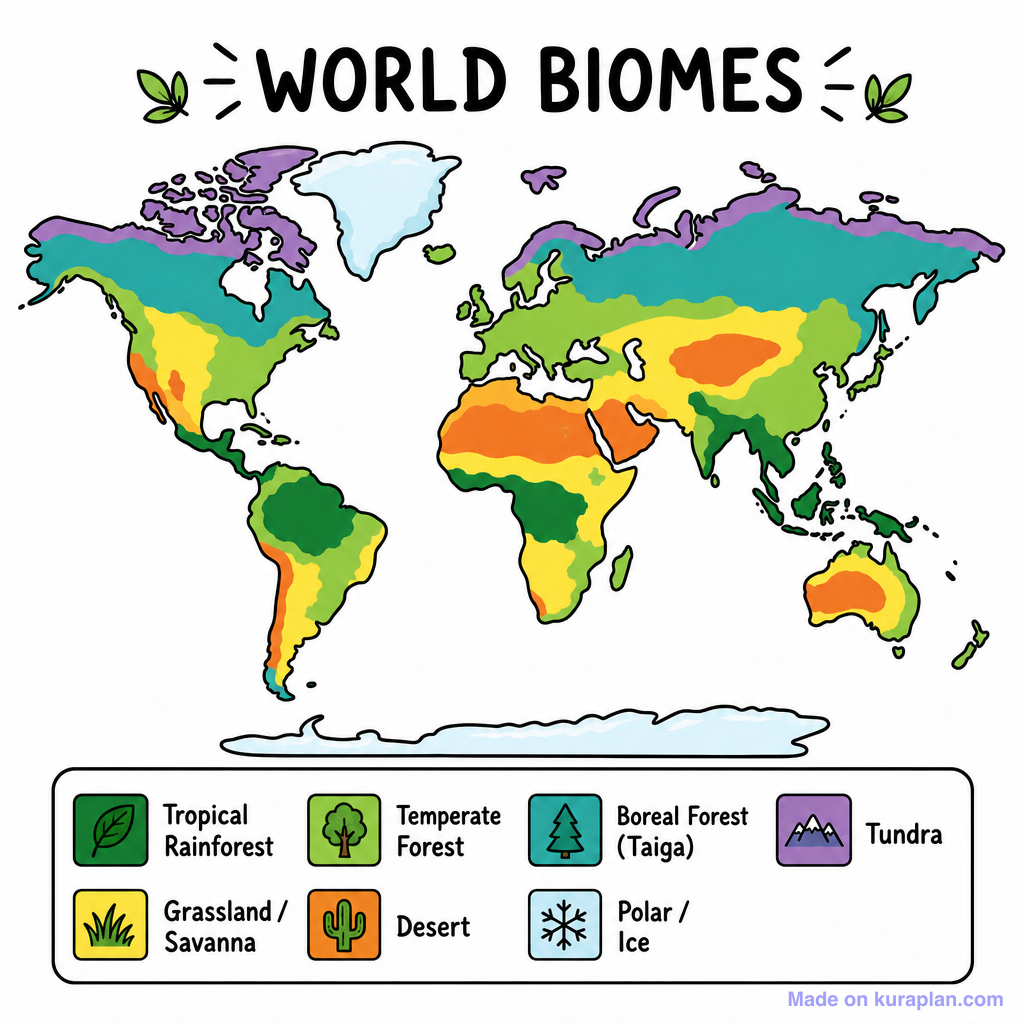
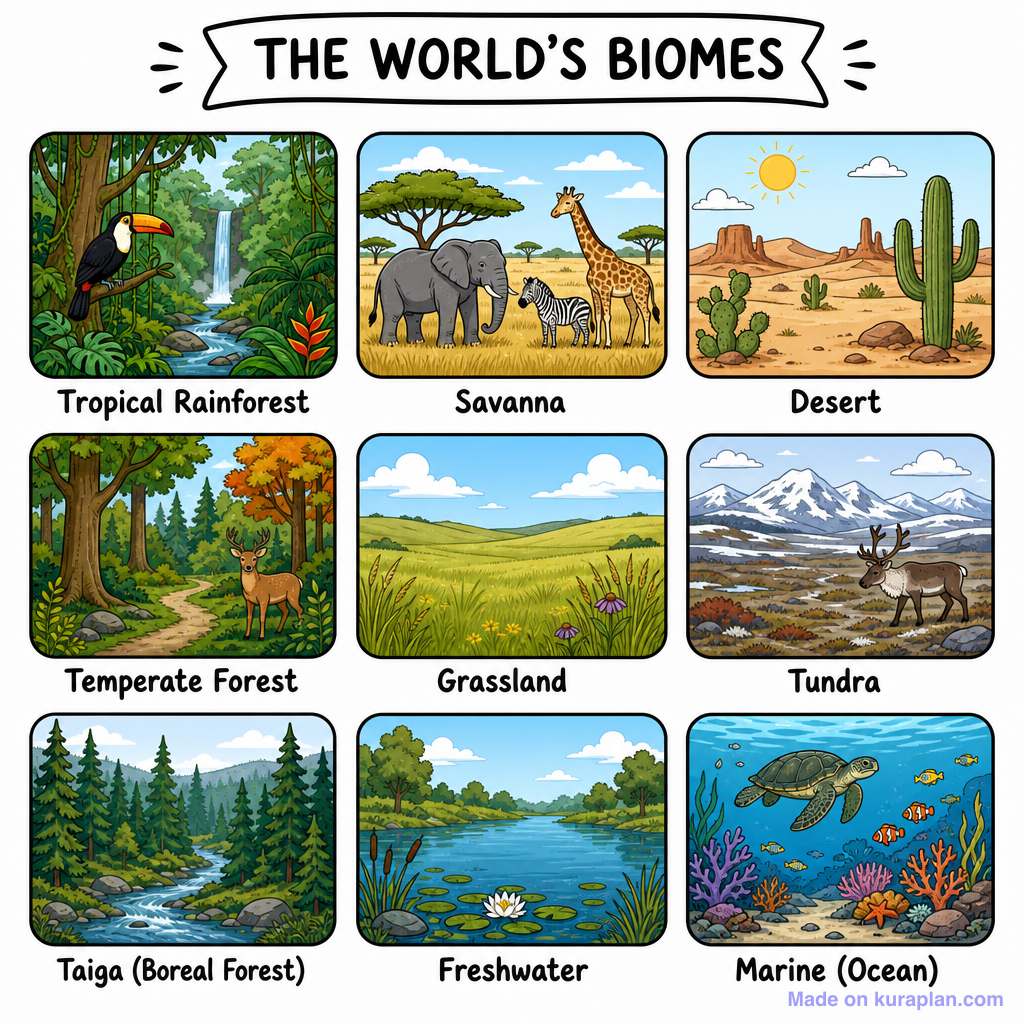
Large geographical regions with similar climate patterns Distinctive plant and animal communities Determined by temperature, precipitation, and soil type Found on every continent including Australia Both terrestrial (land-based) and aquatic (water-based) types

Major Terrestrial Biomes of the World

Australian Terrestrial Biomes
{"left":"Tropical Rainforest (Queensland)\nTemperate Rainforest (Tasmania, Victoria)\nSclerophyll Forest (Eastern coast)","right":"Grasslands (Interior regions)\nDesert (Central and Western Australia)\nMediterranean (Southern and Southwestern regions)"}

Biome Characteristics Matching
Work in groups of 4 Match biome types with their characteristics Use the fact sheets provided Complete your world map worksheet Identify climate, soil, and vegetation patterns

Aquatic Biomes - Earth's Water Ecosystems
Freshwater biomes: rivers, lakes, wetlands Marine biomes: oceans, coral reefs, estuaries Different zones based on depth and light penetration Australia's Great Barrier Reef - world's largest coral reef system Murray-Darling river system - major freshwater biome

Understanding Biome Connections
"Biomes are not isolated systems - they interact with each other and with human activities. Understanding these connections helps us protect Earth's biodiversity."
More Biomes slide decks
Other ready-to-teach decks on biomes.

Free Biomes images
Drop these illustrations straight into your lesson.