
Evaluating Workforce Management Decisions
Year 10 Business Studies Making Smart Business Choices 70 minutes

Decision Thinking Starter
A business is considering introducing digital workforce management software Think-Pair-Share: What could go right? What could go wrong? Record your ideas under 'Positives' and 'Negatives'

From 'Good or Bad?' to 'Should We Do This?'
This is NOT just asking 'Is it good?' This IS asking 'Should the business do this?' We need specific criteria to make smart decisions Business decisions affect many people

The Four Evaluation Criteria
Efficiency → Does it save time or money? Effectiveness → Does it improve performance? Competitiveness → Does it give an advantage? Stakeholders → How are employees and customers affected?
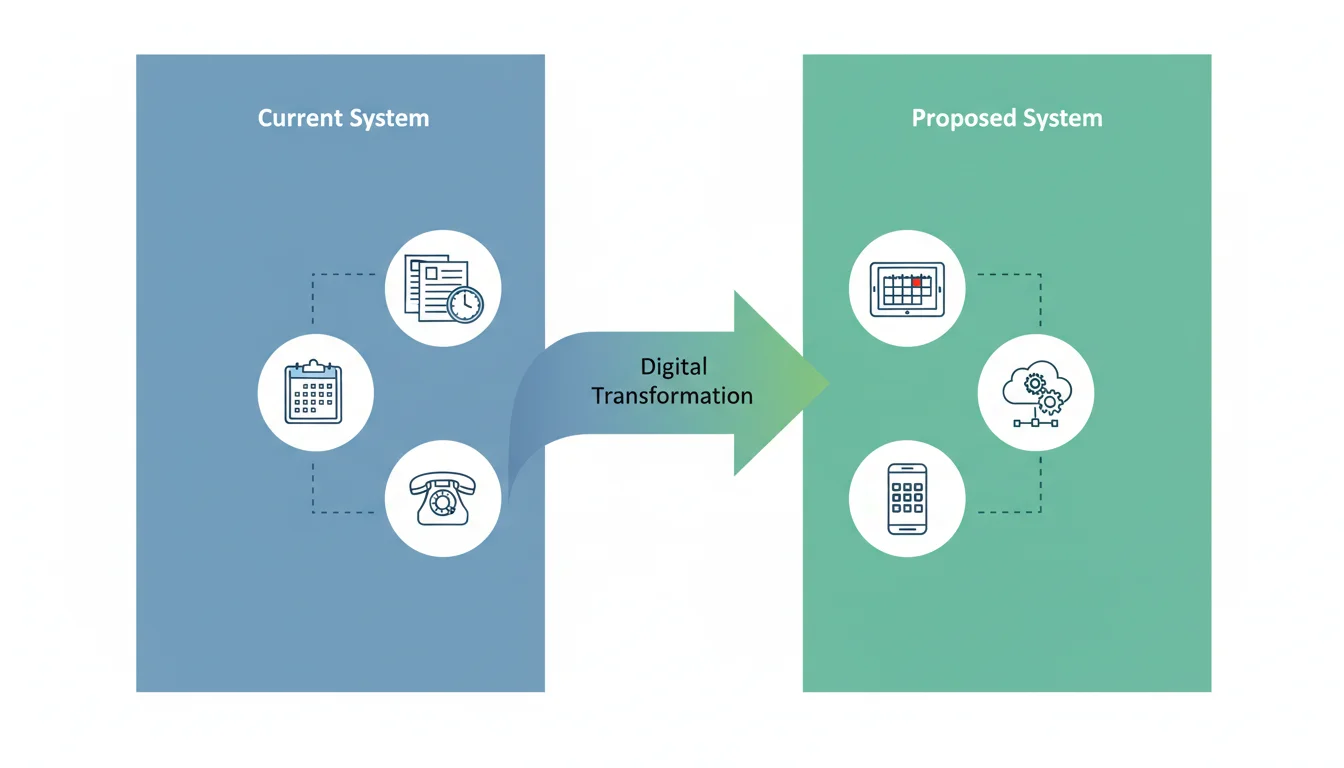
Case Study: Retail Business Transformation

Guided Analysis: What's the Decision?
Look at our retail business case What exactly is the business deciding to do? What will change from the current situation? Who will be affected by this change?

Mini Task: Structured Evaluation
Step 1: Identify the decision clearly Step 2: Analyse cause-and-effect relationships Step 3: Evaluate using all four criteria Step 4: Make a justified recommendation

Cause-and-Effect Thinking
{"left":"Digital software implementation\nReduces manual paperwork\nSaves manager time\nFaster schedule changes","right":"Real-time communication\nImproved efficiency\nBetter employee satisfaction\nCompetitive advantage"}

Making Your Recommendation
Should the business implement the software? Include one key benefit Acknowledge one limitation Make a clear final judgement Use evidence to support your answer

Key Learning
Effective business evaluation requires structured thinking using specific criteria, not just personal opinions