Estimate Smart with Multiply and Divide
Year 5 Mathematics Making smart guesses with numbers Building number sense skills
What is Estimation?
Making a smart guess about an answer Getting close to the real answer without exact calculation Helps us check if our answers make sense Useful in everyday life situations
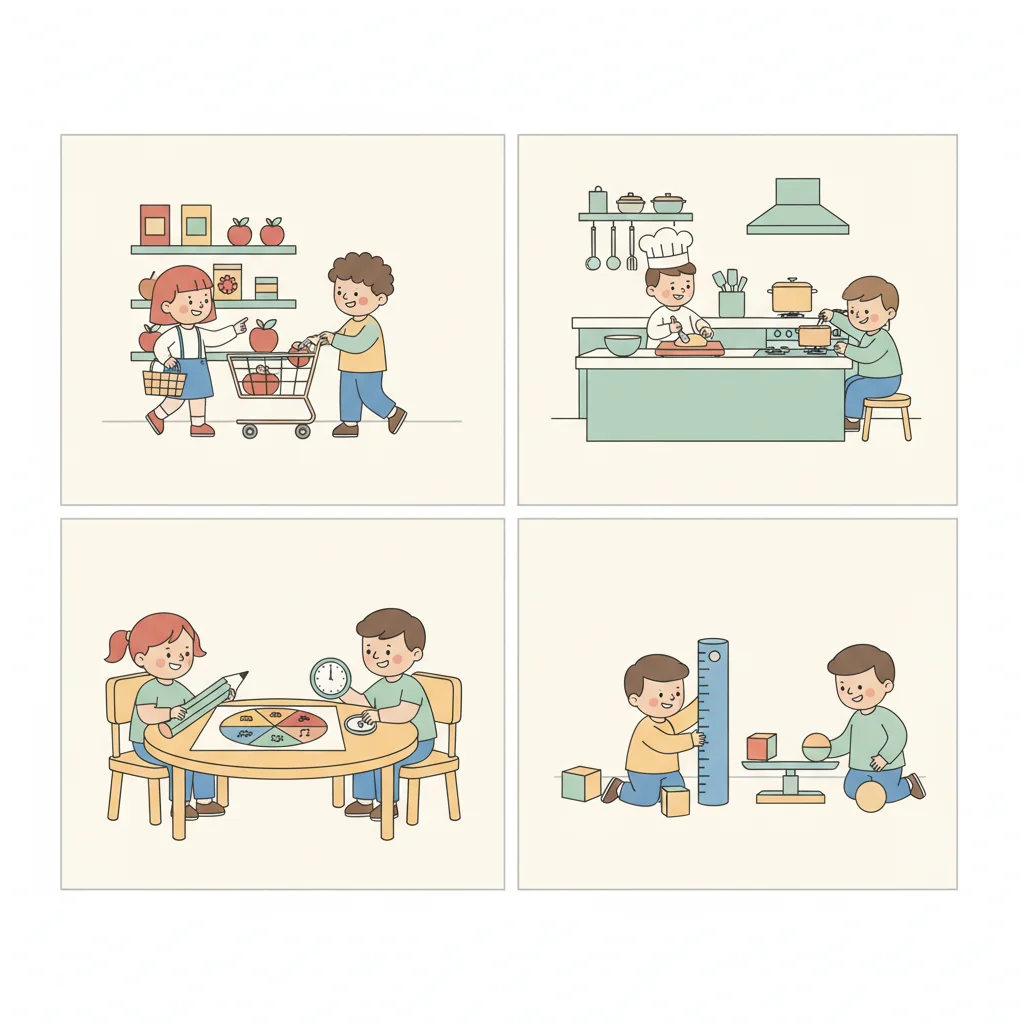
When Do We Use Estimation?
Think about your daily activities When might you need to make quick calculations? Share examples with a partner
Rounding Numbers for Estimation
Round to the nearest 10 or 100 Example: 47 rounds to 50 Example: 238 rounds to 200 or 240 Makes multiplication and division easier
Estimation Station: Multiplication
Problem: 23 × 4 Step 1: Round 23 to 20 Step 2: Calculate 20 × 4 = 80 Step 3: Compare with exact answer (92)
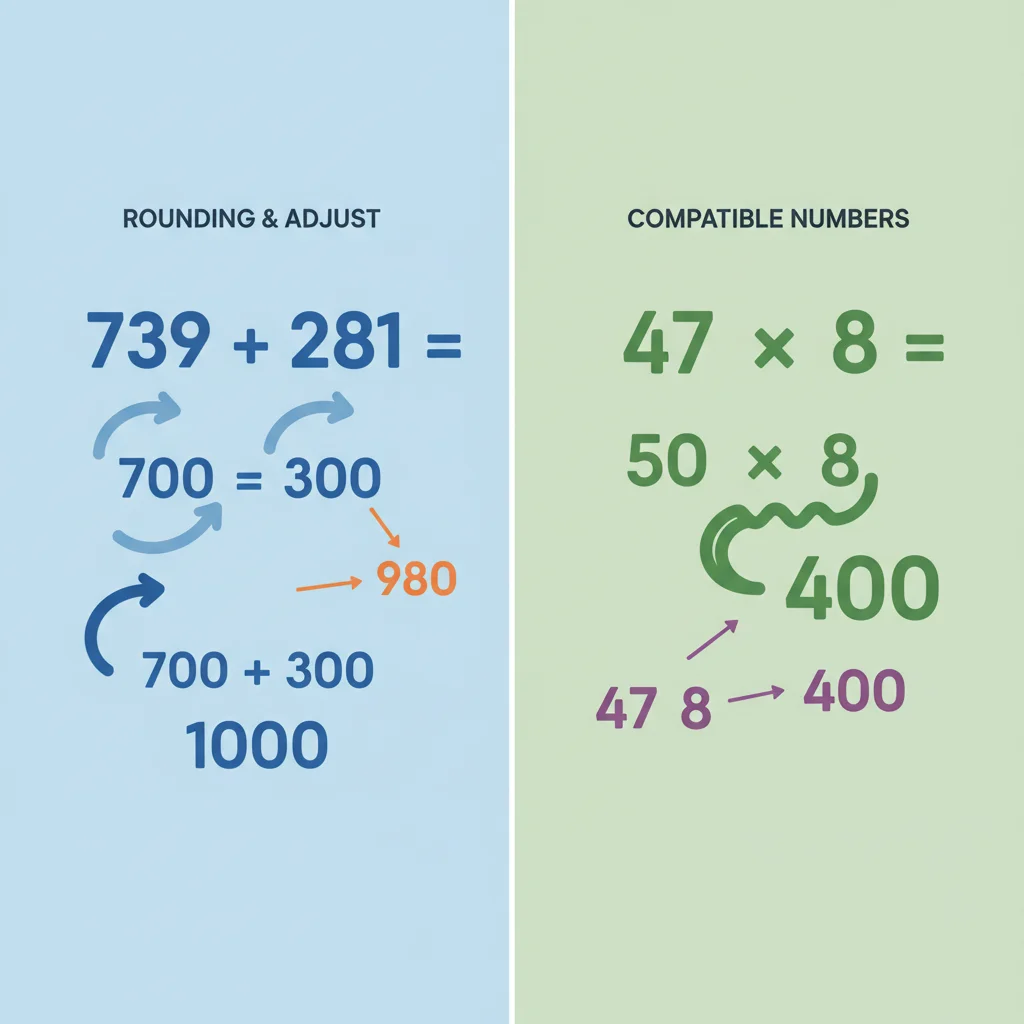
Multiplication Estimation Strategies
{"left":"Round both numbers to friendly numbers\nUse known multiplication facts","right":"Think about whether your estimate is reasonable\nRound one number up and one down for balance"}
Estimation Station: Division
Problem: 184 ÷ 6 Step 1: Round 184 to 180 Step 2: Think: What × 6 is close to 180? Step 3: 30 × 6 = 180, so estimate is 30
Division Estimation Tips
Round the dividend to a number that divides easily Use multiplication tables you know well Check: Does my estimate make sense? Remember: Estimates don't need to be perfect!
Challenge Time!
Estimate: 38 × 21 Estimate: 247 ÷ 8 Which estimation strategy will you use? Compare your estimates with a partner

Why Estimation Matters
Helps us spot mistakes in calculations Makes mental math faster and easier Useful for real-world problem solving Builds confidence with numbers