
Discovering Auslan: Signs and Culture
A Journey into Australian Sign Language Year 4 Languages Lesson
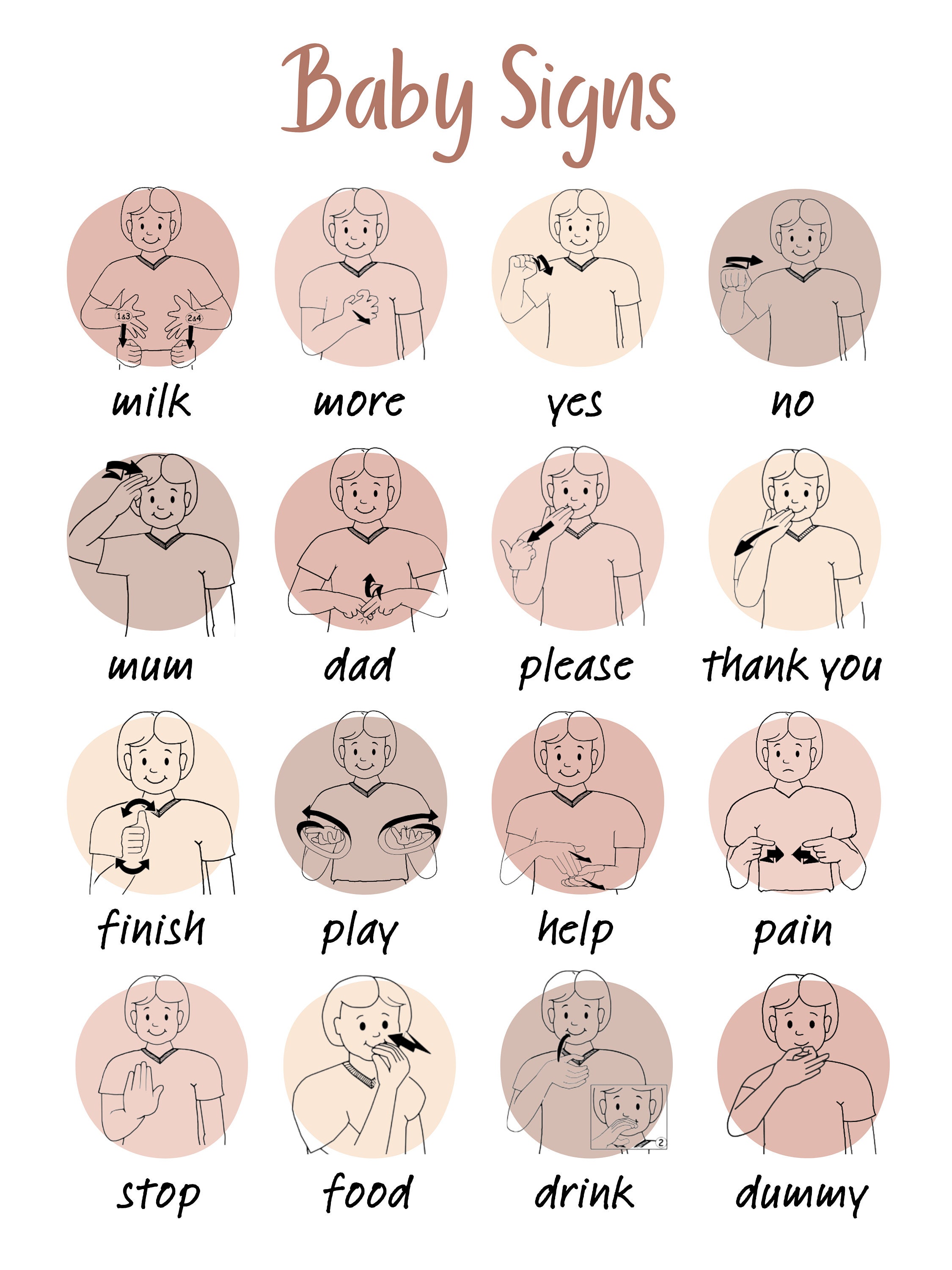
What is Auslan?
Australian Sign Language A complete language with its own grammar Used by the Australian Deaf community Visual language using hands, face, and body
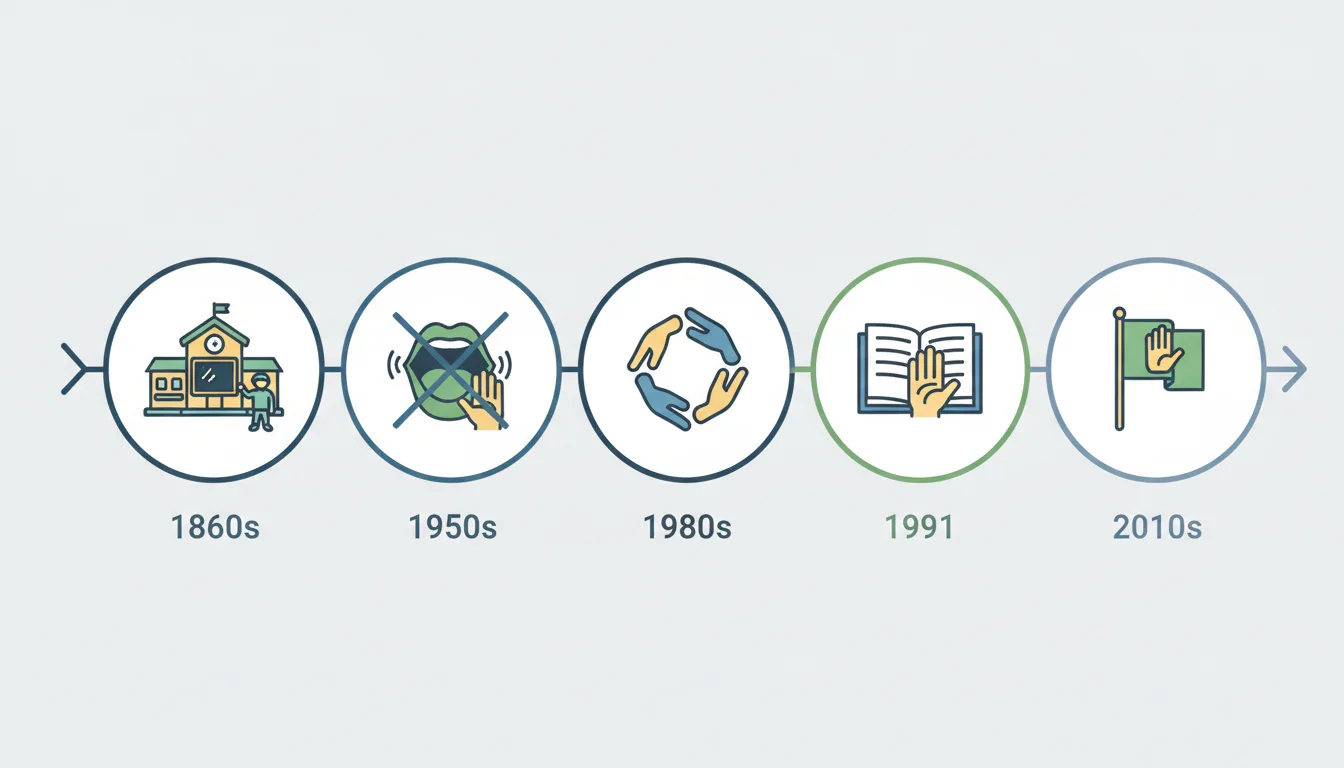
Auslan History Timeline

Why is Auslan Important?
Connects the Deaf community across Australia Preserves Deaf culture and stories Helps Deaf people share their experiences Shows respect for diversity and inclusion

Let's Learn Our First Signs!
We'll learn three basic Auslan signs Remember: facial expressions are important too! Practice with a partner Focus on clear hand movements and eye contact
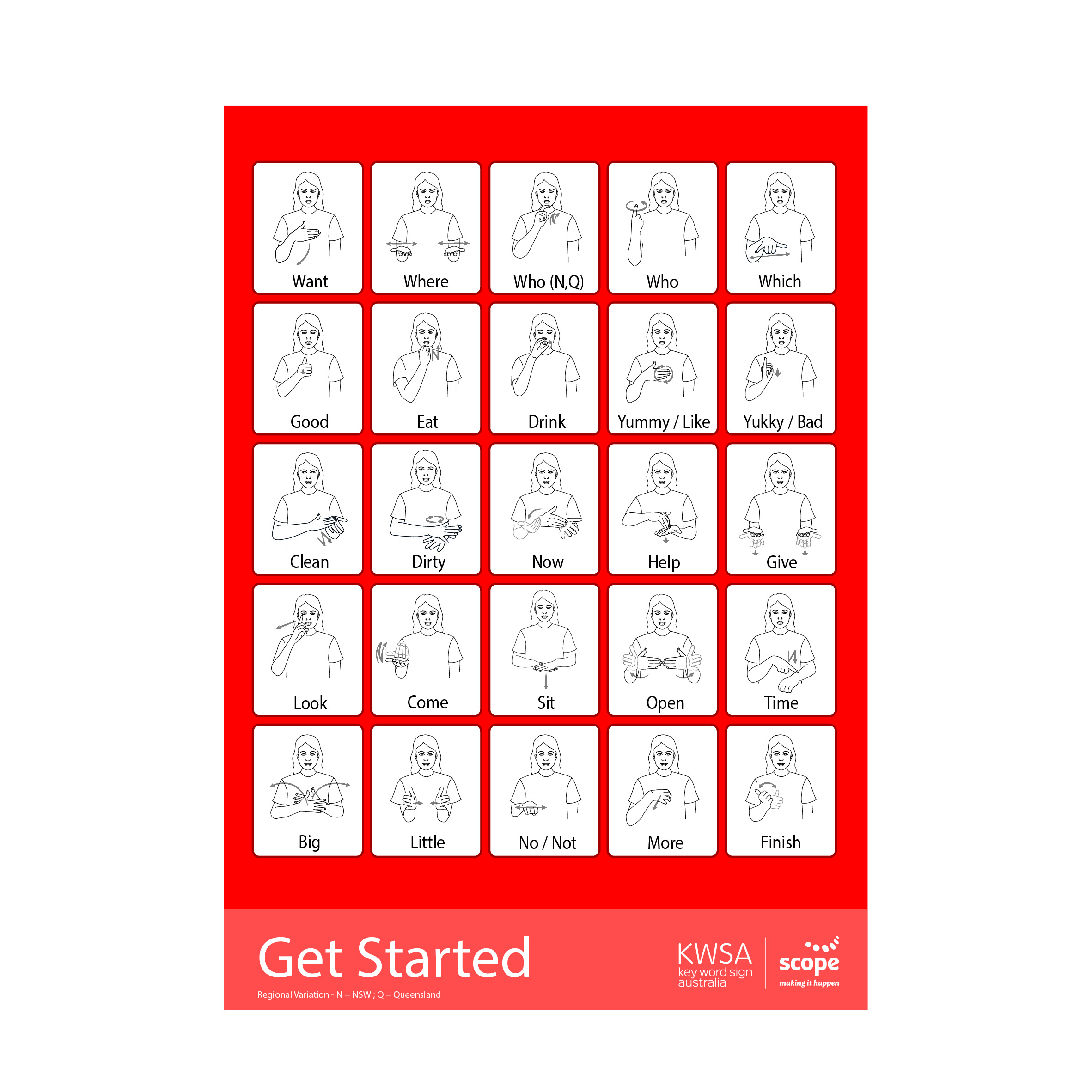
Learning Auslan Signs
{"left":"Hello - Wave with open palm facing out\nThank you - Flat hand touches chin, moves forward","right":"Friend - Index fingers hook together twice"}
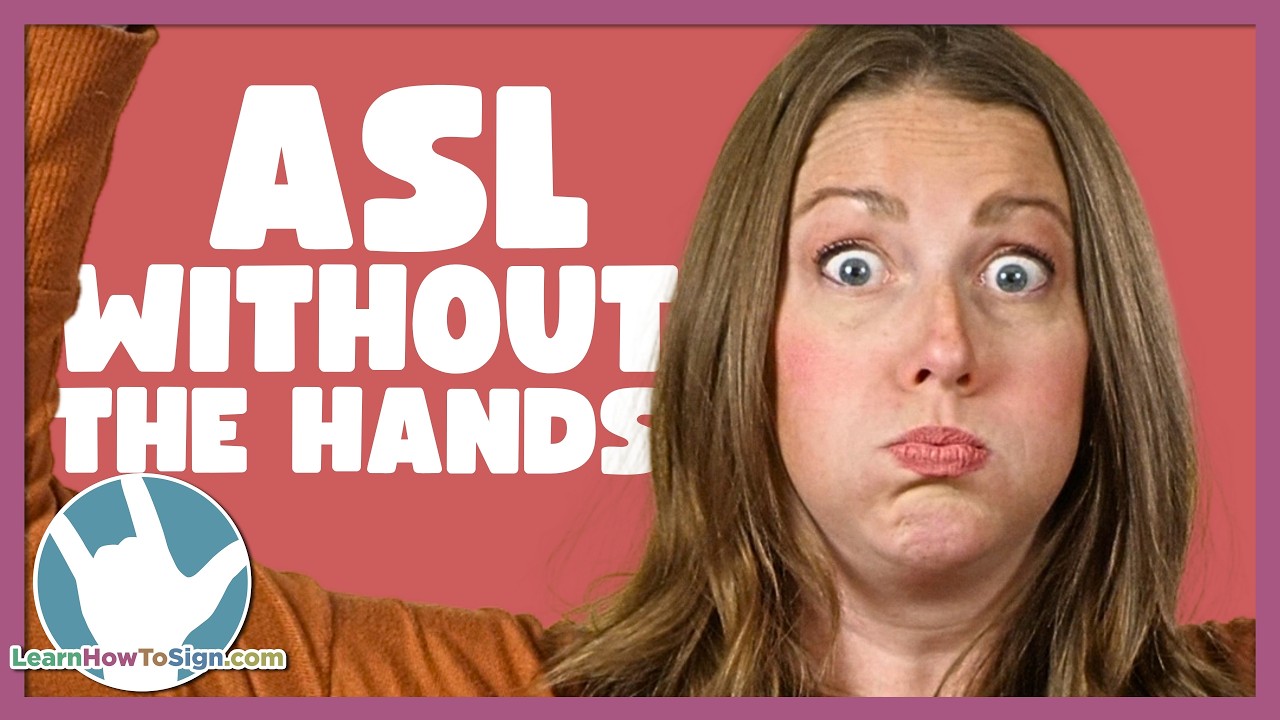
More Than Just Hands
Facial expressions show emotions and meaning Eye contact is very important in Deaf culture Body language adds to the message Signing space - where you make signs matters
Think and Share
How is Auslan different from spoken English? What did you notice about using your hands and face to communicate? Why might learning Auslan help us be more inclusive?
Celebrating Deaf Culture
Deaf community has rich traditions and events National Week of Deaf People - October Auslan Day - May 31st Deaf storytelling and poetry in sign language

What We've Learned Today
Auslan is Australia's sign language It has a rich history and cultural importance We learned three basic signs: Hello, Thank you, Friend Facial expressions and eye contact are part of the language Learning Auslan helps us be more inclusive