
Corresponding Angles on Parallel Lines
Year 8 Mathematics Understanding angle relationships NSW Mathematics Syllabus

What Are Parallel Lines?
Lines that never meet or intersect Always the same distance apart Marked with arrow symbols Found everywhere in real life

What Is a Transversal?
A line that crosses two or more other lines Creates eight angles when crossing parallel lines Can be straight or slanted The 'cutting' line in our diagrams

Think About It
Look around the classroom Can you spot parallel lines being crossed by another line? What patterns do you notice?
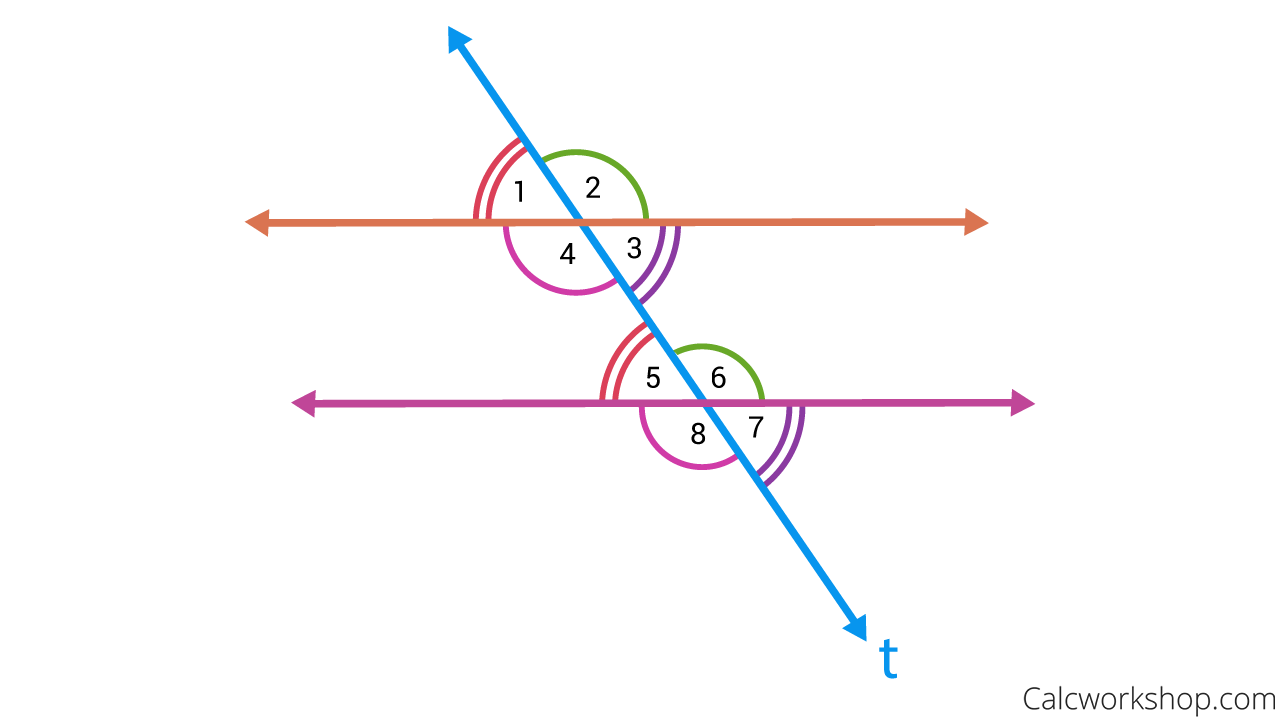
The Eight Angles Created
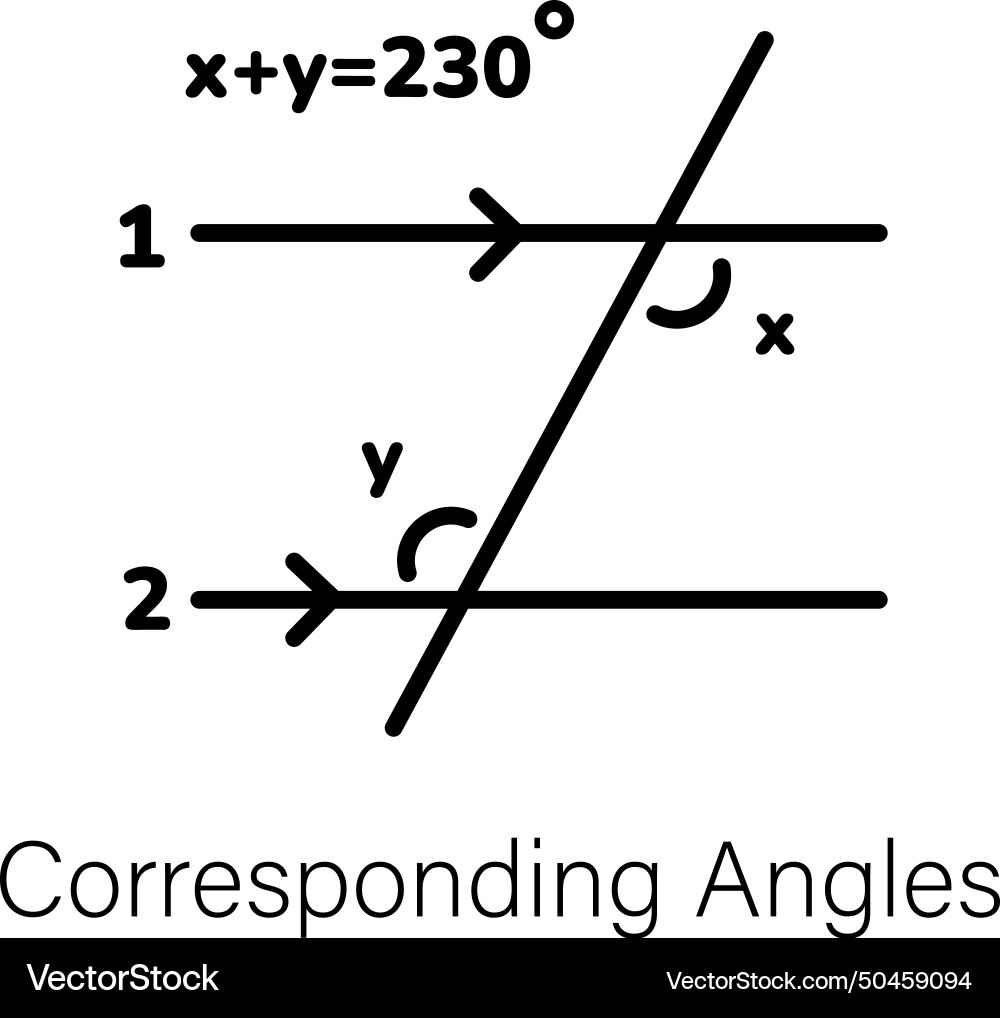
What Are Corresponding Angles?
Angles in the same relative position One on each parallel line Same side of the transversal They are always equal when lines are parallel

Identifying Corresponding Angles
{"left":"Angle 1 corresponds to Angle 5\nAngle 2 corresponds to Angle 6","right":"Angle 3 corresponds to Angle 7\nAngle 4 corresponds to Angle 8"}

Practice Time!
Draw two parallel lines Add a transversal line Number all eight angles Identify the four corresponding pairs
The Corresponding Angles Theorem
When parallel lines are cut by a transversal, corresponding angles are equal
Summary and Next Steps
Parallel lines never meet Transversals create eight angles Corresponding angles are in matching positions Corresponding angles are always equal on parallel lines