Biomes and Climate: Exploring Earth's Ecosystems
Year 9 Social Sciences Understanding Earth's diverse environments Australian Curriculum Geography AC9HG9K01

WALT: We Are Learning To...
Identify and describe major terrestrial biomes globally and in Australia Understand the relationships between climate, soil, and vegetation in biomes Develop mapping skills to recognize biome distribution patterns Compare characteristics of aquatic and terrestrial biomes Analyze the importance of biome conservation

Success Criteria - How We'll Know We've Succeeded
I can name and locate major biomes on world and Australian maps I can describe the climate, soil, and vegetation of different biomes I can explain how climate influences biome characteristics I can distinguish between terrestrial and aquatic biomes I can create accurate biome distribution maps

Think-Pair-Share: What Do You Already Know?
What is a biome? Can you name any biomes you've heard of? What makes different places on Earth look so different? Share your ideas with a partner, then we'll discuss as a class

What Are Biomes?
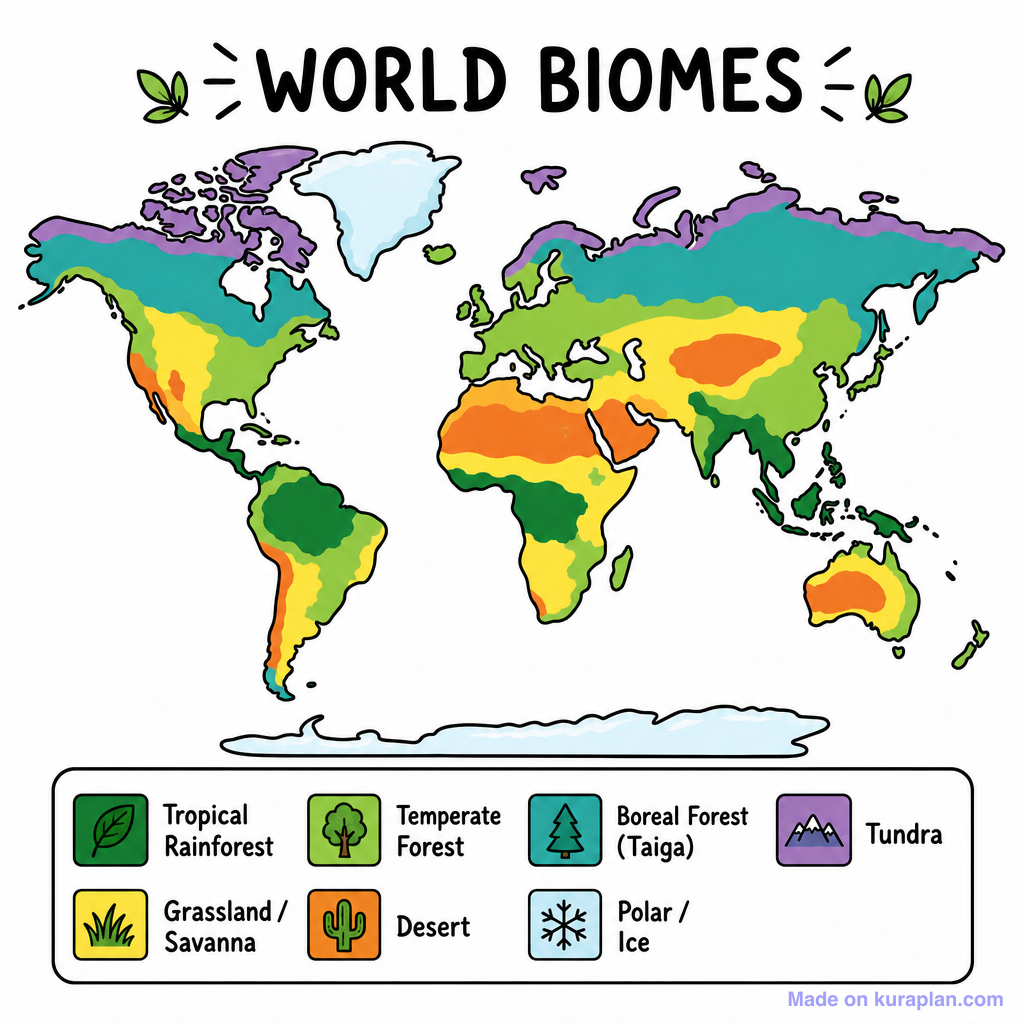
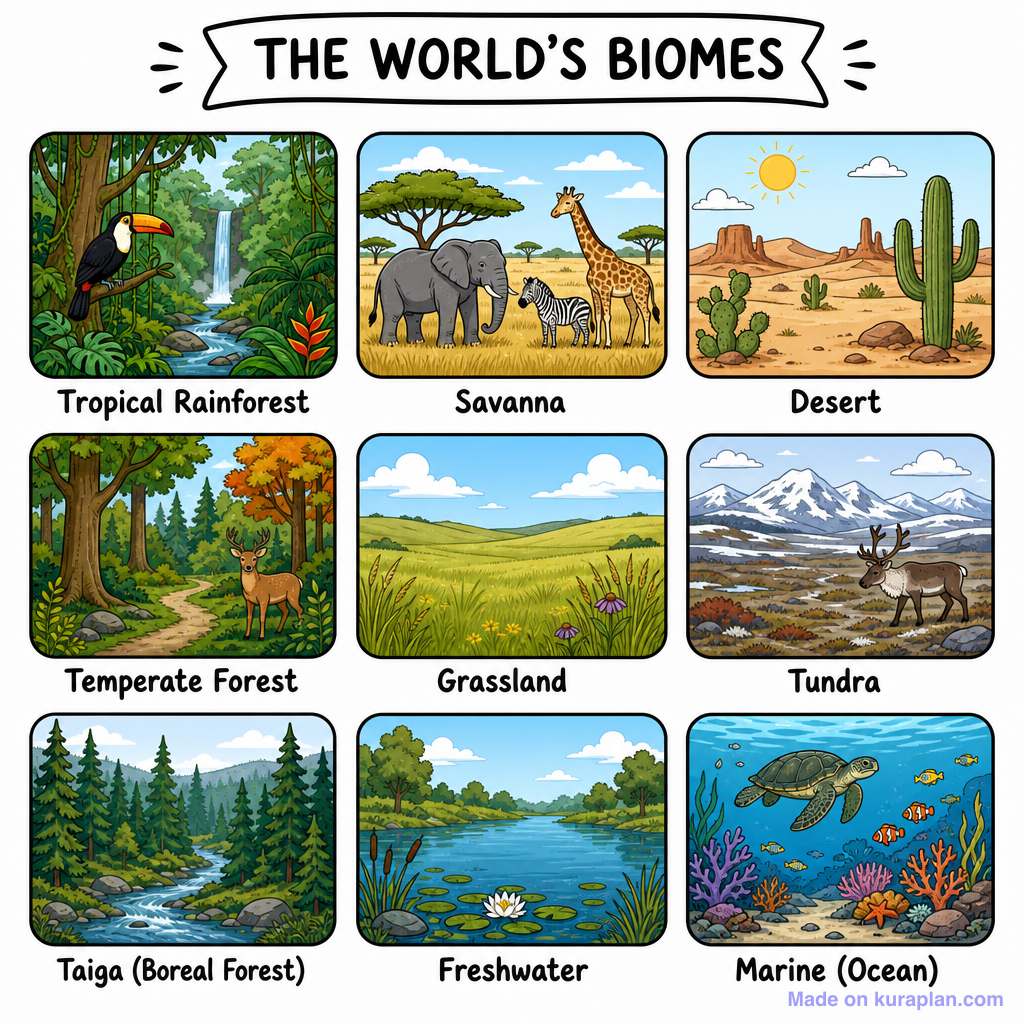
Large regions with distinctive climate patterns Characteristic plant and animal communities Shaped by temperature and precipitation Found in similar climates worldwide Examples: rainforests, deserts, grasslands, tundra

Major Terrestrial Biomes of the World

Tropical Rainforest vs Desert Biomes
{"left":"High temperature year-round (25-30°C)\nVery high rainfall (2000+ mm annually)\nRich, diverse soils but nutrients quickly recycled\nDense, multi-layered vegetation\nHighest biodiversity on Earth","right":"High temperature with extreme daily variation\nVery low rainfall (less than 250mm annually)\nPoor, sandy or rocky soils\nSparse, drought-adapted vegetation\nLow biodiversity with specialized species"}

Biome Mapping Activity - Part 1
Work in groups of 4 students Use the blank world map provided (Worksheet 1) Identify and color major terrestrial biomes Complete the characteristics table for each biome Focus on climate, soil, and vegetation patterns 15 minutes for mapping, then group sharing

Australian Biomes - Our Unique Ecosystems
Tropical rainforest (northeast Queensland) Temperate forest (southeast and southwest) Grasslands and woodlands (inland areas) Desert (central and western Australia) Mediterranean scrubland (southwest corner) Each adapted to Australia's varied climate

Critical Thinking: Climate and Biome Connections
Why do you think Australia has deserts in the center but rainforests on the coast? How might climate change affect these biome boundaries? What role do ocean currents play in creating different biomes?

Introduction to Aquatic Biomes
Freshwater biomes: rivers, lakes, streams, wetlands Marine biomes: oceans, coral reefs, estuaries Different from terrestrial biomes Determined by water depth, salinity, and temperature Support unique communities of plants and animals

Australia's Aquatic Biomes
4 more slides available after you open the deck.
Download all 16 slidesMore Biomes slide decks
Other ready-to-teach decks on biomes.

Free Biomes images
Drop these illustrations straight into your lesson.