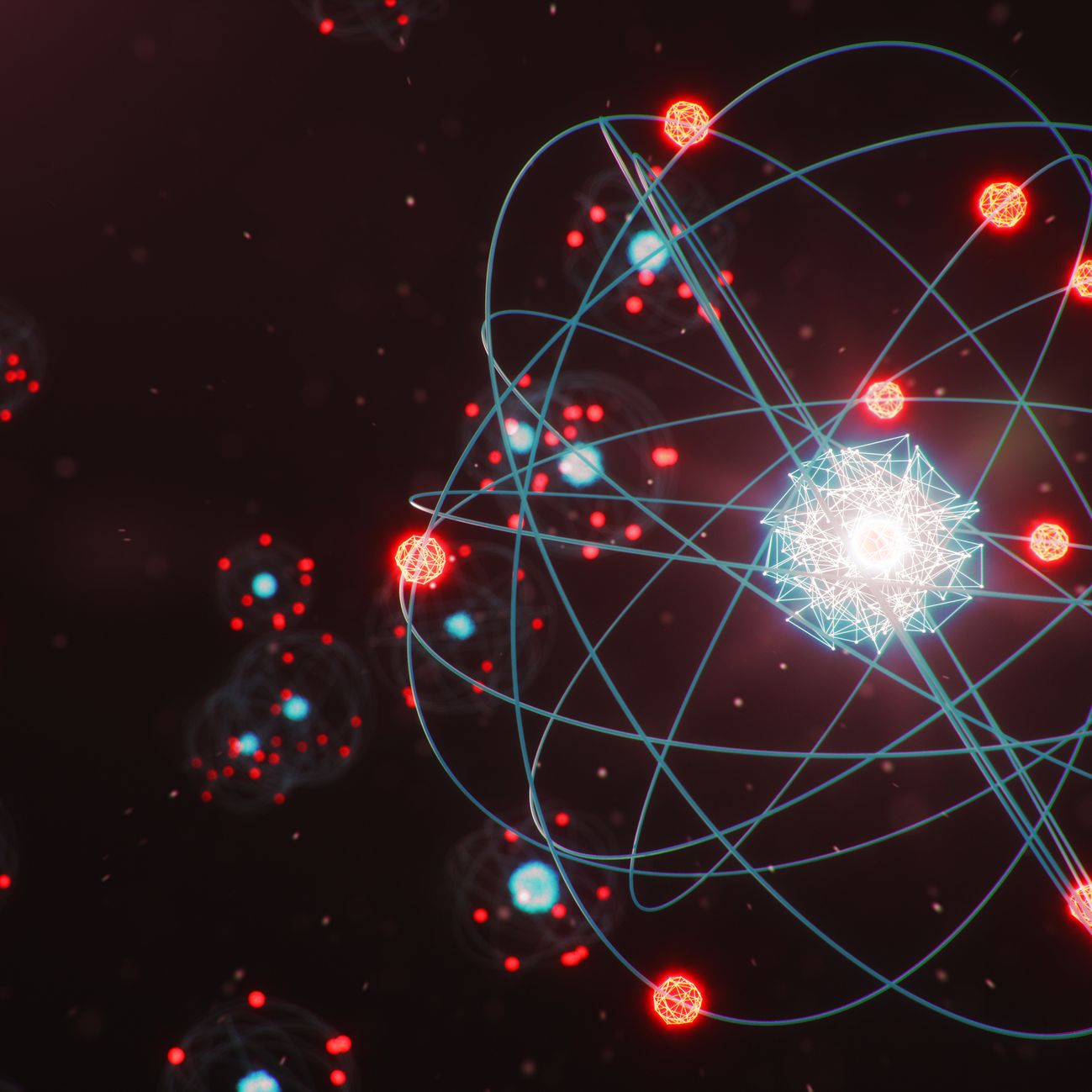
Atoms: Exploring Subatomic Particles
Year 9 Science Understanding the Building Blocks of Matter

What Do You Already Know?
Think about atoms and their parts Share one thing you know about atoms What questions do you have about atomic structure? Create a KWL chart with your partner

Meet the Subatomic Particles
Three main particles make up every atom Protons: Positively charged particles Neutrons: Neutral particles with no charge Electrons: Negatively charged particles Each has a specific location and role

Inside an Atom: Particle Locations

Particle Characteristics Comparison
{"left":"Protons: Positive charge, Located in nucleus, Determines element identity\nNeutrons: No charge (neutral), Located in nucleus, Affects atomic mass","right":"Electrons: Negative charge, Orbit around nucleus, Involved in chemical bonding"}
Build Your Own Atom
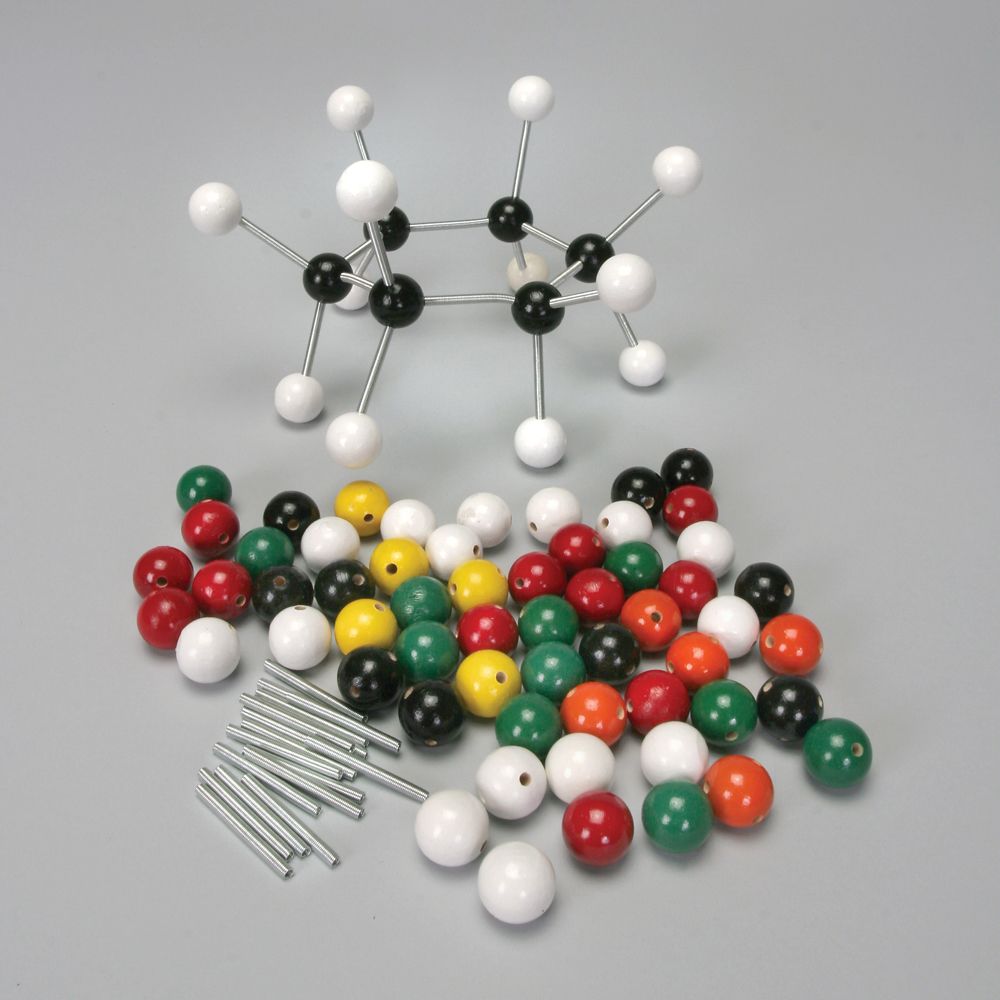
Use colored materials to represent particles Red balls = Protons (nucleus) Gray balls = Neutrons (nucleus) Blue balls = Electrons (orbiting) Build atoms of Hydrogen, Helium, and Lithium
Quick Check: Can You Identify the Particles?
Which particle has a positive charge? Where are neutrons located? What determines the identity of an element? Which particles are found in the nucleus?

Why Subatomic Particles Matter
Particles determine element properties Understanding atoms helps explain chemical reactions Foundation for chemistry and physics Next lesson: How particles behave in chemical reactions Exit ticket: One thing learned, one question for next time